CJ stops dialysis and enters hospice
A Dog's JourneyCJ’s decision to stop dialysis and enter hospice marks a shift from caring for people who are dying to receiving that care herself. After years of illness and a long period of deliberation, she tells Fran that she has stopped dialysis and will come to live at the hospice. Toby, her longtime companion, remains beside her as she explains her choice, settles into the building, and approaches death.
From Caregiver to Guest
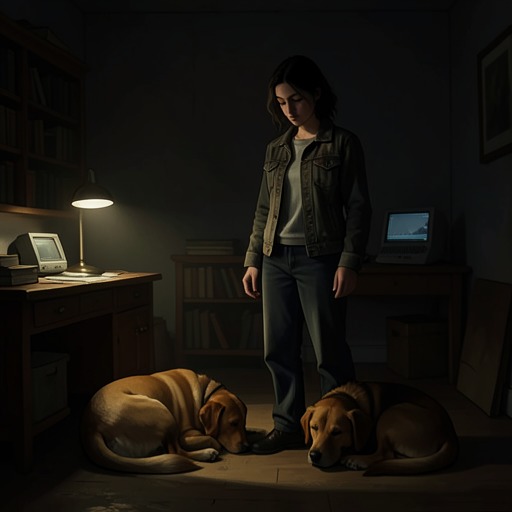
Before announcing her decision, CJ has an established place in the hospice community. She visits patients in their rooms, talks with them, and sometimes hugs them; Toby follows at her heels. When she leaves at night, he often stays beside someone on a bed, while family members hold him. The work makes care tangible: a quiet conversation may lessen a patient’s pain, and Toby’s task is to accept a family member’s embrace for as long as it is needed. CJ’s own illness exists alongside this daily attention to others, rather than outside it.
Her routine includes absences. Sometimes she is away for a week or two, but she always returns. After one such absence, at lunch with Fran, CJ says a new guest may arrive as early as Monday. The revelation is that she means herself. She is not merely bringing another person into the hospice’s care; she is preparing to become its guest, changing her relationship to the place and to the work she has been doing there.
A Deliberate End-of-Life Choice
CJ describes a life increasingly shaped by pain, sleeplessness, sickness, and forty pills a day. She says that her doctors have many problems to address and that she is tired of the burden. Gloria’s death has also changed how she understands her obligations: CJ feels that she has fulfilled them and owes no one anything further. She has already told her family at a reunion and said goodbye, and her affairs are in order. These details present the decision as prepared for and communicated to the people close to her, not as a sudden declaration.
Fran urges her to talk more and suggests that she might see someone. CJ answers that she has worked through the choice with her therapist over the preceding year and a half. She distinguishes it from suicide, describing it instead as acceptance of an illness whose course she believes will end badly. Her doctors, she says, agree with her decision. She fears another stroke could leave her debilitated; after watching Gloria, the prospect of damage to her own brain is especially frightening. Choosing the timing and setting of her death, in CJ’s account, is a way to protect her quality of life rather than prolong life without regard to it.
The decisive fact comes when CJ tells Fran that she has stopped dialysis. She speaks of the relief and freedom she feels at not having to return for treatment. She acknowledges that she has had ups and downs, but regards her life as long and good, without regret. Her reasoning is not that she knows exactly what will happen next: Fran points out that another stroke is not certain. CJ’s answer is that uncertainty does not undo her decision. She does not want treatment to artificially extend a life whose prognosis she sees as ending badly, or to leave her unable to recognize or direct what happens to her.
Moving into Hospice
As she explains herself, CJ’s fear fades. Toby nuzzles her hand, and she strokes him tenderly. The exchange makes their bond part of the scene without turning him into the decision-maker: CJ has made her choice through reflection and discussion, while Toby offers the familiar physical companionship that allows her to share it with Fran.
A few days later, CJ comes to live in the building. Toby can tell that she is sicker than before. He jumps onto her bed and stays with her, sometimes near her head and sometimes curled at her feet. The change is concrete: the woman who once moved through patients’ rooms with Toby following behind now lies in a bed where he can keep watch. Her care has not become a matter of abstraction; it is embodied in the hours he spends beside her as her strength diminishes.
CJ continues to call Toby a good dog, though her voice grows weaker. She compares his gentleness to Molly’s and his self-assurance to Max’s, recognizing qualities he carries from his life with her. Toby understands her tenderness as recognition of their continuing bond: he has been with her, cared for her, and guarded her across the lives that connect them. The hospice move therefore changes his immediate role—from accompanying CJ as she cares for others to accompanying her as she receives care—without changing the loyalty between them.
Final Days and Aftermath
CJ tells Toby that she will be leaving him. She says she has had the good things this life can offer and is weary of its hardships, especially what she expects if she prolongs it. She regrets leaving her friends, including Toby, but believes he is loved and will be cared for. She asks him to be with her in her final moments so that she will not be afraid, and calls him her forever friend. Her request gives the earlier decision its intimate consequence: choosing hospice does not mean choosing solitude; she wants to face death with a trusted companion beside her.
On a cool, clear spring afternoon, Fran sits with CJ through the day while Toby rests with his head on CJ’s chest. When CJ’s hand stops stroking his fur, Fran moves her chair closer and takes her slack hand. CJ lets go of life gradually, then dies with a final breath. Fran embraces Toby and tells him he has been a good dog. In the moments afterward, Toby remembers CJ as baby Clarity at The Farm, and recalls her later hugs, including when she held him close as Max to keep him warm. Her decision to enter hospice thus culminates not only in a chosen setting for her death, but in the final presence of the companion who has shared her life in more than one form.