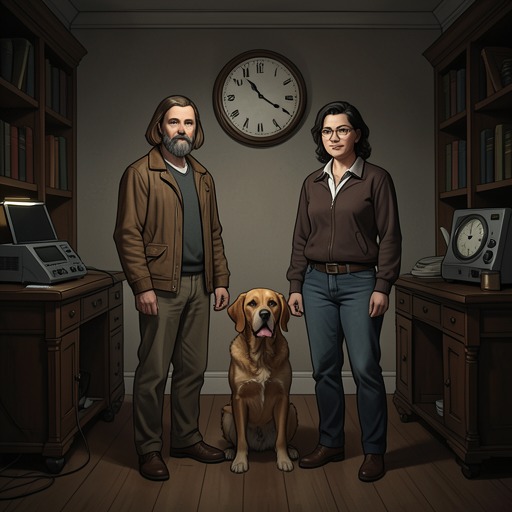
CJ—Toby
A Dog's JourneyCJ and Toby’s relationship is a cross-life bond: Toby has been with her as Molly and Max before returning as Toby, while CJ’s recognition of that continuity grows through affection, memory, and the work they share. Their connection begins in the protective intimacy of a girl and her dog, becomes an act of care for the people around them, and endures at CJ’s bedside when she dies.
Recognition Across Lives
As Max, Toby receives from CJ a direct recognition of what his warning had meant. Sitting together in the grass, she strokes his head and tells him she understands that his attempts to signal with the “Pray” command were not an effort to say grace: he could smell Trent’s cancer, but the people around him had not understood. CJ wonders aloud whether Molly had told Max and whether both dogs were angel dogs. Max responds to the name Molly by wagging, a small physical answer that conveys the importance of hearing CJ speak of that earlier life.
CJ then names the consequence of Max’s warning: the cancer was found in time, had not returned, and he had saved her husband. She cannot explain how he knew, but asks him to thank Molly if he can communicate with her. The exchange links Max’s present service to Molly’s earlier life without requiring CJ to understand the mechanics of that connection. Her gratitude reaches across the dogs’ lives, while Max’s response remains characteristically canine: a wag rather than an explanation.
Care as a Shared Purpose
The relationship is not limited to protection in a crisis. In Toby’s hospice life, CJ’s care for him and his presence beside her become part of a wider practice of caring for people in pain. CJ visits patients, talks with them, and sometimes hugs them; Toby stays close at her heels. When a patient’s family reaches for him, he allows them to hold him as long and as tightly as they need, even when the embrace makes him uncomfortable. The work gives their companionship a communal reach: their bond helps CJ’s patients and their families find comfort, rather than belonging only to the two of them.
CJ’s companions at the hospice recognize Toby’s role alongside her. She calls him a “Good dog,” and Fran and Patsy use the same praise. The phrase is affectionate, but it also marks the work Toby performs: staying with people who are suffering and accepting their need for physical closeness. CJ’s earlier understanding of Max’s cancer warning and Toby’s later presence with hospice patients are different forms of the same attention to human vulnerability.
Naming the Continuity
When CJ’s own health worsens and she comes to live in the hospice building, she tells Toby that he is more than a therapy dog. Calling him an “angel dog,” like Max and Molly, she joins his present identity to the dogs who had protected her before. She says that he reminds her of Molly’s gentleness and Max’s self-assurance. Toby understands her words as recognition: his girl knows who he is and that he has always been with her, caring for her and guarding her against danger.
That recognition is grounded in memories spanning several lives. After CJ dies, Toby recalls baby Clarity falling from the dock at The Farm and looking toward him as Gloria lifted her; Clarity had called him “Bubby.” He also remembers her returning with Trent to take him home, and the hugs and kisses she gave him. As Max, he remembers CJ holding him against her chest to keep him warm. The memories establish an enduring relationship through distinct acts of rescue, welcome, touch, and protection—not simply a repeated name or an abstract belief in reincarnation.
Final Companionship and Legacy
Before her death, CJ speaks plainly to Toby about leaving him. She says that she is weary of the bad that would come from prolonging her life and wants to be with her husband. She names Toby as one of the friends she regrets leaving, but trusts that he will be loved and cared for and that having a job matters deeply to a dog. She asks him to be with her in her final moments so she will not be afraid, and asks him to tell her angel dogs that she is coming. Her request makes his companionship a source of courage at the threshold she cannot avoid.
On a cool, clear spring afternoon, Fran sits with CJ while Toby rests with his head on her chest and her hand strokes his fur. When the hand stops moving, Fran takes it; CJ then lets go of life with a final breath. Toby’s grief is measured against the physical intimacy that had defined their bond: he will have to live without her hugs. Yet CJ’s influence remains in what Toby has learned through their shared lives. She opened his understanding beyond his first devotion to Ethan, showing him that he had loved many people and that loving humans was his purpose. For years after her death, Toby continues serving hospice patients and remembers CJ through the separate scenes of their lives together. Their relationship therefore ends in bodily separation but not in the loss of its defining work: care, remembered and carried forward.