Cancer-detection dogs
A Dog's JourneyCancer-detection dogs turn the canine sense of smell into a possible early-warning system: they learn to recognize an odor associated with cancer and communicate that recognition through a trained behavior. The novel presents the work as both research and practical care, moving from Andi’s proposed public screenings to Molly’s unexpected learning and Max’s later alert about Trent. Its method depends not on smell alone, but on a dog connecting a scent to a signal that people can understand.
Research and Rescue Setting
Andi explains that her main work is dog rescue, while a grant allows her to use the facility to research cancer detection. Dogs’ sense of smell, she says, can be as much as a hundred thousand times more intense than a human’s; some studies suggest that dogs can detect cancer on a person’s breath before another diagnosis has been made. Andi sees early detection as potentially important, but the passage frames her work as research and an attempt to put study methods into practice, not as a replacement for medical diagnosis.
The proposed program differs from methods that train dogs to identify specimens in a laboratory. In those exercises, a dog sniffs a test tube; Andi wants to find out whether trained dogs can work in the field, moving from person to person at places such as a health fair or community center. The distinction is practical as well as technical: the target is not only whether a dog detects an odor, but whether the dog can do so in an encounter with a person and make the detection legible to a handler.
Training and the Alert
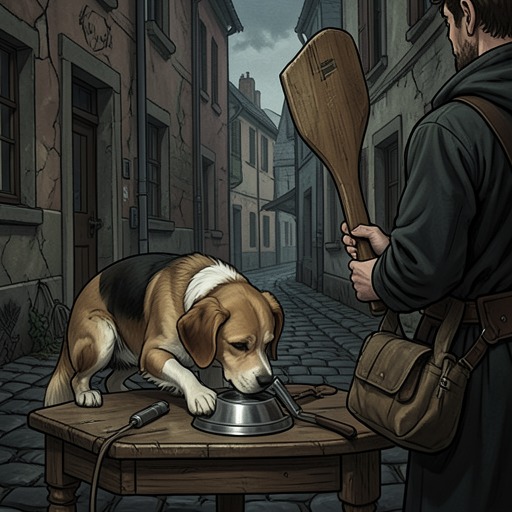
The training scene makes that communication concrete. Andi works with Luke and a row of metal buckets, guiding him to sniff each one. At the relevant bucket, she gives a verbal cue, and Luke lies down; he receives a treat. His posture is the visible endpoint of an exercise built around scent. To a human observer, a dog’s nose may register a difference that sight cannot reveal, but the trained response makes that private sensory information actionable.
Molly first comes to the facility with CJ as part of her community service. CJ spends the day caring for and walking dogs, while Andi trains. When Molly watches Luke’s bucket exercise, the scene establishes Luke as a focused working dog, unlike Rocky, whom Molly associates with play and affection for Trent. That contrast shows that detection work is a learned task, not simply a general disposition to be attentive or obedient.
Molly Learns to Signal
During a person-to-person exercise, Molly is introduced to people in turn. They pet and speak to her, but do not give her treats. At one stop, she detects a distinctive odor on a woman’s hands. The scent recalls the strange taste that had troubled her when she was Buddy and resembles the odor on a bald man’s breath when he spoke to CJ. The connection across those encounters is first made through Molly’s bodily perception: the smell recurs before she can understand the task in human terms.
As Andi begins to move on, Molly notices tension in her and recognizes that the exercise concerns this particular smell. Molly turns back to the woman and lies down, crossing her paws. Andi rewards her, confirming that the posture is the desired alert. The sequence matters because Molly has not simply repeated an exercise after formal instruction: she has watched Luke and adopted his way of signaling. Andi says that dogs may detect the odor without necessarily connecting it to a signal for their handlers, and identifies Molly’s observation of Luke as the explanation for her new behavior. The discovery makes learning between dogs part of the program’s success, alongside direct training and reward.
Max’s Alert and Its Consequences
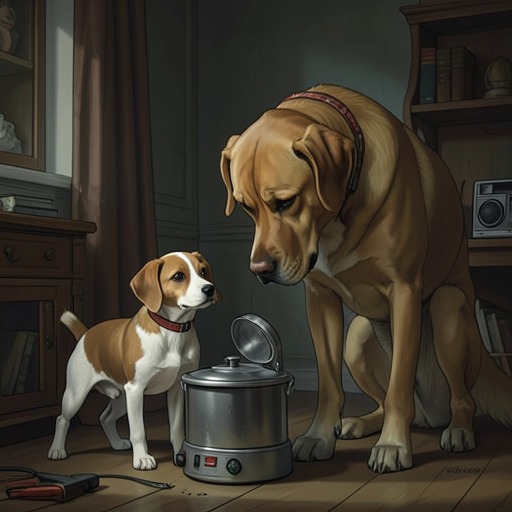
The signaling behavior recurs later with Max. While Trent prepares Max’s food, Max detects a metallic, unmistakable odor on Trent’s breath and signals, using a behavior he had been trained to perform long before. The scene links the cancer-detection program’s training to a later household moment: a skill learned in structured work becomes useful when the dog encounters an odor in the course of ordinary life.
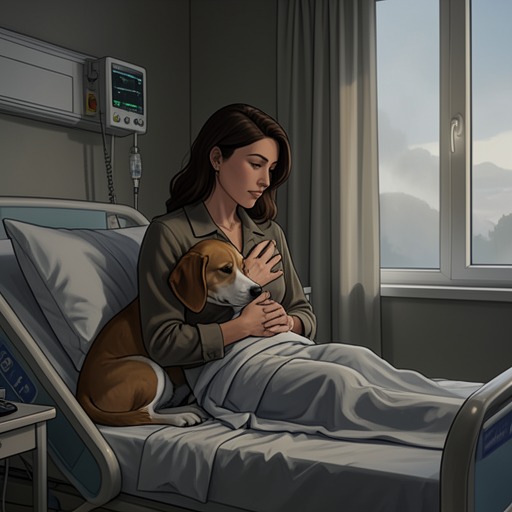
CJ eventually understands Max’s earlier attempts to alert the family as an effort to communicate that he could smell Trent’s cancer. She tells Max that the cancer was found in time and had not returned, crediting him with saving her husband. Her account supplies the human interpretation and consequence of the signal, while the detection itself remains grounded in Max’s smell and trained response. The narrative does not present the dog as making a diagnosis; it presents his alert as information that people initially failed to understand and later recognized as significant.
Sensory Knowledge and Care
Across these episodes, smell acts as a kind of knowledge that precedes explanation. Molly recognizes a scent from her experience as Buddy and responds before she can describe what the training is for; Max detects an odor on Trent’s breath and performs a learned signal. The dogs’ perceptions are not immediately transparent to the people around them. They become useful through a shared code of posture, handler attention, and reward, and the gap between sensing and being understood gives the alerts their narrative force.
The program also joins detection to ordinary care. Andi’s research takes place within a rescue facility whose dogs need feeding, exercise, and clean kennels; CJ’s participation includes that labor as well as the screening exercise. Luke’s focused work, Molly’s attentive imitation, and Max’s later alert show different routes by which a dog can contribute. Together, they present cancer detection not as an isolated trick of canine smell, but as a relationship among bodily perception, training, human interpretation, and the possibility of timely action.