Dutch
A Dog's Way HomeDutch is a large, dark-furred dog whose loyalty is tested when an avalanche separates him from his person. Bella first encounters him digging frantically in the snow beside the buried man; after the rescue, Dutch follows Gavin, and later Gavin offers him a permanent place in his family. His story runs alongside Bella’s own longing for Lucas, showing how attachment can survive separation and how a new home can be chosen without erasing the old one.
Identity and Introduction
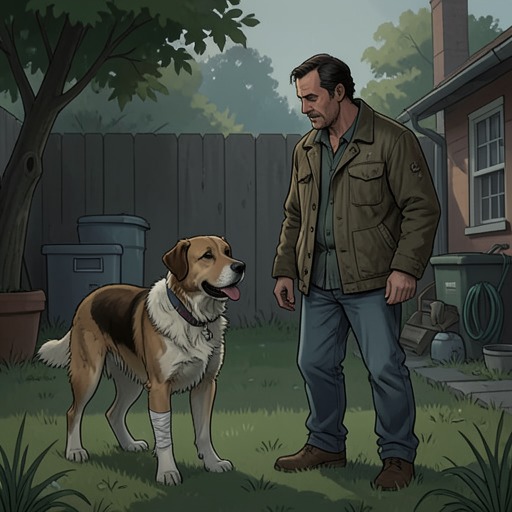
Bella meets Dutch in the aftermath of an avalanche. She has freed herself from the snow when she sees a dog uphill, sobbing with fear and digging at the snow near the tree line. He is bigger than Bella, with thick, dark fur, and so absorbed in the effort that he does not acknowledge her when she approaches. Bella joins him without understanding what has happened, responding to his distress before she knows his name or the identity of the person beneath the snow.
Dutch’s name becomes clear through his collar. Gavin reads it and calls him Dutch, and the dog’s response confirms that this is what people call him. The recognition arrives amid a crisis: Dutch is focused on the buried man, while the people around them work to get the man out. His introduction therefore defines him less through explanation than through action. He is a dog trying to reach someone he loves.
The Avalanche and Separation
After the rescue, Dutch stays with the moaning man, the other man, and Bella. He remains even as machines approach, and the bread offered to the dogs is not the reason for his persistence. Bella understands his staying as a need to remain beside those who are distressed, much as she stays with people who need a dog. Dutch’s attention is fixed on his person, while the adults’ urgency makes clear that the situation has not yet been resolved for him.
When the rescuers carry the man away on a sled, Dutch gives chase through the snow. Gavin calls to him, and Dutch circles the machines, placing a foot on the sled where his person lies. His pursuit makes the separation visible: he does not know that the man is being taken for help, only that the person he depends on is leaving. Bella watches without following. Gavin knows Dutch, and she believes Dutch will be all right with him; her own sense of home, and the pull toward Lucas, instead draws her onward. The scene gives Dutch and Bella different immediate paths out of the same emergency.
From Kurch to Gavin
Dutch’s bond with Kurch is evident again when Gavin brings the dogs back. Dutch leans into the man’s hand and closes his eyes, a small gesture of trust that sharpens Bella’s own homesickness for Lucas. Gavin explains that he has brought back the dogs, but the man insists that Bella is not his. The contrast is consequential: Dutch is recognized as belonging there, while Bella remains oriented toward a home elsewhere.
That recognition does not lead to Dutch returning to Kurch’s care. When Kurch refuses to take him back, Dutch approaches Gavin almost crawling, as though he believes himself to be the bad dog. Gavin kneels, puts his arms around him, and tells him that his home is now with Gavin, Taylor, and Bella. He calls himself Dutch’s father and names the four of them a family. Bella understands the gesture as comfort: Gavin is not merely giving Dutch an instruction or a place to stay, but answering the dog’s fear of having lost his person and his home.
Belonging and Narrative Role
Dutch’s relationship with Gavin develops through repeated acts of recognition. After Gavin has been away, Dutch hears him arrive and begins wagging his tail. When Gavin opens the gate, Dutch rushes at him, whimpering, jumping, and licking him. Bella then understands that Gavin is Dutch’s person, just as Lucas is hers. The reunion confirms the bond not through explanation but through Dutch’s immediate, unmistakable response.
Dutch’s arc also offers a counterpoint to Bella’s determination to go home. Bella can love and protect others, but she continues to seek Lucas; Dutch, after losing Kurch’s care, accepts Gavin’s offered family. Their different outcomes do not make either attachment less real. Dutch’s story instead distinguishes the persistence of loyalty from the idea that belonging must always mean returning to the same person. His new place with Gavin and Taylor becomes a home through care, reassurance, and Dutch’s own evident delight at Gavin’s return.