Terri’s recurrent seizures
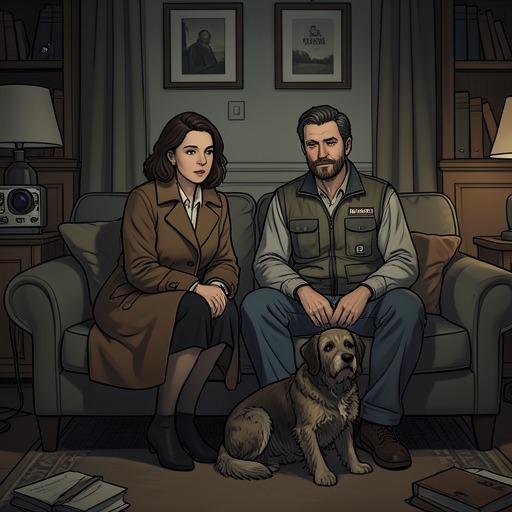
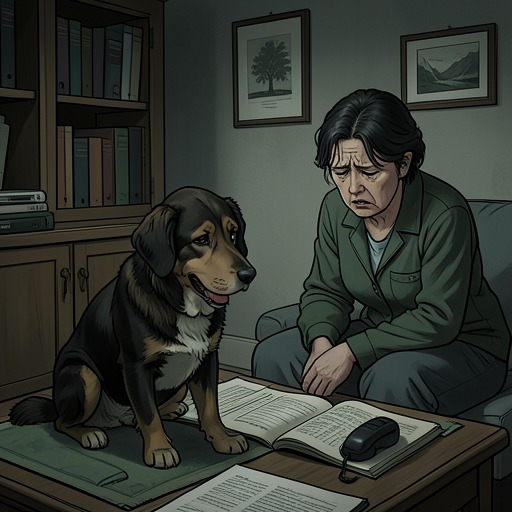
A Dog's Way HomeTerri’s recurrent seizures are a recurring medical crisis whose warning signs remain uncertain even as their consequences become increasingly visible to Lucas and Bella. The episodes interrupt ordinary domestic routines, separate Terri from her family, and reveal a form of communication Bella can offer before she understands what is happening: she senses a change in Terri, persists in seeking attention, and tries to comfort her when the crisis arrives.
Symptoms and Diagnostic Uncertainty
Before the first seizure described in detail, Terri has just returned indoors after being outside with Bella. Bella detects that something is wrong through a new emotional quality and a sharp change in the tang of Terri’s sweat. Terri praises her but appears distant, then says she feels strange. The account gives no clinical warning signs beyond this change in Terri’s state and Bella’s sensory response; the onset is presented through what the dog can smell and observe rather than through a medical explanation.
Terri later sits down to watch television, a familiar shared activity with Lucas and Bella. This time, Bella finds her touch shaky and tense and continues to notice the bad smell. Bella gets down from the couch, curls at Terri’s feet, returns, pants, drinks water, and comes back to nose Terri’s leg. Her repeated movements register a worsening condition she cannot name. Terri interprets the attention as a possible need to go outside, showing how the household initially reads Bella’s behavior through ordinary routines rather than recognizing it as a warning.
The second episode confirms that the first was not isolated. Lucas identifies the earlier crisis as another grand mal seizure and says Terri had not had one of that kind for a long time. The family had thought her medication was controlling the condition, but her doctors were not sure what was wrong with her. The narrative therefore establishes recurrence without offering a settled diagnosis or a reliable account of treatment: medication had seemed to help, yet Terri’s seizures return, and medical uncertainty remains explicit.
The First Crisis and Its Aftermath
When Terri’s condition worsens during the first episode, she tells Bella to go for a treat. Bella runs downstairs because she needs Lucas, whom she associates with making things right. While eating the snacks, she hears a loud crash from overhead, then rushes back upstairs. Terri is curled on the floor, making small sounds, with her hands raised near her face and shaking. Bella tries to put her head on Terri’s shoulder, but Terri’s body stays rigid. The attempted comfort does not stop the crisis, but it shows Bella responding to bodily distress before she can understand its cause.
The consequences extend beyond the seizure itself. The following morning, Lucas takes Bella for a walk while Terri is absent. He explains that the seizure has happened again, that the medication had appeared to keep it under control, and that the doctors still do not know what is wrong. Terri does not come home that day or the next. When Lucas goes to work, Bella is left in her crate and barks in frustration and fear, unsure whether either of her people will return. Her distress makes the practical disruption of Terri’s illness part of the event: the seizure changes who is at home, who cares for Bella, and how secure the household feels.
Recurrence and Bella’s Warning Behavior
A later episode gives Bella’s response a more recognizable pattern. Lucas has had her spayed, and Terri and Bella are alone while he is away. Terri seems tired and unhappy and repeatedly puts her hand to her face. Bella notices a sharp, sour smell she remembers from the previous occasion when Terri became sick and Bella was left alone overnight. Terri does not respond to Bella’s anxious whining, so Bella barks. Terri scolds her under the household’s no-barking rule, but the reprimand does not address the danger Bella is reacting to.
When Lucas arrives, Bella barks again. He initially tells her not to bark, then notices Terri making small sounds on the couch, her hands curled and batting at the air. His response changes immediately: he runs to her, calls for help, and tells the emergency service that his mother is having a seizure. Two women and a man arrive, lift Terri onto a bed, and wheel her out. Lucas puts Bella in her crate and tells her to stay. As in the earlier episode, Bella’s warning cannot prevent Terri’s seizure, and the emergency response separates the family; unlike the first account, this scene shows Lucas recognizing the crisis and summoning medical help.
Family Effects and Narrative Significance
After Terri has returned, Olivia gives her a ride. Terri says she felt well enough to walk, while Olivia lightly notes that Lucas treats her as his personal driver. Later, Lucas looks up information on his phone and tells Terri that it says fifteen percent of dogs can sense seizures. Terri agrees that Bella seemed to know what was happening, and Lucas praises the dog. This exchange does not establish that Bella has been formally trained or medically assessed. It records the family’s growing interpretation of behavior they have already witnessed: Bella’s persistence may be more than disobedience or a request to go outside.
The seizures also alter the meaning of familiar commands and routines. Bella understands going out, getting treats, watching television, and Lucas leaving for work in practical, immediate terms; illness makes those ordinary patterns unreliable. Terri’s absence after the first seizure leaves Bella frightened, while the later scene turns the barking that Terri had prohibited into an urgent signal Lucas learns to heed. Through Bella’s sensory point of view, the condition is rendered as a change she can detect but cannot explain, and the gap between her perception and the household’s understanding gives the recurring episodes their narrative force.