
The Apartment That Replaces a Dream
A Gentleman in MoscowThis thread traces how standardized construction changes Moscow’s housing and undermines the architect’s vocation while leaving room for imaginative design.
increasing Bearing strength in each event
 decreasing
Bearing strength in each eventdecreasingThe Architect’s Training

A Skilled Man Without Buildings
Work Scarce
A young architect tells Count Alexander Ilyich Rostov that Moscow is building extensively but has little need for architects. He works for Intourist drawing hotel interiors instead.
A Profession Narrowed
Construction expands while design is reduced to standardized forms. The architect’s frustration reveals a society that values speed and uniformity over individual imagination.
A City of Repetition

Standardized Housing
The Mayor’s Directive
Moscow’s officials prefer a universal, economical design to the architects’ proposed towers and adaptable apartments. Five-story concrete blocks spread across the city.
Design Without Choice
The buildings are easy to reproduce but offer cramped rooms and communal facilities. The policy solves an urgent housing need while suppressing architectural ambition.
Interiors as Memory
Drawing What Remains
The Piazza Sketch
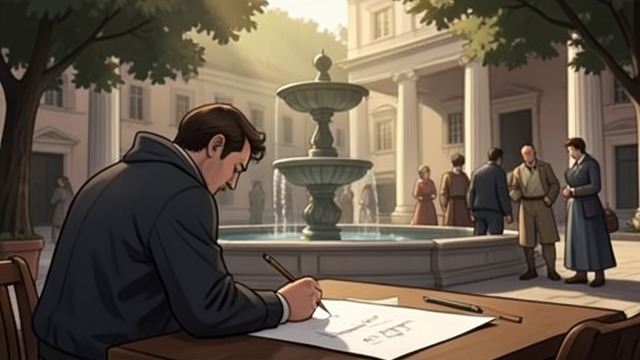
The architect carefully draws the Piazza’s columns, fountain, and occupants. Count Alexander Ilyich Rostov argues that the room’s meaning comes from the people who have gathered there.
A Room’s History
The conversation suggests that a building is shaped by the events it contains. Architecture records not only formal design but shared human experience.
An Imagined Restaurant Machine

A Private Design
The Hidden Sketchbook
The architect secretly draws fantastical buildings, including a restaurant whose chairs move around a giant mechanism. His imagination exceeds the practical work available to him.
A World in Motion
The imagined device reflects the novel’s recurring interest in chance, seating, and relationships. The sketch preserves a creative life that official building programs cannot accommodate.
The Unbuilt City

Architecture as Resistance
Projects Kept Alive
The architect continues to design buildings that may never be built, including a museum of razed Moscow architecture. His private drawings preserve alternatives to the city’s uniform development.
Hope in Practice
Like the Count’s service and Sofia’s music, the architect’s work keeps a blocked dream active. Imagination survives even when public opportunity is limited.
1950
Early 1950s
1950
After 1950
Mid-1950s
