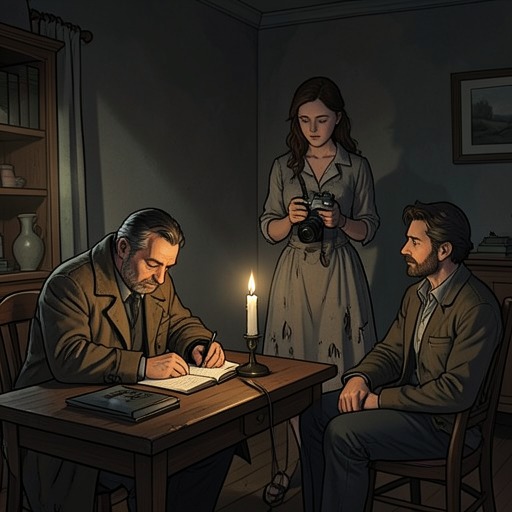
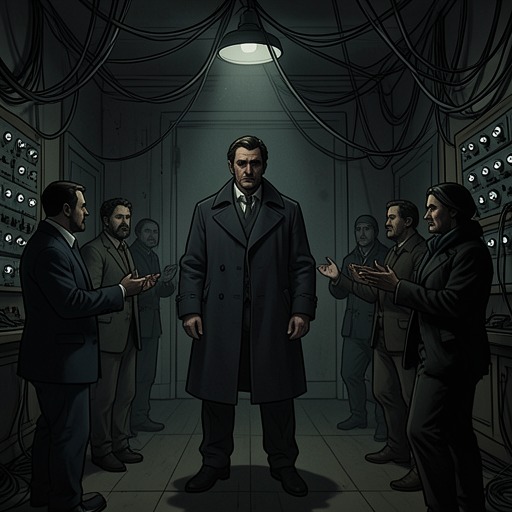
1923 First Congress of the Russian Association of Proletarian Writers
A Gentleman in MoscowThe 1923 First Congress of the Russian Association of Proletarian Writers appears through Mishka’s recollection as a gathering where literary work became an emphatic public performance. Its first day joined paperwork and proclamations to solidarity across occupations, then carried that energy into a dinner that lasted until eleven and a speech by Vladimir Mayakovsky delivered from atop a chair. The episode’s significance lies in this collision of organizational labor, political allegiance, and theatrical spectacle—and in the lively, skeptical way Mishka recounts it to the Count.
Setting and recollection
The congress enters the story through an evening at Shalyapin. The Count, newly trimmed and shaved, has taken a corner table to wait for Mishka, who is in town for the inaugural congress. The two friends meet after the Count has offered Mishka the banquette; the gesture is courteous, but also keeps his fidgeting companion in his seat. Over beers, the Count asks how the congress is progressing. Mishka responds that it is the topic of the hour, soon to engross Russia and, as he grandly puts it, perhaps the world.
This framing makes the account both a report from the congress and a scene of friendship. The Count had hoped to share roasted duck at the Boyarsky and a particular Grand Cru with Mishka, but Mishka cannot stay for dinner. The anticipated leisurely meal gives way to beer and an urgent account of the day. The Count listens from across the table; Mishka’s restless manner suggests that describing the congress is almost another way of taking part in it. The event is therefore filtered through a participant’s animated recollection, not presented as an impersonal record of proceedings.
Declarations and solidarity
Mishka contrasts the congress’s activity with the inertia he says was absent that day: there were no hushed voices, dozing, or pencil-fiddling. In every corner, people had work to do. The Count’s account identifies some of that work as drafting “Declarations of Intent,” “Proclamations of Allegiance,” and “Open Statements of Solidarity.” These formulations give the gathering a formal, programmatic dimension: its participants are not merely discussing literature but publicly defining commitments and affiliations.
The stated reach of that solidarity is striking. The Russian Association of Proletarian Writers declares it not only with writers, publishers, and editors, but also with masons and stevedores, welders and riveters, and street sweepers. The list stretches from cultural occupations to manual and municipal labor, making the congress’s political self-presentation broader than a professional gathering of authors. Its language of solidarity places literary work alongside forms of labor that are materially and socially distinct. The account does not specify what practical consequences followed from these declarations; it shows instead the ambition and breadth of the allegiance being voiced.
The late dinner and Mayakovsky’s performance
The first day is so fevered that dinner is not served until eleven. At a table set for sixty, Vladimir Mayakovsky addresses those present without a lectern. When the plates arrive, he bangs on the table and stands on his chair. The scene makes the speech’s setting part of its force: the table is at once a place to eat and the platform from which the poet commands attention. Formal equipment is unnecessary; a physical gesture transforms ordinary furniture into a stage.
Mishka’s retelling repeats that transformation on a smaller scale. In the interests of realism, he tries to stand on the banquette, nearly toppling his beer, then settles for an oration from his seat, one finger raised. He recalls Mayakovsky’s poem as an assertion of shining everywhere and at full strength, even at the expense of everything else. The detail of the near-spilled beer keeps the imitation comic and tangible: Mishka is moved by the speaker’s example, but cannot reproduce the chair-top spectacle without risking the drink in front of him. The episode thus links the congress’s rhetoric to the bodily business of performing it.
Mayakovsky’s poem prompts unrestrained applause and the smashing of glasses. As the company settles and prepares to eat chicken, another participant, Zelinsky, gets onto a chair. The transition from acclaim to the next speaker is abrupt, and Mishka punctures the moment with a disparaging comparison: Zelinsky, he says, stands as little shoulder to shoulder with Mayakovsky as with a bottle of milk. The contrast records the fervor of the room while exposing Mishka’s impatience with a speaker he considers unworthy of the same platform.
Public fervor and private judgment
The account holds enthusiasm and skepticism together. The congress produces hours of work, a broad declaration of solidarity, and an audience capable of responding to poetry with applause and broken glass. Yet Mishka does not treat every raised speaker as equally deserving of attention. His mockery of Zelinsky distinguishes the poet he admires from the man who follows him, even as both occupy a chair before the dinner crowd. The shared platform does not, in Mishka’s judgment, confer shared stature.
The episode also turns the congress into a story told across a small restaurant table. The Count’s seating choice restrains Mishka’s impulse to pace; Mishka’s attempt to imitate Mayakovsky nearly sends his beer over; and his final sip leaves the critique hanging on a modest, everyday gesture. These details do not diminish the event’s political declarations. They show how its energy persists in a friend’s restless performance and sharp recollection, where organized literary solidarity, public oratory, applause, and personal judgment remain inseparable.