1932 Soviet famine
A Gentleman in MoscowThe 1932 Soviet famine is presented as the devastating outcome of a drive to transform agriculture and feed rapidly expanding cities. The narrative traces the crisis from the launch of the First Five-Year Plan through forced changes in the countryside, falling harvests, and the use of coercion to meet rising grain demands. It also sets this impending catastrophe against ordinary scenes of food and work, making the distance between national plans and lived scarcity sharply visible.
Background and the drive for production
The First Five-Year Plan began in 1928, when tens of thousands of workers in urban centers were building power stations, steel mills, and heavy-machinery plants. This industrial effort depended on the grain-producing regions supplying more bread to the cities. Agricultural production was thus assigned a national task: it had to rise in step with the demands of industrial transformation.
The policy chosen to prepare the countryside for that task included the exile of a million kulaks, described as profiteers and enemies of the common good. The account underscores the contradiction in this justification: those targeted were also the regions’ most capable farmers. Their removal weakened the very productive capacity the campaign required, while the peasants who remained regarded new agricultural methods with resentment and suspicion.
Why the harvest failed
The campaign’s ambitions met practical limits. Tractors, expected to usher in a new agricultural era, were in short supply. The remaining peasants resisted even small efforts at innovation, and uncooperative weather compounded these difficulties. The resulting collapse in agricultural output did not prompt a reduction in the demands placed on rural communities. Instead, because the cities still had to be fed, quotas and requisitions increased as the harvest declined.
This sequence makes the famine more than a story of failed crops. The state’s demand for grain intensified precisely when production was contracting, and the shortfall was met through measures enforced at gunpoint. The account’s causal emphasis falls on the interaction of forced removals, distrust of imposed methods, inadequate equipment, poor weather, and escalating requisitions—not on a single obstacle in isolation.
Starvation and the narrative’s warning
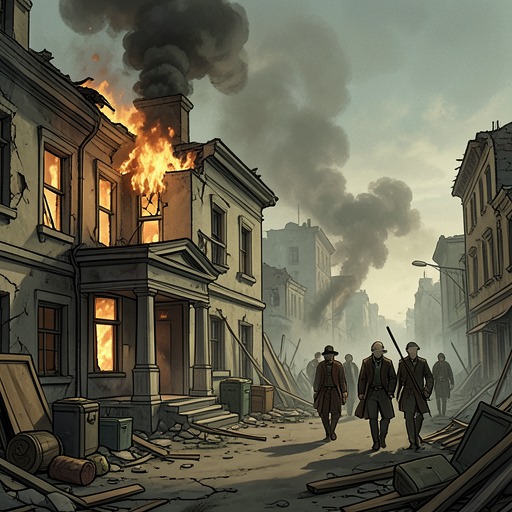
The narrative places the consequences in 1932: these intractable forces brought widespread hardship to the agricultural provinces of old Russia and death by starvation for millions of peasants in Ukraine. Its retrospective discussion of historical turning points lends the crisis a wider frame, but the famine is not treated as an abstract date in a sequence of political decisions. The chain of policy and production failures culminates in mass human suffering.
The warning is sharpened by the scene immediately before this account of the crisis. Nina Kulikova arrives in Ivanovo as fields of young wheat stretch across the landscape; she is overwhelmed by their beauty and by the feeling that her life has just begun. The narration then turns toward the agricultural disaster still to come. That contrast does not identify Ivanovo as the site of the famine described, but it places an individual’s hopeful encounter with the countryside beside a history of mounting hardship in the agricultural regions.
Scarcity in everyday life
Elsewhere, the aftermath of the Revolution is rendered through the diminished larder of The Metropol. Economic decline, failed crops, and halted trade leave refined ingredients scarce in Moscow, and chef Emile Zhukovsky must work with what he can obtain. His improvised saltimbocca replaces veal with chicken, Parma prosciutto with Ukrainian ham, and sage with a more bitter herb. This episode does not itself depict the 1932 famine, but it gives material form to the wider scarcity that follows upheaval and failed harvests: shortages enter daily life through altered ingredients and constrained choices.
The famine’s decisive significance lies in the gap between the promise of increased production and the methods used to pursue it. Industrial expansion depended on rural grain, yet the campaign removed capable farmers, lacked sufficient machinery, encountered resistance and poor weather, and answered falling output with harsher demands. In that progression, the plan’s measurable targets meet the limits of agricultural life—and the cost of refusing to adjust them is counted in starvation.