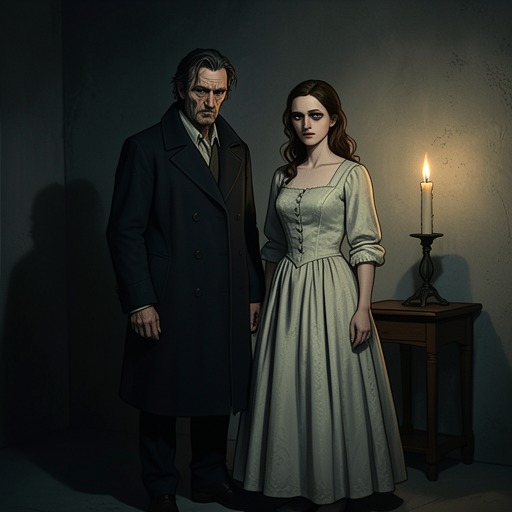
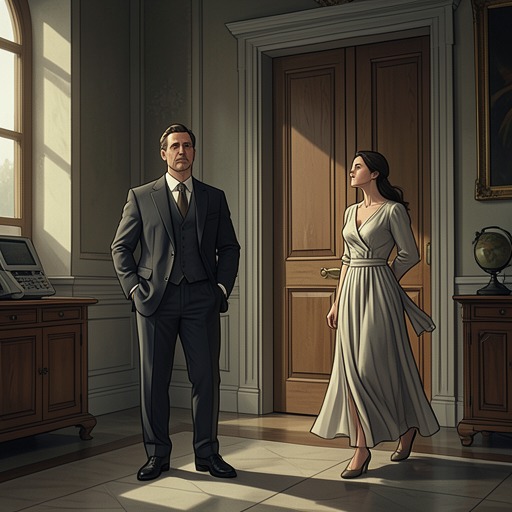
Alexander Rostov and Helena
A Gentleman in MoscowAlexander Rostov and Helena’s sibling relationship is rendered through a quiet, one-sided intimacy: the Count returns to his room and speaks to his sister’s portrait as though sharing the aftermath of his day with a trusted confidante. Her tenderness is conveyed not through dialogue but through the smile the narration attributes to her image, making remembrance feel like a continuing form of companionship.
A Sister Present in the Room
At half past three in the morning, the Count sways upstairs, passes through his closet, empties his pockets onto a bookcase, pours himself brandy, and settles into his chair. Helena’s portrait hangs on the wall, and the narrative describes her looking on with a tender, knowing smile. The details place the siblings’ connection inside an ordinary private routine: after the movement and events of the day, he returns to a room where her image remains.
The scene does not present Helena speaking or acting beyond the portrait’s described expression. Instead, the image gives the Count a focus for reflection. The effect is intimate without making her an active participant in the room: her represented smile registers familiarity, while his attention supplies the exchange.
Confiding and Reflection
The Count admits to Helena that it is late and that he is a little drunk, defending himself on the ground that the day has been eventful. To demonstrate, he rises and points out a button he sewed onto his own jacket. The small act gives his confession a concrete, almost playful detail; he is not merely reporting the day but sharing a modest accomplishment with the sister whose portrait watches over him.
He then reflects that Marina was right and turns to an idea about storytelling. In his account, Death has long been imagined as a visitor who quietly enters a town and eventually finds the unwitting hero. Life, he argues, can be just as stealthy: it can approach indirectly, find a person in hiding, and draw that person into connection. He recalls Mishka being lured from his books and taking a woman’s hand by the Neva, then predicts that Life will also find Nina. These reflections are narrated as confidences shared with Helena, extending their sibling bond into the Count’s effort to make sense of other people’s lives.
The Relationship’s Narrative Form
Helena’s presence in this passage is mediated by the portrait, while the Count’s words create the scene’s side of the exchange. That asymmetry matters: the relationship is not developed through a remembered conversation or a new action between the siblings, but through the Count’s decision to address her and share his thoughts. The portrait’s knowing smile makes the private ritual feel reciprocal, even as the text leaves her response within the image.
The passage therefore presents sibling closeness as something sustained through attention and narration. The Count moves from an anecdote about his day to a broad reflection on Life’s visits to Mishka and Nina, speaking in Helena’s presence as he arranges experience into a story. Their bond appears not as a separate plot event but as a private frame for his reflections, joining everyday gestures, remembrance, and his continuing concern for others.