Alexander Rostov's Escape from the Metropol Hotel
A Gentleman in MoscowAlexander Rostov's Escape from the Metropol Hotel is the decisive break in the Count’s decades-long confinement: when an overlooked map threatens his plan and puts Sofia at risk, he abandons careful preparation for a swift, improvised operation. He uses Nina Kulikova’s passkey and hidden pistols to take control of Bishop Leplevsky’s office, destroys the dossiers the Bishop has kept on hotel staff, and leaves the Bishop locked in a basement room. At midnight, thirty telephones ring throughout the hotel; as the night staff and guests react, Rostov walks out in a journalist’s hat and coat. Viktor Stepanovich Skadovsky’s parallel journey and planted evidence complete the escape’s deception.
The Plan Put at Risk
For six months, Rostov had planned and carried out his preparations with care. That work is suddenly endangered when he realizes that he had failed to burn a map and had instead slipped it into a drawer. The mistake does more than threaten the plan: it makes him fear that his carelessness has put Sofia in danger. The crisis briefly leaves him overwhelmed by fury, disbelief, self-reproach, and fear, but the pause lasts only seconds. He turns immediately from regret to action.
The scene makes the escape hinge on a small, concrete oversight rather than on any failure of nerve. Rostov’s preparations have been painstaking, yet a single map can unravel them. The reversal gives his resolve a practical form: he does not try to repair the mistake from a distance, but follows Bishop Leplevsky down from the attic and into the hotel’s executive offices, where the danger can be confronted directly.
The Bishop’s Office
Still in his stocking feet, Rostov follows the Bishop. He initially takes the belfry stairs, then leaves them at the fifth floor, hurries along the hallway, and descends the main staircase—the same route Sofia had run at thirteen. He reaches the executive offices unseen, only to find the Bishop’s door locked. Nina’s passkey, still in his pocket, gets him inside; he relocks the door behind him.
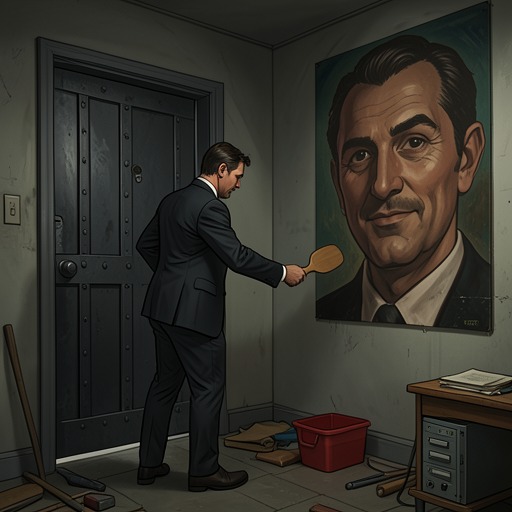
The office has changed since Mr. Halecki’s time: filing cabinets now stand where Halecki’s chaise had been. Rostov counts from the portrait of Karl Marx to find the second panel to the right, presses its center, and opens the concealed compartment. Inside is an inlaid box. He takes out the two pistols, loads them, and waits in the manager’s chair for the Bishop to return. Though he expects to have only seconds, he uses them to steady his breathing and lower his heart rate. By the time the key turns, he has made himself calm enough to meet the Bishop without betraying his alarm.
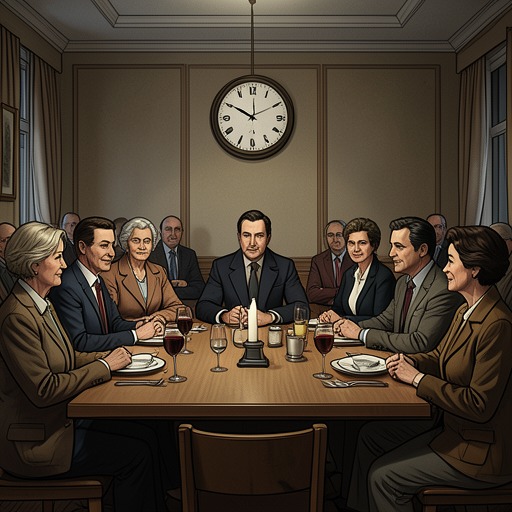
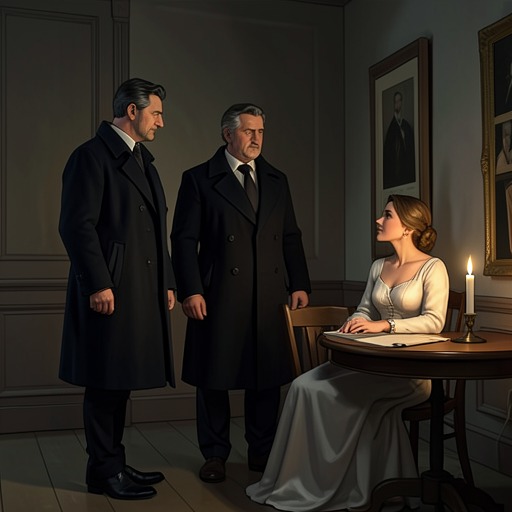
The Bishop enters so surprised to find Rostov behind the desk that he has already swung the door shut before noticing him. Even then, his first response is to insist on the authority of office protocol, ordering the headwaiter to leave. Rostov’s position in the room has reversed their usual balance: the man who has spent years being treated as a subordinate now holds the pistols and controls the encounter.
The Dossiers and the Basement
Rostov takes his bearings from the Bishop’s watch: it is 2:30 in the morning. He reloads one pistol, tucks it through his belt, and points the other at the Bishop. The files he directs the Bishop to carry expose the private machinery of the hotel administration. Some cabinets contain operating reports on revenue, occupancy, staffing, maintenance, inventories, and discrepancies; others contain files on guests and employees, arranged alphabetically.
Among the staff files are records on Arkady, Vasily, Andrey, Emile, and Marina, as well as Rostov’s own. They collect specific instances of tardiness, impertinence, disaffection, drunkenness, sloth, and desire. Rostov recognizes that the accusations need not be invented to be unjust: the failings may be real, but they are only a fraction of what could be recorded about the virtues of the people concerned. His own file is among the thickest. He pulls the files of his friends and his own from the cabinets, places them on the desk, and makes the Bishop carry them away.
Rostov leads him through the empty offices, into an enclosed stairwell, and down two flights below street level. The Bishop, despite his command of the hotel’s minutiae, has apparently never been in the basement. At Rostov’s direction and under the pressure of the gun, he enters the boiler room and feeds the dossiers into the furnace through its small door. The destruction is literal: records that reduce the staff to their faults are turned into fuel, and the Bishop is made to perform the act himself.
The next stop is a bright blue door. Rostov opens it with Nina’s key and orders the Bishop inside. He tells him he will not return. The Bishop protests that it might take weeks for anyone to find him, but Rostov points out that the Bishop attends the daily meeting of the Boyarsky and that a ballroom banquet is scheduled for Tuesday night. The promise of an eventual discovery is also a sentence of confinement: Rostov closes the door and locks him in the room where pomp bides its time.
The Midnight Distraction
Rostov’s exit depends on a diversion prepared in advance. When he reaches the lobby with a rucksack on his shoulder, he sits between the potted palms and waits without fidgeting, pacing, reading the evening edition, or checking the time on the Bishop’s watch. What he expected to be an anxious wait instead feels peaceful. He watches hotel guests come and go, sees the elevator doors open and close, and hears music and laughter from the Shalyapin Bar.
Almost exactly at midnight, the instructions he has written to Richard Vanderwhile take effect. Thirty telephones begin ringing at once: those at the main desk, by the elevator, at Vasily’s desk and the bell captain’s station, as well as phones in the Piazza, the coffeehouse, the executive offices, and on the Bishop’s desk. The sudden, simultaneous sound unsettles everyone. The limited night crew runs from phone to phone but cannot bring itself to answer any of them. Guests from the Shalyapin spill into the lobby, while people awakened upstairs come down the stairs.
Rostov moves through that confusion quietly. He puts on the journalist’s hat and coat, shoulders his rucksack, and walks out of the Metropol Hotel. The scale of the diversion matters: a single ringing telephone prompts an immediate response, but thirty at once make the staff stop and stare. The hotel’s own network of calls, desks, and procedures becomes the cover for a departure its ordinary routines might otherwise have noticed.
Skadovsky’s Part and the Escape’s Meaning
The escape also depends on Viktor Stepanovich Skadovsky. After bidding Rostov goodbye, Skadovsky boards the Helsinki-bound train wearing the journalist’s hat and coat and carrying the Baedeker. At Vyborg, he removes the maps and leaves the guide, along with the other items, on a counter in the station washroom; he then returns to Moscow on the next train empty-handed. The account identifies him as the person who left the damning evidence in the Vyborg terminal washroom. His journey gives the disguise and travel materials a trail separate from Rostov’s quiet exit.
Rostov’s escape is therefore both a physical departure and a carefully staged misdirection. It brings together a hidden compartment, a passkey retained in a pocket, a cache of pistols, a compromised plan, and a mass of ringing telephones. Just as important, it turns the Bishop’s system of surveillance against itself: the files are burned, their keeper is confined, and the staff and guests are drawn into a commotion that masks the Count’s departure. The escape’s final image is not a public confrontation or a triumphal announcement, but Rostov slipping out of the hotel while everyone else is occupied by the ringing.