Borzois
A Gentleman in MoscowThe Borzois are a pair of silver-coated hunting dogs whose sudden appearance at the Metropol turns the lobby into a miniature field of pursuit. Their episode begins in spectacle and slapstick, but the dogs are not merely decorative accessories: the narrative gives them alert senses, a strong response to unfamiliar surroundings, and a brief life of their own beyond the human relationships that brought them there. Later, their calm familiarity with Count Alexander Ilyich Rostov and their indifference to a dinner scene sharpen the contrast between animal habit and human disappointment.
Arrival at the Metropol
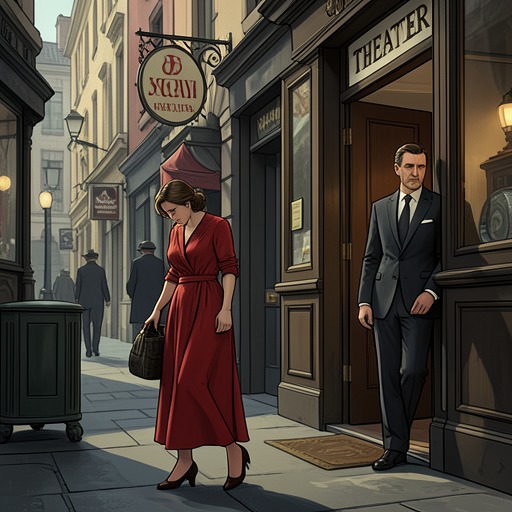
The dogs enter with a striking woman in her midtwenties, tall and auburn-haired, with arched eyebrows and feathers projecting from her hat. As she approaches the front desk, bellhops drag her luggage behind her and the lobby’s attention gathers around her; the two dogs on leashes make her entrance impossible to overlook. Their silver coats, lean loins, and alert senses distinguish them from the bustle around them. The description imagines the lives for which they were bred: giving chase in the cold October air with a hunting party, then resting at their master’s feet before a fire in a manor house. The grand hotel is a very different setting, and the dogs behave as though they recognize the mismatch. While their mistress speaks to Arkady at the desk, they pull in different directions and sniff for familiar landmarks.
Their mistress’s command to stop them is followed by a yank that reveals her lack of familiarity with the animals. The contrast is pointed but remains concrete: she is confidently at the center of the lobby’s attention, yet the dogs do not respond as manageable ornaments. Their independent interest in their surroundings quickly overtakes her attempt to control the encounter.
The chase through the lobby
The dogs’ attention fixes on Kutuzov, the one-eyed cat. The cat first takes refuge behind a wingback chair, then climbs a potted palm to observe his opponents from above. Once satisfied that the dogs are tethered, he drops to the floor and hisses without arching his back. The dogs answer with a volley of barking and leap to the ends of their leashes, pulling their mistress away from the desk until the ledger pen clatters to the floor. They then break free and scramble after the cat.
The pursuit turns the lobby’s formal furnishings into obstacles. Kutuzov darts beneath the western row of chairs toward the front door, and the dogs split around the potted palms in an attempt to cut him off. One knocks a lamp to the floor, scattering sparks; the other sends a standing ashtray tumbling and raising a cloud of dust. The dogs are energetic and purposeful, but the cat knows the ground. Just as they close in, Kutuzov reverses direction, cuts in front of a coffee table, and races beneath the eastern row of chairs toward the staircase.
The change of surface defeats the dogs’ momentum. They recognize the reversal and try to turn, but the oriental carpet ends and their paws skid across the marble floor into an arriving guest’s luggage. The scene gives them a tactical role in the comedy: their speed and coordinated pursuit are real, yet the unfamiliar lobby and Kutuzov’s knowledge of its hiding places put them at a disadvantage. The chase also briefly interrupts the hotel’s orderly public space with barking, fallen objects, dust, and scattered luggage.
Familiarity and daily life
Later, the dogs appear at the sound of Count Alexander Ilyich Rostov’s voice, their nails clacking lightly on the floor as they emerge from the drawing room. He greets them and scratches behind their ears. The gesture makes their relationship to him feel easy and habitual, unlike the strained handling at their arrival. After paying their respects, they trot to the windows overlooking Theatre Square and rest their forepaws on the sills to watch the cars below. Their attention has shifted from a cat and a chase to the movement outside, but they remain active observers of their environment.
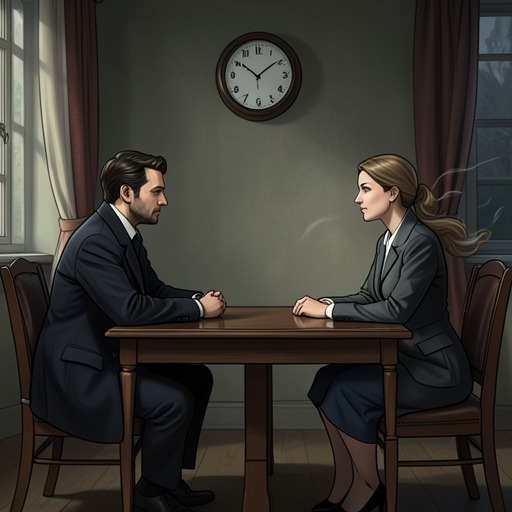
At another point, the Count pulls back a chair for his hostess and sits opposite her across a candle. The dogs look back from the windows, then lose interest in the human scene. They drop to the floor and return to the drawing room without a second glance. Their withdrawal is a small but revealing action: the gathering that matters to the people at the table does not hold the dogs’ attention. The actress watches them go wistfully, a response that draws attention to the distance between her own feelings and the animals’ untroubled departure.
Gift and significance
The actress admits that she is not a dog lover. Asked why she has the dogs, she explains that they were a gift; the Count reads the gift as coming from an admirer, and her wry response suggests that she would have preferred a necklace. The exchange recasts the pair from magnificent hunting animals into evidence of a human gesture that has missed its mark. Their mistress’s disappointment is expressed through the contrast between the gift she received and the gift she would have chosen, not through any change in the dogs themselves.
Later, when the Count asks after them while sharing vodka with the actress, she answers that the dogs are better off than she is. He raises his glass to them, and she joins the toast. The dogs’ fortunes become a compact measure of her own discontent: their welfare can be acknowledged even as their owner feels worse off. Across these scenes, the Borzois remain sharply physical presences—pulling at leashes, barking, skidding, watching from windows, and padding into a room—while the humans attach gifts, status, and disappointment to them. Their brief independence from human conversation is part of their significance: they belong to a world of movement and immediate attention that the people around them can admire, but cannot simply inhabit.