Exile within one's homeland
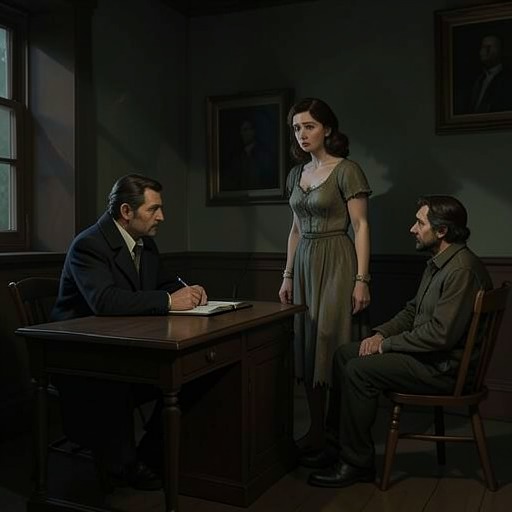
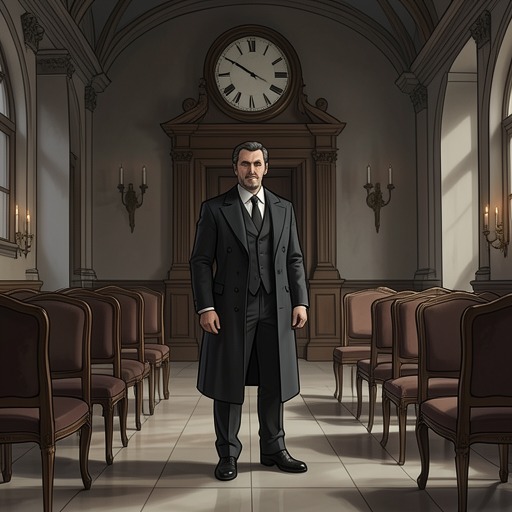
A Gentleman in MoscowExile within one’s homeland describes a condition in which a person remains inside the country but is denied meaningful access to the places and life that make it home. The novel sets this idea against ordinary exile abroad: leaving one’s country may allow a person to begin again, whereas being confined within it keeps home visible and just out of reach. Through Count Alexander Ilyich Rostov’s house arrest at the Metropol, the concept becomes both a history of political punishment and a daily experience of measured time, restricted movement, and persistent attachment.
Definition and Historical Background
On the Metropol’s roof, looking out at a city that was both his and no longer his, Rostov considers exile an old human punishment. In his account, the Russian innovation was not exile itself but the practice of banishing a person without sending him out of Russia. From the eighteenth century, the Tsars sent political enemies to Siberia rather than expelling them abroad. Exile in another country might permit work, a home, a family, and the beginnings of a new life; exile within Russia denied that break while preserving the exiled person’s attachment to the country.
The distinction applies both to Siberian banishment and to the Minus Six restriction. Their forms differ, but each places limits on where someone may live while keeping that person within the national territory. The result, in Rostov’s reflection, is not simply a smaller map. Because the beloved country remains near enough to imagine but beyond the exile’s reach, its attractions may occupy the mind more powerfully than they do for a free person who can enjoy them.
Confinement and the Experience of Time
Rostov’s hotel confinement gives the idea a domestic, intimate scale. On June 21, 1923, he hesitates over whether to wear his plain gray blazer for his weekly visit to the barbershop and his meeting with Mishka at Shalyapin. The date marks one year since he last set foot outside the Metropol. His arrest is a definite infringement on liberty, and the possibility that it is also meant to humiliate him makes celebrating the anniversary feel like a choice between pride and common sense.
Yet the anniversary matters precisely because confinement makes time difficult to distinguish. Rostov considers how prisoners and people lost at sea keep count of passing years, sometimes cutting 365 notches into wood or scratching them into a cell wall. Outside, seasons and recurring festivities divide the year; under confinement, those patterns give way to indistinguishable days. Marking the year restores a measure of order, but it also records the duration of the restriction.
The roof scene turns this private accounting into a spatial image. After drinking, Rostov crosses the roof as the building shifts beneath him, steadies himself by a chimney, and looks toward the Boulevard and Garden Rings. Their circles lead his eye to the Kremlin and then outward to the rest of Russia. The capital is legible from above, yet legibility does not amount to freedom: the city lies before him while remaining inaccessible as a place in which he can live freely.
Movement, Documents, and Surveillance
The novel also shows how exile and escape are shaped by control over movement. To leave the Metropol, Rostov needs a foreign passport, but stealing one too early could prompt a hotel manager to alert the authorities, lead to interviews with staff, bring searches of rooms, or result in guards at railway stations. The theft therefore has to happen at the last possible moment. After a Stockholm salesman checks out and an Oslo journalist is recalled, two Finns arrive with only a day to spare; Rostov still faces the problem of obtaining the gentleman’s passport from a suite while its occupants are present.
The later investigation reconstructs the escape through the objects and checkpoints that make movement visible to the state. A Finnish passport and currency have been stolen from a Finnish guest, followed by a raincoat and hat taken from an American journalist. Investigators learn that a man wearing the latter disguise boarded an overnight train toward Helsinki. The hat and coat turn up at Vyborg, along with a Finland guide whose maps have been removed. Because the railway crossing is tightly guarded, officials infer that Rostov left the train there and tried to cross the border on foot. His plan depends on a passport and a route, but the same objects and stations allow authorities to track him; he may nevertheless have slipped past them.
Sofia’s departure from the Salle Pleyel offers a contrasting image of constrained movement. At the end of a performance, she leaves by the rear exit and goes barefoot into the night, carrying a pack and wearing a cap. Her movement is not the same as Rostov’s enforced life inside the Metropol, but the contrast clarifies how much a journey depends on concealment, timing, and a viable route. In this story, movement is never merely a matter of distance: it is conditioned by the possibility of being recognized, stopped, or reported.
Significance
Exile at home holds together two opposing facts: a person remains inside the homeland, yet is separated from its ordinary freedoms. Rostov’s view of Moscow makes that separation visible, while his attention to anniversaries makes it measurable. The national territory becomes both the boundary enclosing the exile and the object of attachment that confinement intensifies.
The concept also links private restriction to larger systems of administration and surveillance. A house arrest is experienced in days counted at the Metropol; an attempted escape is reconstructed from stolen papers, clothing, railway movements, and a guide with its maps removed. The contrast between the year Rostov cannot leave the hotel and the dangerous route by which he tries to cross a border shows the reach of the same underlying problem: who may move, where, and under what scrutiny. Exile within one’s homeland is therefore not simply the absence of travel. It is the enforced nearness of home without the freedom to inhabit it.