Finland Baedeker guide
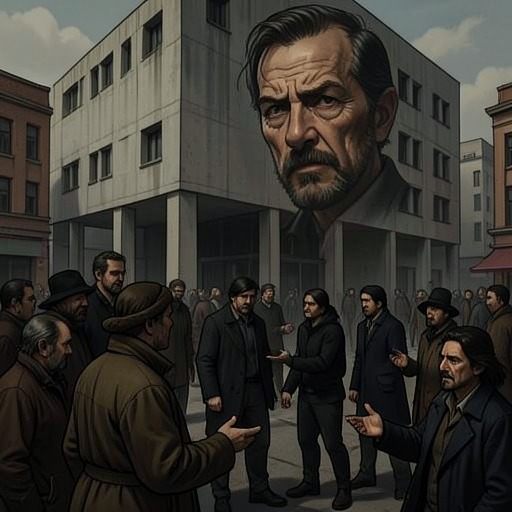
A Gentleman in MoscowThe Finland Baedeker guide is more than a book of travel information: in the escape plans of Count Alexander Ilyich Rostov, it becomes a container for stolen documents, a source for Sofia’s route through Paris, and a clue that exposes his movements. Its journey from a basement shelf to a railway washroom makes the material object part of the plot’s practical machinery, while its maps point beyond the hotel confinement that shapes both escapes.
Acquisition and Intended Use
The Count’s plan depends on obtaining a Finnish passport and currency, but taking them creates a risk of discovery. He expects a foreign guest to report the theft, potentially bringing interviews with hotel staff, searches of rooms, and guards at railway stations. For that reason, the theft must happen at the last possible moment, and the passport cannot simply be collected from an unattended suite: its owner is likely to carry it. The book belongs to this larger effort to turn limited time and access into a viable route out.
The opportunity is uncertain until two Finns arrive at the Boyarsky with only a day to spare. The Count’s difficulty is not merely finding the right nationality among the hotel guests; he must reach the Finns’ suite while they are still there. The guide serves a different but complementary part of the plan. It is not itself taken from the Finnish visitors: in the basement, the Count directs Bishop Leplevsky to retrieve a small red book from the lower shelf of the cabinet of curiosities, and the Bishop hands him the Finland Baedeker guide. The distinction matters: the passport and money are stolen from a guest, while the guide comes from the hotel’s collection of abandoned books.
A Book Made into an Escape Tool
At three in the morning, after his narrow escape through the hotel, the Count enters the lobby-floor belfry and puts the stolen Finnish passport and marks inside the Baedeker. The guide thus becomes a hiding place for the items most likely to expose his intended destination. Its use is practical rather than decorative: the documents and the travel book can be carried together as he attempts to leave the country.
The same guide also supplies Sofia with a map cut down and folded to the size of a matchbook. After changing her appearance at the Salle Pleyel, Sofia leaves through the rear of the building barefoot, carrying a knapsack. She uses the small map to orient herself and follow the Count’s red line toward the American Embassy in Paris. The route runs from the concert hall along the Avenue Hoche, past the Arc de Triomphe, and on toward the Place de la Concorde. Rather than sending her along the shortest route, the Count has chosen a detour that should move her away from the concert hall quickly and let her disappear into the anonymity of the Champs-Élysées. The guide’s map therefore carries not just geography but a carefully considered escape strategy.
Traces, Discovery, and Consequence
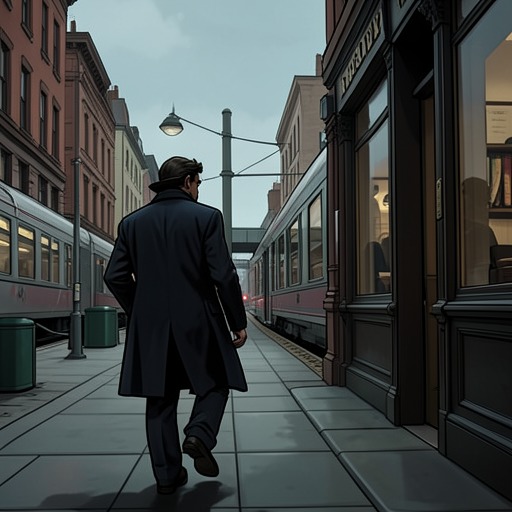
The guide’s usefulness leaves a telltale absence. In the account assembled by hotel investigators, a Finnish passport and currency disappear first; a raincoat and hat belonging to an American journalist are taken the following night. A man wearing the journalist’s clothing is reported boarding the overnight train to Helsinki. At Vyborg, the hat and coat are found in a washroom with a Finland travel guide whose maps have been removed. Investigators infer that Rostov left the train there and tried to cross the border on foot, where security at the crossing made travel by train more difficult.
The book also supplies the missing link between the thefts and Rostov. When Bishop Leplevsky is taken to the basement, he has seen Rostov retrieve the Finnish guide from the abandoned books. That observation gives investigators a connection between the guide and the stolen Finnish passport, and officers are dispatched to the station. The guide’s presence in the washroom, its missing maps, and the Bishop’s account turn a modest hotel object into evidence of a plan that would otherwise be harder to trace. It does not establish that the Count has been caught; the report acknowledges that he may already have slipped through the authorities’ grasp.
Confinement and the Work of Maps
The guide’s significance rests on the difference between being exiled abroad and being confined within one’s own country. The Count reflects that Russian punishments can exile a person at home, leaving the country’s attractions close enough to remain vivid but beyond reach. Against this condition, the Baedeker offers specific routes outward: first, the Count’s attempted passage toward Finland; separately, Sofia’s mapped passage from a concert hall toward diplomatic refuge. A map cannot itself open a border or remove the danger of surveillance, but it makes movement imaginable as a sequence of decisions, streets, and thresholds.
The object also joins the two plans without making their circumstances identical. The Count hides his passport and money in the guide as he tries to escape the hotel and cross a guarded frontier. Sofia carries a small map cut from a Baedeker as she leaves the performance unnoticed and follows a route designed to buy her time. In both cases, a book associated with travel becomes a compact instrument for acting under constraint. Its missing maps and concealed contents register the risk of movement; its surviving directions help turn that risk into a route.