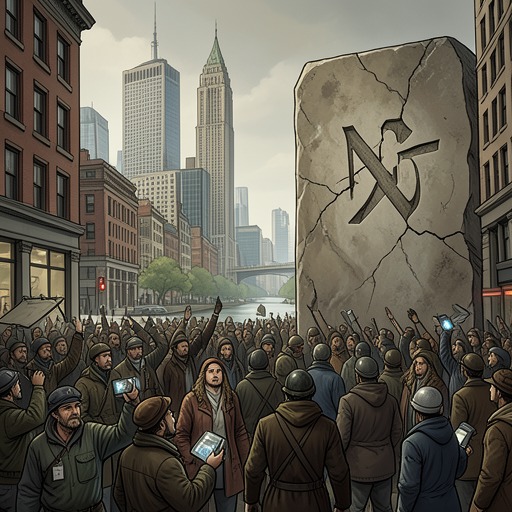
German Invasion of the Soviet Union in 1941
A Gentleman in MoscowThe German Invasion of the Soviet Union in 1941 brought more than three million German soldiers across the frontier and carried the Wehrmacht to the outskirts of Moscow. In the novel, the offensive is recalled against a view of the capital’s surviving landmarks: the approaching threat gives new weight to the city’s endurance, while the account of evacuation plans and defiance makes clear that Moscow’s survival was never assured.
The offensive and advance on Moscow
Five years after the invasion began, a lone figure pauses in Theatre Square and looks from the Palace of Unions to the Bolshoi Theatre, the Maly Theatre, and the Metropol Hotel, wondering at how many old facades remain unspoiled. The narration then turns back to the day the Germans launched their offensive, which sent more than three million soldiers across the Russian frontier, from Odessa to the Baltic.
Hitler estimated that the Wehrmacht would secure Moscow within four months. After taking Minsk, Kiev, and Smolensk, German forces had advanced nearly six hundred miles by late October. They were closing on Moscow from the north and south in a pincer movement, and within days the city would be within artillery range. The account sets the speed and scale of the advance against the capital’s increasingly precarious position.
A capital preparing for defeat
As the Germans approached, lawlessness spread through Moscow. Refugees and deserters crowded the streets, sleeping in makeshift encampments and cooking looted food over open fires. The government was preparing to move to Kuybyshev, and the city’s sixteen bridges had been mined for possible demolition. Within the Kremlin walls, classified files were burned; outside them, municipal and factory workers, unpaid for months, watched the fortress’s usually illuminated windows go dark one by one.
These preparations make the danger tangible: evacuation was under way, key routes could be destroyed, and even the Kremlin’s familiar lights were disappearing. The threatened loss of Moscow is also measured against the figure’s later walk through Theatre Square, where the old buildings still stand. The contrast does not erase the crisis; it shows what the city had risked losing.
Defiance underground and on Red Square
On the night of October 30, while the Germans were closing in, laborers carried chairs from the Bolshoi Theatre to Mayakovsky Metro Station. Later that night, the full Politburo assembled on the station platform, a hundred feet below ground, and sat at a long table set with food and wine. Stalin arrived by train in full military dress and told the leadership that, although its members could leave for Kuybyshev, he intended to remain in Moscow. He also announced that the annual Revolution commemoration would proceed on Red Square on November 7.
The underground meeting and the announced parade turn political resolve into action. For many Muscovites, hearing The Internationale accompanied by fifty thousand marching boots, with Stalin standing on the rostrum, became a turning point that strengthened confidence and resolve. The narration also complicates any single explanation for that change: it notes that seven hundred thousand soldiers held in reserve in the Far East were being moved toward Moscow even as the celebration took place.
The retreat and the event’s remembered meaning
The account offers further material factors behind the German failure to take the city. Snow fell on twenty-eight of December’s thirty-one days, grounding the Luftwaffe, while the average temperature dropped to minus twenty degrees, a climate as alien to the Wehrmacht as it had been to Napoleon’s forces. Whatever the balance among military reserves, weather, and Soviet resistance, the Germans never passed through Moscow’s gates.
After taking more than one million prisoners and causing one million deaths, German forces began their retreat in January 1942, leaving the city surprisingly intact. The recollection of the invasion thus carries two scales of meaning: the immense cost of the German advance and the fact that the capital, despite preparations for its possible evacuation and destruction, remained beyond the invader’s reach.