Goslitizdat
A Gentleman in MoscowGoslitizdat, the State Publishing House for Fiction, is presented as both a center of literary scholarship and a point where editorial authority could reach into a text and its editor’s life. Mikhail Mindich had spent years preparing Anton Chekhov’s collected letters for publication; when a dispute over a single word brought him into open conflict with senior editor Viktor Shalamov, the publisher’s offices became the setting for a protest whose consequences extended far beyond the book.
Editorial Work and the Chekhov Letters
Mindich’s connection to Goslitizdat grew from an assignment proposed by Shalamov, an acquaintance from their university days who had become the publisher’s senior editor. Shalamov asked Mindich to edit forthcoming volumes of Chekhov’s collected letters, a project Mindich had been working on since 1934. The work was nearly complete: the galleys were ready, and Mindich believed they were on their way to the printer.
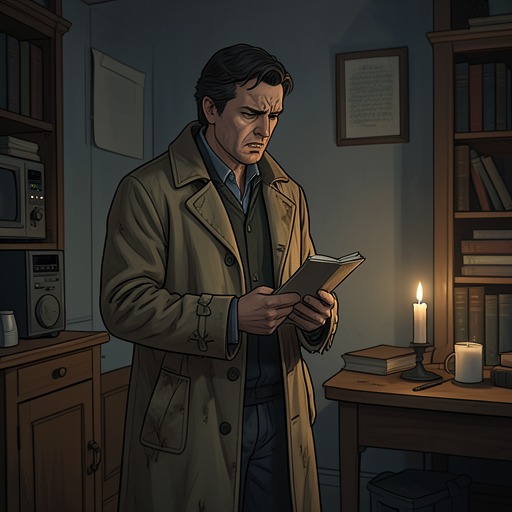
Shalamov summoned him back to the office shortly before one o’clock, ostensibly as part of a celebratory lunch. Instead of taking him to the Central House of Writers, Shalamov congratulated him in the publisher’s reception room and then brought him into his office. There, he revealed that the galleys had not gone to the printer at all; they were still on his desk. He praised the edition’s nuance and scholarship but insisted that one matter had to be addressed before printing: an elision in Chekhov’s letter of 6 June 1904.
The letter was a bittersweet message to Chekhov’s sister, Maria, in which he predicted a full recovery only weeks before his death. Mindich knew it well. The proposed correction was framed as the repair of a word accidentally lost in typesetting, but the narrative does not disclose which word Shalamov wanted removed. That withheld detail keeps the dispute focused on the editorial demand and its consequences rather than on a conjecture about the letter’s exact wording.
The Protest at the Publisher
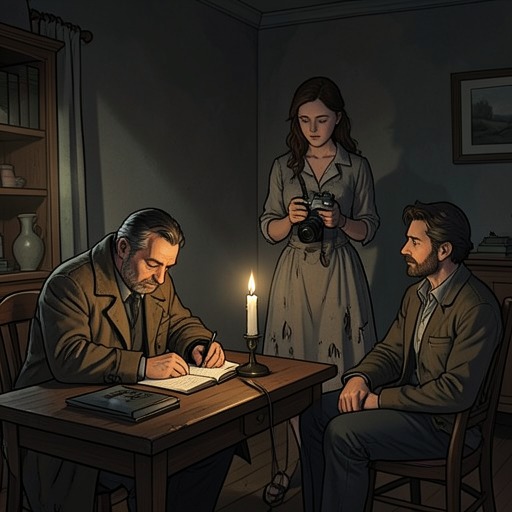
Mindich’s response turned the publisher’s editorial setting into a public confrontation. He went to Goslitizdat’s offices, climbed the stairs, passed the receptionist, and opened doors until he found Shalamov presiding over an editorial meeting. Young junior and assistant editors were gathered around a table laid with cheese, figs, and cured herring. Their presence, and the meeting’s ordinary institutional setting, sharpened the contrast with Mindich’s anger.
He challenged the editors over what they were prepared to cut, invoking the possibility of mutilating a major work of literature. Shalamov addressed him formally as Mikhail Fyodorovich, but Mindich continued the confrontation and ended with the shouted prediction that haiku was the future of Russian poetry. He slammed the conference-room door, then every door between himself and the street. The sequence makes the doors more than a route through the building: each one becomes part of a deliberately emphatic exit from the editorial authority he had just challenged.
Repercussions and Significance
The consequences followed quickly. Within a day, the gist of Mindich’s comments had reached the authorities; within a week, they had been recorded word for word. In August, he was summoned for questioning at the NKVD offices in Leningrad. In November, he was brought before an extrajudicial troika, and in March 1939 he was on a train bound for Siberia.
Goslitizdat’s role in this episode is therefore more than that of a workplace or a publisher preparing a scholarly edition. It is where the practical decisions of literary production—the handling of galleys and the demand to alter a text—meet a broader system capable of turning an editor’s protest into a record for the authorities. The Chekhov project began as years of meticulous editorial labor; its final approach to print instead exposed the risks of challenging the terms on which literature could be published.