KGB
A Gentleman in MoscowThe KGB is depicted through the reach of its surveillance: its representatives accompany Soviet cultural travel abroad, while its officers investigate a disappearance at the Metropol Hotel and pursue a suspected escape across the Finnish border. The novel does not offer an institutional history or a full account of the organization’s structure. Instead, it shows how its presence reaches from the monitored itinerary of a young musician to searches, questioning, and the reconstruction of a fugitive’s movements.
Identity and Scope
The KGB’s role is conveyed through specific acts rather than explanation. In Paris, three chaperones employed by the KGB are included among the authorities watching Sofia’s group of young musicians. They travel within an official entourage that also includes two members of the Conservatory staff, two VOKS representatives, and a cultural attaché. The arrangement makes surveillance part of the tour’s ordinary organization: the musicians’ travel and stay are overseen by a group that includes both cultural officials and security personnel.
The evidence does not specify the chaperones’ individual actions, or show them intervening in Sofia’s decision to leave. Their presence nevertheless defines the conditions around her trip. The concert tour is not simply movement from one city to another; it is movement under observation. The KGB thus appears both as an organization with officials assigned to accompany cultural activity abroad and, later, as the force investigating the disappearance of Sofia and the man who raised her.
Surveillance and the Paris Tour
Count Alexander Ilyich Rostov imagines Sofia’s arrival at the Gare du Nord, her transfer to a hotel, and the period before the musicians’ concert. In this imagined itinerary, he explicitly includes the KGB-employed chaperones among those who will watch over the young performers. Their presence is part of the future he mentally constructs for his daughter, not a scene in which the novel shows them questioning her or discovering her plan.
That distinction matters. The passage establishes the pressure of observation without claiming that the chaperones know what Sofia intends. It also places cultural exchange and security supervision side by side: the tour is enabled by official institutions, but it is not presented as private or unmonitored. When Sofia ultimately leaves the concert hall, the KGB’s presence belongs to the surrounding risk of the journey, while the concrete route away from the venue has been planned by her father.
The Search at the Metropol Hotel
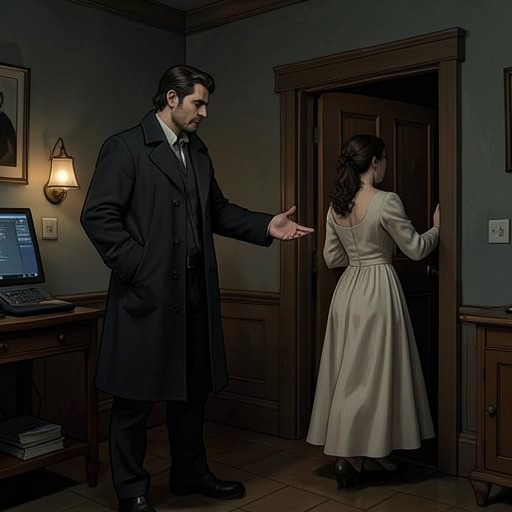
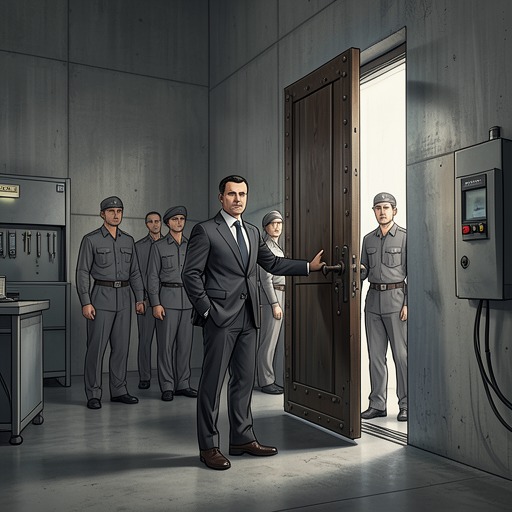
After Rostov has disappeared, the KGB’s investigation proceeds through a widening search of the hotel. At half past eleven the following morning, two officers arrive to question him on an undisclosed matter. They find no sign of him in his sixth-floor room, the barbershop, the Piazza, or the lobby. They then question close associates, including Chef Zhukovsky and Maître d’ Duras, none of whom admits to having seen Rostov since the previous night.
The search expands in stages. At one o’clock two additional KGB men are summoned for a more thorough examination of the premises. At two, the senior officer questions Vasily, the concierge, at his lobby desk. The sequence shows the investigation using the hotel’s ordinary network of rooms, public spaces, and employees: first checking familiar places, then seeking information from the people who work and move through them.
A later report places Sofia within the inquiry as well. Her given name, residence at the Metropol Hotel, and upbringing by Rostov are recorded, alongside uncertainty about her paternity. The officers report that Rostov cannot be found and that an initial search has failed. A second, more thorough search discovers the hotel manager locked in a basement storeroom. The investigation therefore gathers both personal information and physical circumstances, but the account does not say that the KGB has yet established why Sofia and Rostov are missing.
Reconstructing the Escape
The KGB report links the disappearances to a sequence of thefts. Two nights earlier, a Finnish guest’s passport and currency were stolen; the previous night, an American journalist’s raincoat and hat were taken. Investigators then receive confirmation from Leningradsky Railway Station that a man wearing the journalist’s clothing boarded the overnight train to Helsinki.
The trail continues at Vyborg, where the hat and coat are found in a washroom at the Russian terminus. A Finland travel guide is recovered with its maps removed. From these details, the officers infer that Rostov got off at Vyborg and crossed the border on foot, avoiding the tightly secured railway crossing. Local security is alerted, although the report acknowledges that he may already have escaped their reach. The investigation converts clothing, travel documents, a train sighting, and a discarded guide into a proposed route; its conclusion is a reasoned reconstruction, not confirmation that the authorities have caught him.
The officers also connect Rostov with violence and access. They report that he possessed antique dueling pistols, had shot a portrait of Stalin in the manager’s office, and had the will to use the weapons. Asked how the Finnish passport was connected to him, the lieutenant identifies Leplevsky. The report thus points to information supplied from within the hotel’s authority structure as one link in the investigation, without explaining the full basis of that connection.
Narrative Significance
The KGB’s appearances form a contrast between routine oversight and urgent pursuit. On Sofia’s tour, its personnel are embedded in an official travelling party; after her disappearance, officers search the hotel, question its staff, and assemble a border-crossing theory from scattered evidence. In both settings, movement is made administratively visible through escorts, records, interviews, and checkpoints.
That visibility also throws the fugitives’ practical choices into relief. Sofia leaves the concert hall by its rear exit and follows a deliberately indirect route toward the American Embassy, while the investigators later infer that Rostov abandoned the train at Vyborg to cross on foot. The KGB’s part in the story is not an all-knowing power: its officers work from partial information, reach conclusions from clues, and acknowledge that a suspect may have slipped away. Its significance lies in the pressure its surveillance and search place on the characters’ movements—and in the race between making a person legible to the authorities and disappearing before that account is complete.