Katerina Litvinova
A Gentleman in MoscowKaterina Litvinova is a poet whose brief introduction in the 1920s opens into one of the book’s most enduring love stories: her relationship with Mishka, its separation, and their later reunion in Yavas. Years afterward, she returns to the Count not to revive the past but to carry out Mishka’s request, bringing a small handmade copy of Bread and Salt and asking the Count to remember the man they both loved.
Identity and Introduction
When the Count first hears her name, Mishka identifies Katerina as a talented young poet from Kyiv, in her second year at university, and a fellow member of a committee. The description gives her an independent public identity before she becomes known through the romance: she is not simply an object of Mishka’s interest, but a young writer and participant in intellectual life. The Count’s reaction changes as the details assemble. Mishka’s new jacket and carefully groomed beard, together with the story of the evening, make the friend’s courtship apparent to him.
The circumstances of their first encounter are both social and carefully staged. Zelinsky has brought the group to a favored nightspot, seated the impressionable young poet at one end of the table and Mishka at the other, and drawn them into the same gathering. When the party breaks up and Zelinsky returns inside for his forgotten hat, Katerina calls from her cab and invites Mishka to ride with her. That small intervention changes the evening’s arrangement: Mishka, who had been left waiting while the others prepared to depart, is chosen by her. The Count takes pleasure in hearing the story, but the pleasure is mixed with envy. He recognizes not only that his friend has begun a romance, but that Mishka is now entering a kind of lively social world from which the confined Count is excluded.
Love and Separation
After the 1923 congress of the Russian Association of Proletarian Writers, Mishka’s interest becomes an attachment he tries to contain by retreating behind books in the old Imperial Library in Saint Petersburg. The Count, who had been an accomplished marksman, later thinks of his ability to detect Mishka’s feelings as an unusually precise shot: Katerina’s beauty, tenderness, and kindness have become impossible for his friend to ignore. Mishka describes her to the Count as “She’s a firefly, Sasha. A pinwheel.” The images convey his wonder, but the story gives that wonder a concrete setting rather than leaving it as romantic praise.
One autumn afternoon Katerina comes to Mishka’s alcove seeking a confidant. They talk in whispers for an hour, until the closing bell sends them out of the library. Their conversation continues along Nevsky Prospekt, and they walk as far as Tikhvin Cemetery, to a place overlooking the Neva River. There Katerina takes Mishka’s hand. The relationship begins not with a declaration reported at length, but with the decisive gesture that follows an extended conversation and a shared walk. The later importance of this route comes from its recurrence: it becomes a path Mishka will walk again after the relationship has ended.
Katerina and Mishka move to Kyiv together. Four years after that move, she leaves him for another man. Mishka returns to Saint Petersburg and once again takes refuge behind his books; by the time of his later walk, he has been back for six months. The separation is not presented as a passing disappointment that he simply outgrows. In the Count’s understanding, Mishka continues to pine for Katerina, and the old route becomes inseparable from the loss. At four in the morning, unable to sleep, he follows the path they had walked on the day she first took his hand. As dawn rises over Nevsky Prospekt, the remembered promise to shine everywhere and always becomes bound to the history of their love. The Count understands that Mishka will carry the pain with him for the rest of his life.
Reunion and Final Errand
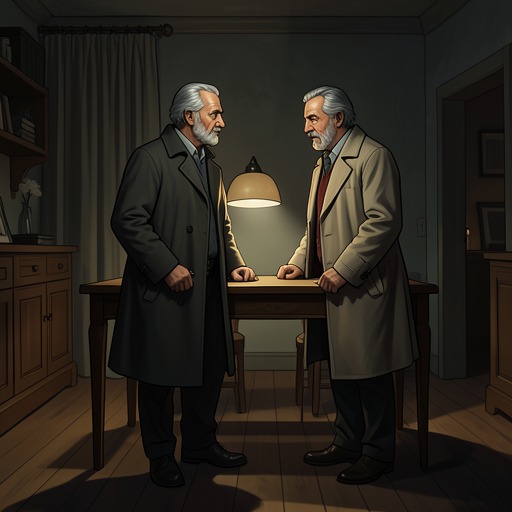
Katerina reappears many years later, after waiting to speak privately with the Count. She emerges from the shadows in the hotel corridor carrying a satchel; the Count sends the others on ahead so that she can talk to him alone. Her bearing seems severe, and the narration associates that severity with someone who makes no half measures in matters of the heart. The Count recognizes her as Mishka’s former companion from the 1920s, the poet he had known through his friend’s stories.
Katerina tells the Count that she has lost her husband and has no children. She also explains that she received word from Mikhail in January, went to him in Yavas, and had been with him for the last six months. These details make the reunion more than a return to an old romance: after years apart, she answered his message and shared his final period of life. When she says that Mishka spoke of the Count often, the Count calls him a loyal friend. Katerina corrects the description, calling him a man of devotions. Her correction enlarges the meaning of their relationship. Mishka’s attachment was not merely remembered fondly; devotion was a defining quality of the man she knew.
Katerina says that she has come at Mikhail’s request and produces a rectangular parcel wrapped in plain brown paper and tied with twine. When the Count asks whether there is anything he can do for her, she asks him to remember Mishka. She then leaves. The Count returns to his chair and opens the package: it contains a small leather-bound volume titled Bread and Salt. Its roughly cut pages and loose threads show that the binding was made by a devoted amateur. Katerina’s errand thus joins a personal appeal to a physical legacy. The book is not presented as a polished artifact; its handmade imperfections preserve the labor and care invested in it.
Narrative Significance
Katerina’s story is told largely through its effects on Mishka and the Count, but she is not reduced to a remembered image. She is a university student, poet, committee member, the person who initiates the ride from the nightspot, the confidante who takes Mishka’s hand, the partner who later leaves him, and the woman who chooses to go to him when she learns where he is. At the end, she acts on his request and speaks for the importance of remembrance. These distinct actions resist treating her only as the cause of a man’s longing.
The repeated walk on Nevsky Prospekt gives the relationship a structure of return without undoing its ending. The first journey leads from the library to the moment Katerina takes Mishka’s hand; the later one retraces the same route after she has left him. Its meaning changes with the walker’s circumstances, turning a shared beginning into an encounter with absence. Katerina’s final visit supplies a different kind of return: she comes not to restore the relationship, but to deliver its surviving object and insist that Mishka remain present in memory. The Count’s envy at the beginning and his silence as he opens Bread and Salt at the end frame a friendship and a love whose consequences outlast their shared years.