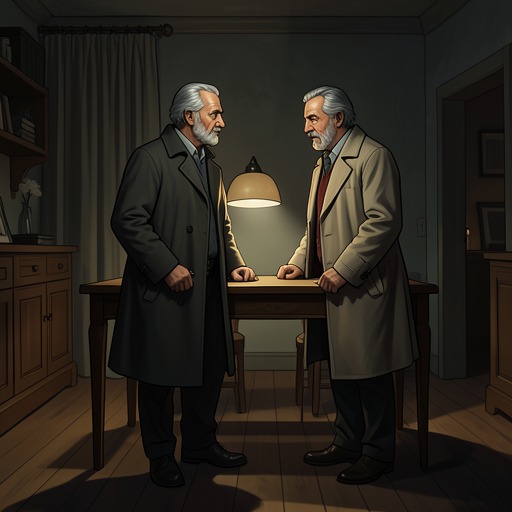
Mishka's clandestine visit to Moscow
A Gentleman in MoscowMishka’s clandestine visit to Moscow reunites him with Count Alexander Ilyich Rostov after eight years apart, but the meeting makes clear that release from punishment has not restored his freedom. Barred from Moscow by a Minus Six restriction, Mishka enters on a borrowed passport for a single day; his altered appearance and sardonic manner carry the marks of the era into the Count’s office.
Background and Reunion
Mishka and the Count’s friendship began at the Imperial University in Saint Petersburg in 1907. They came from sharply different worlds: the Count had grown up in a twenty-room mansion attended by fourteen staff, while Mishka had been raised with his mother in a two-room apartment. Their temperaments also contrasted. The Count was celebrated in the capital’s salons for wit and charm; Mishka preferred reading alone and was ready to throw himself into a quarrel. On the fourth day of their first year, the two found themselves on the same side of a fight, helping each other up and wiping dust from their knees and blood from their lips. Within a year they were sharing rented rooms above a cobbler’s shop.
The reunion begins with a young man pointing toward the Count and explaining that the visitor has asked for Alexander Ilyich. The Count recognizes the significance of the request before the others do: he leaves his chair, goes out of the office, and embraces the old friend he has not seen in eight years. Andrey and Emile, who have never met the visitor, understand his identity as soon as they hear his name: this is the former roommate from above the cobbler’s shop, remembered for pacing extraordinary distances in confined spaces and for his love of Mayakovsky and Mandelstam.
The Visitor’s Changed Circumstances
The Count’s joy at seeing Mishka is immediately complicated by what he sees. Mishka is thirty pounds lighter, wears a threadbare coat, and drags one leg. The Count has watched age affect his colleagues Andrey and Emile, but Mishka’s condition appears to him not merely as the passage of time: it bears the marks of one man upon another, and of an era upon those who lived through it. Even Mishka’s smile has changed. Formerly earnest and without irony, he now speaks of bread and salt with a sardonic expression.
Mishka has completed eight years under sentence in the name of Article 58 of the Soviet Criminal Code, but his release does not permit him to return freely to Moscow. He has instead been assigned a Minus Six restriction. When the Count asks whether he has returned to Moscow, Mishka explains that he has not; to make this visit, he borrowed a passport from someone sympathetic who bore a passing resemblance to him. The Count responds with concern about the risk, while Mishka shrugs rather than offering reassurance.
A One-Day Visit
Mishka says that he arrived that morning by train from Yavas and will return there later that night. The visit is therefore sharply bounded: a covert journey into the city, an embrace after eight years apart, and a return to the place where he is permitted to reside. His description of Yavas as somewhere between where wheat is grown and where bread is eaten gives the restriction a bleak, compressed geography, linking the agricultural landscape to the ordinary food from which political power has separated him.
The visit’s secrecy is not incidental to the reunion. A sympathetic acquaintance’s passport and a same-day return make the meeting possible, while the Minus Six prevents Mishka from simply coming home to Moscow. The Count’s question about whether the risk is wise cannot undo those conditions; Mishka’s shrug leaves the decision, and its danger, standing without explanation.
Significance
The scene joins personal recognition to political consequence. The old signs of Mishka’s identity remain legible to the Count and to his colleagues: the name, the friendship, the history above the cobbler’s shop. Yet the body and manner that arrive with that name have been changed by years of punishment and restriction. The reunion thus restores the bond without pretending that the years apart can be reversed.
Mishka’s brief, illicit presence also turns the hotel office into a point of contact between an intimate past and the state’s continuing reach. He can cross into Moscow only through another person’s passport, and only temporarily; even after completing his sentence, the prohibition determines where he may live and how long he may stay. The embrace is genuine, but its duration is measured by the train journey back to Yavas.