Mishka's protest against censorship and subsequent arrest
A Gentleman in MoscowMishka’s protest against censorship and subsequent arrest turns an editorial dispute over a few lines about bread into a rupture with the machinery of literary control. After resisting Shalamov’s demand to remove Anton Chekhov’s observations about Berlin, Mishka walks out; then he returns to Goslitizdat and denounces the editors’ business of cutting manuscripts. The protest has a documented aftermath: his words reach the authorities, he is questioned by the NKVD, and he is sent toward Siberia in March 1939. The episode links the material act of striking out a passage to a far larger cost for the person who objects.
The passage under dispute
The conflict concerns a passage in Chekhov’s impressions of Berlin, especially his praise for the city’s bread and his observation that Russians who had never traveled did not know how good bread could be. The disagreement is not over a missing fragment. Mishka has read the edited passage, compared it with his memory of the original letter, and cannot find what has been removed until Shalamov points directly to the lines. The correction is an excision, not an addition: a writer’s specific observation is to disappear from the text.
Mishka presses Shalamov to confirm the nature of the demand, then asks for its reason. Shalamov invokes concision. The explanation makes the editorial principle sound modest and practical, but Mishka answers by asking where the deleted words are supposed to go: a bank, a dresser drawer, or Lenin’s tomb. His escalating question exposes the material finality hidden inside the neat language of editing. Once struck from the manuscript, the passage has no authorized place to survive.
The subject matters partly because the suppressed detail is so ordinary. Chekhov’s praise of bread is not presented as a political manifesto; it is an observation grounded in travel and appetite. In the dispute, however, even that everyday comparison becomes vulnerable to editorial power. The gap between the smallness of the passage and the growing seriousness of Mishka’s response gives the incident its force: censorship operates not only by forbidding grand declarations, but by deciding which particular experiences may remain in print.
From withdrawal to public protest
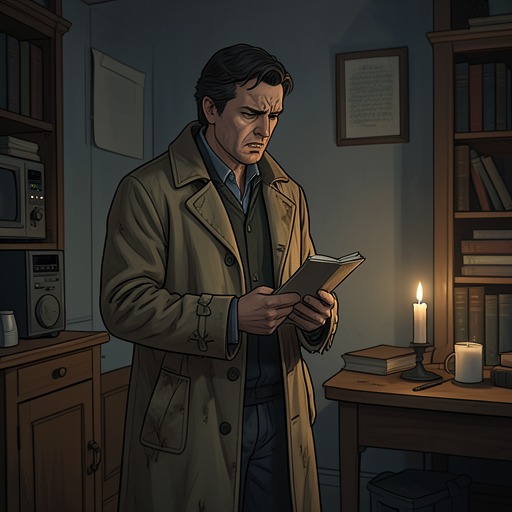
Mishka first complies. He later tells Count Alexander Ilyich Rostov that he struck the passage out and left the room without a word. His account carries anger, but the action itself is restrained: he performs the requested deletion and withdraws. The Count feels relief at this ending, although Mishka’s defeated appearance prevents the episode from becoming simply comic. The conflict has not been resolved; compliance has only postponed its more public form.
Mishka then turns away from Maxim Gorky and the Central House of Writers and goes to Goslitizdat. He climbs the stairs, passes the receptionist, and opens doors until he finds Shalamov presiding over an editorial meeting. Around the table sit junior and assistant editors; platters of cheese, figs, and cured herring occupy its center. The room’s orderly business, food, and young staff stand in sharp contrast to the fury that brings Mishka through its doors. He mocks the editors’ knives and asks what will be cut next, naming The Brothers Karamazov as an example.
Shalamov responds that Mishka is plainly upset and offers to speak with him later in his office, while stressing that the meeting still has hours of business to complete. Mishka answers by turning that business into an indictment. As he ticks off the day’s items, he takes manuscripts from staff members’ desks and throws them across the room toward Shalamov. He ridicules the movement of statues and the excision of lines, then imagines Shalamov attending to Joseph Stalin’s bath. The manuscripts themselves become part of the protest: instead of remaining orderly objects on a conference table, they are flung across the room as Mishka attacks the routine that governs their handling.
He ends by declaring, “The future of Russian poetry is the haiku!” Then he slams the door behind him, and, with evident satisfaction, slams every door between the conference room and the street. The repeated gesture gives the exit a physical punctuation. Against the meeting’s controlled sequence of editorial tasks, each closing door marks Mishka’s refusal to remain within its procedures.
Literary silence and political cost
The protest is set against Mishka’s earlier conviction that a new poetry for Russia could be made by the four writers who would come together. The narrative presents that prediction as fulfilled, but names its result the poetry of silence. Mishka’s account of silence is deliberately double-edged: it can register an opinion or a protest, and it can also be a means of survival; it is even described as a school of poetry with its own meter, tropes, and conventions. Yet the image of a poem written in the soul with a revolver to the chest binds aesthetic possibility to coercion. Silence is not simply an absence of writing here. It is at once a form created under pressure and evidence of the pressure itself.
That tension clarifies why Mishka’s outburst matters beyond the individual passage. His protest does not establish that the Chekhov lines are restored, nor does the episode show that the editorial institution changes its practice. Instead, it records a moment when the person expected to participate in cutting manuscripts openly repudiates the work. His declaration about haiku is both a provocation and a bleakly compressed statement about what might remain possible when writing is constrained. The protest’s literary claim and political danger arrive together.
The aftermath
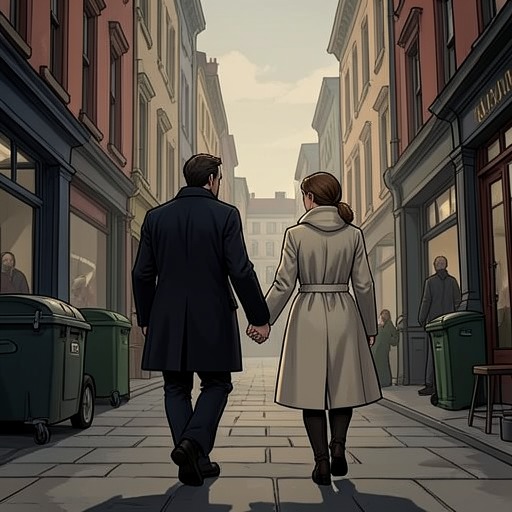
The narrative traces a rapid sequence after the meeting. Within a day, the gist of Mishka’s remarks is shared with the authorities; within a week, his words are recorded verbatim. In August, he is summoned to the NKVD offices in Leningrad for questioning. In November, he is brought before one of the era’s extrajudicial troikas. By March 1939, he is on a train bound for Siberia. The account gives those stages and dates, but does not specify a separate arrest date or describe the proceedings in detail; its force lies in the widening passage from a scene of editorial dissent to state scrutiny and removal.
The contrast with the initial act of deletion remains central to the event’s meaning. Mishka had struck the passage out and left without a word; later he walks into the publishing house, throws manuscripts, and leaves by slamming every door. The change in scale is unmistakable, but neither action restores the censored words. The episode ends its immediate arc with Mishka traveling east, while the Chekhov passage remains the small, concrete point around which the narrative has made the costs of literary control visible.