Moscow Branch of the All-Russian Union of Railway Workers
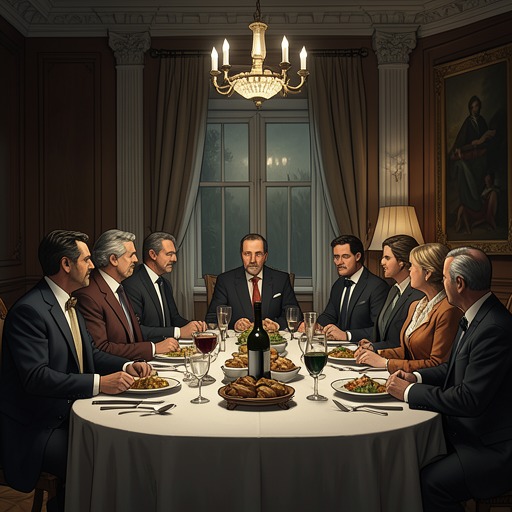
A Gentleman in MoscowThe Moscow Branch of the All-Russian Union of Railway Workers is presented through a formal congress meeting whose debate turns on the wording of its charter. A proposed change to one sentence expands the stated work of railway workers from facilitating communication and trade to enabling and ensuring them, bringing the organization’s practical responsibilities into sharper focus.
Organization and charter
The meeting is identified as the Second Meeting of the First Congress of the Moscow Branch of the All-Russian Union of Railway Workers. Its members assemble to consider administrative business and the language of the union’s charter. The scene offers little information about the branch’s internal structure beyond this congress setting, but it makes the charter a consequential instrument: its wording is expected to represent the work and purpose of railway labor across Russia.
The disputed passage is the seventh sentence of the charter’s second paragraph. It describes the union’s efforts in expansive terms, invoking the workers’ strength, resolve, seasonal labor, and the sound of trains moving through the night, before concluding that their efforts facilitate communication and trade across the provinces. The lengthy sentence’s elevated rhetoric makes its comparatively restrained final verb stand out.
Debate over the wording
The meeting begins with six administrative matters dispatched in the first fifteen minutes. The charter proposal then slows proceedings. Delegates debate alternatives to facilitate with arguments, rhetorical questions, emotional speeches, and calls from the back rows, while the secretary’s gavel repeatedly brings the discussion to order. The temperature in the balcony rises to 96 degrees as the argument intensifies.
A shy young delegate in the tenth row proposes replacing facilitate with enable and ensure. He explains that the paired verbs would encompass not only laying rails and manning engines but also maintaining the system. His suggestion supplies a practical distinction: the union’s work is not limited to establishing and operating railway infrastructure; it includes keeping that infrastructure functioning over time.
The proposal is adopted unanimously, with a show of hands and the stamping of feet. The decision gives the charter a more comprehensive formulation of the railway workers’ contribution, and the meeting’s boisterous approval contrasts with the seemingly small scale of the editorial change.
The meeting in the narrative
Count Alexander Ilyich Rostov observes the assembly from a balcony with Nina Kulikova. He initially regards the early business as brisk enough to suggest that the meeting might end before the strain of sitting became unbearable; the dispute over the charter overturns that expectation. His attention to the delegates’ language and procedure makes the debate both a public deliberation and a comic study of political speech.
After the meeting, the Count is pleased by his comparisons between the assembly’s conventions and those of the old social order, and he prepares a Shakespearean joke about the debate’s apparent disproportion to its subject. He does not get to deliver it: Nina, asked for her view, begins speaking before he can offer his own. The scene thus leaves the charter amendment’s successful passage alongside a separate contrast between the Count’s amused distance and Nina’s more immediate response.