Nina entrusts Sofia to Count Rostov
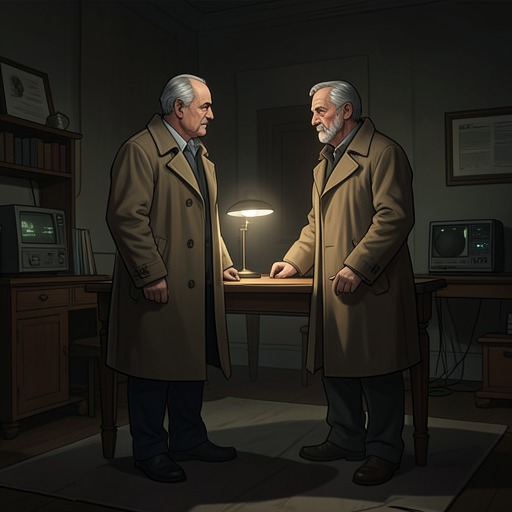
A Gentleman in MoscowNina Kulikova’s decision to leave Sofia in the care of Count Alexander Ilyich Rostov is both an act of necessity and a decisive renewal of their friendship. With her husband arrested and sent toward Sevvostlag, Nina must follow him without taking their young daughter along. She asks the Count to care for Sofia only until she can find work and a place to live, but even this temporary arrangement makes him responsible for the child’s immediate safety and comfort. The request transforms his familiar, carefully ordered life at the Metropol into a sustained practice of care.
Crisis and Request
Nina explains that she and her husband have been recalled from Ivanovo to a conference on agricultural planning. On the first day, Leo is arrested. She manages to trace him to the Lubyanka but is not allowed to see him; the news she receives the day before her meeting with the Count is that he has been sentenced to five years of corrective labor and will be put on a train for Sevvostlag that night. Nina intends to follow him. Before she can do so, she needs someone to watch Sofia while she establishes herself.
The Count is confronted in quick succession with a husband, a daughter, an arrest, a prison, and a sentence of forced labor. Nina reports these developments with remarkable composure, as if laying out a sequence of facts. The speed and gravity of what she describes nevertheless leave the Count shocked. Her predicament is not hypothetical: the child is waiting across the lobby, and Nina’s departure is imminent.
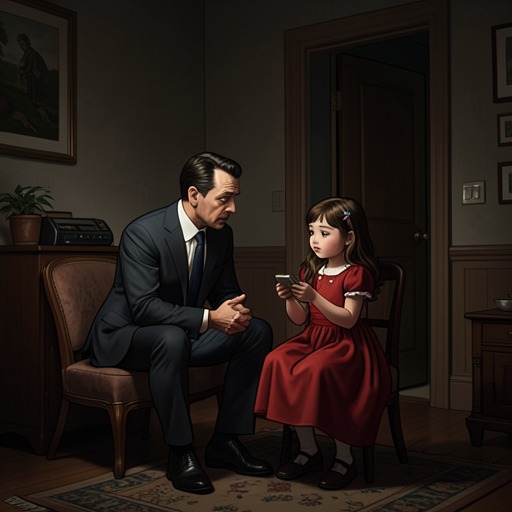
Sofia is about five or six, with black hair, ivory skin, and dark blue eyes. Her clothes are simple, her hair cut nearly as short as a boy’s, and the linen doll she clutches has no dress. When Nina explains that she must leave, Sofia does not protest or plead. She nods to show she understands, but tears run down her face. Nina wipes one side of her daughter’s face while Sofia wipes the other, then looks into her eyes until the tears stop. After kissing Sofia’s forehead, Nina takes the Count aside to make the practical handover.
The Handover
Nina gives the Count a canvas pack with shoulder straps containing Sofia’s things. She also hands him a small, unframed photograph and leaves it to him to decide whether to keep it private. When Nina has gone, he sees that it shows her with her husband. The image corrects his earlier impression of the man: years before, the Count had seen Nina at the Metropol with a handsome Komsomol captain, but she had married the less imposing young man in a sailor’s cap who had eagerly retrieved her coat. The photograph thus carries both family information and a revision of the Count’s memory.
The whole exchange lasts less than fifteen minutes. Nina grips the Count’s arm as she asks for help, then crosses the lobby and leaves the hotel at a pace that allows no room for second thoughts. She has said that she will return for Sofia after a month or two, once she has found work and a place to live. The arrangement is therefore presented as temporary, but its timing leaves no opportunity for the Count to prepare or negotiate its terms.
He immediately understands that temporary custody still entails concrete obligations. He will not be responsible for Sofia’s education, moral instruction, or religious upbringing, but he will be responsible for her health and comfort, even if she stays only one night. He must decide what she will eat and where she will sleep; he must also work out how to care for her on the following evening, when his duties require him to put on the white jacket at the Boyarsky Restaurant. These questions make the request less a symbolic gesture than the beginning of daily labor.
Friendship Becomes Responsibility
The Count does not attempt to dissuade Nina. His response is rooted in their long history: as a child, Nina had crossed the Piazza without hesitation to befriend him, shown him hidden corners of the hotel, and given him the key to its mysteries. The same self-reliant girl has now returned as a mother in crisis. Because asking for help does not come naturally to her, he regards her appeal as one that admits only a single acceptable answer. He slips the photograph into his pocket, composes himself, and turns to Sofia. His first offer is simple: he asks whether she is hungry and would like something to eat. She shakes her head.
The practical scope of the arrangement soon exceeds what the Count can manage alone. At a later point, he recounts the previous day’s events to Marina and asks whether she can watch Sofia for an hour while he attends the Boyarsky Restaurant’s daily meeting. Marina redirects his attention from his own difficulty to Sofia’s predicament, then agrees to help. The exchange shows that caring for Sofia requires the Count to seek support and make arrangements around the hotel’s working routines; it is not solved by his initial willingness alone.
Consequences and Significance
Sofia’s dependence on the Count becomes especially clear when she is injured. After eleven at night, he lifts her from the steps, carrying her under the neck and knees, and rushes through the lobby to get a taxi. In the warm summer air outside the Metropol, he finds himself beyond the hotel’s doors for the first time in more than twenty years. The sequence gives physical force to the responsibility that began with Nina’s request: when Sofia needs urgent help, the Count acts before he can weigh the consequences for himself.
At First Municipal Hospital, Osip Glebnikov tells him that Sofia will be fine and will be taken to recover there. He also warns the Count that he must leave, since others will soon learn what has happened and his presence could endanger both him and Sofia. The Count protests that he cannot leave her, but Osip has arranged for someone else to stay until she is ready to go home. Care in this episode means not only staying close but also accepting a transfer of responsibility when circumstances require it.
Nina’s entrustment therefore connects private friendship to a chain of specific acts: carrying a child’s belongings, preserving her family photograph, finding food and a place for her, coordinating help with Marina, and responding to an emergency beyond the hotel. The request is brief, and Nina intends it to last only until she can establish herself. Its consequence, however, is lasting in the Count’s immediate world: Sofia is no longer merely the child waiting across the lobby but someone whose safety and comfort have become his concern.