Paris
A Gentleman in MoscowParis occupies several sharply different places in the lives of Count Alexander Ilyich Rostov and Sofia: it is the city to which he once fled, the home of the books he left behind, a destination briefly reopened to Soviet performers, and the setting from which Sofia makes her escape. Its significance rests on this contrast between remembered freedom and present-day restriction. For the Count, Paris belongs to a past he has relinquished; for Sofia, reaching it gives her a chance to act beyond the limits imposed on her life.
The Count’s First Exile
In testimony before the Emergency Committee, the Count recalls that after his poem Where Is It Now? appeared in 1913, he left Russia for Paris on May 16 of the following spring. He remembers apple blossoms, but does not offer a fuller explanation for the departure there. Elsewhere, he tells a visitor that he was in Paris when the Hermitage fell and had left Russia before the war because of certain circumstances. The two accounts make Paris a destination within a longer, politically unsettled departure, rather than a place he describes in detail as a settled home.
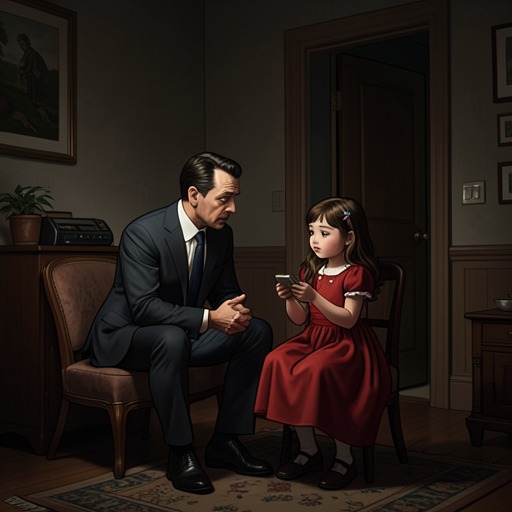
Those circumstances include the aftermath of his shooting of a Hussar lieutenant. After wounding the man, the Count bound his injury and drove him home; the lieutenant survived but lost the use of his right arm and had to surrender his commission. When the lieutenant’s father filed a complaint, the Count’s grandmother sent him to Paris, as was customary. The lieutenant later returned to his regiment despite his injury and died in the Second Battle of the Masurian Lakes. The Count subsequently connects his own conduct to a chain of events that also encompassed his sister Helena’s humiliation and death, and regrets that he was absent from her side when she died. Paris thus marks not only removal from Russia, but also a family separation the Count later interprets through guilt.
The city is also the point from which he reverses direction. On hearing of the Tsar’s execution, he set out from Paris at once, crossed six nations over twenty days, and reached Idlehour Estate on August 7, 1918, carrying only a rucksack. His grandmother, the Countess, accepted that she must leave Russia with only two servants, while her grandson would remain behind. Four years later, the furnishings and possessions in his suite at The Metropol were already the residue of a major dispersal. His personal library of Balzac, Dickens, and Tolstoy had been left in Paris; the books brought to the hotel attic instead belonged to his father and dealt with rational philosophy and modern agriculture. The lost library makes Paris tangible as a storehouse of an earlier life, even while the Count’s present is defined by what he managed to carry away or leave behind.
A City at the Edge of Reach
The Count’s reflections on exile give Paris a larger contrastive force. He considers how a person sent abroad might begin life anew by working, building a house, and raising a family. Exile within one’s own country, by comparison, prevents such a fresh beginning: the forbidden or inaccessible homeland remains vividly close. His reflections focus on Russia and Moscow, but his own history supplies the counterpoint of Paris, a foreign city associated with the possibility of a life outside Russia and then with the painful necessity of returning to it.
That contrast becomes collective when the narrative considers Russians who had seen Paris before the Revolution. Under Soviet conditions, they adapt to the likelihood that they will never see it again, alongside more ordinary adjustments such as making conversation in queues and sharing bureau drawers. Paris therefore signifies more than a location on a map: for these people it is a remembered world whose former accessibility has disappeared. The later prospect of an official Soviet visit does not erase that loss; it makes the gap between prohibition and permission newly visible.
The Tour and the Promise of Return
In 1954, the Count tells his companions that Sofia will be in Paris six months later, on June 21. The route is part of a state-sponsored cultural program: the ballet is scheduled for New York in April, a dramatic ensemble for London in May, and the Moscow Conservatory Orchestra for Minsk, Prague, and Paris in June. Sofia is to perform Rachmaninov at the Palais Garnier. The news overturns the assumption that Russians who had known Paris before the Revolution would never go back, but the opportunity reaches Sofia through an official tour rather than unrestricted travel.
The Count’s pride in Sofia is bound to the prospect of her departure. He recalls that his greatest pride during the Conservatory competition came not when she and Anna Urbanova brought home news of victory, but earlier, when he watched Sofia leave the hotel for the hall without knowing whether she would be applauded. He treats the courage to venture out under uncertain conditions as more important than acclaim. When Sofia wishes he could be in the audience in Paris, his smile acknowledges the wish without changing the limits of his own position. The destination is within her reach, but not his.
Paris also enters the Count’s later life through the film Casablanca. After Sofia has gone, he watches it with Osip Glebnikov and chooses it without hesitation. The film’s refugee story recalls a route created during the Second World War: from Paris to Marseilles, across the Mediterranean to Oran, then overland to Casablanca, where some refugees could obtain passage onward to Lisbon and the New World while others waited. The Count’s choice gives Paris a further association with flight, borders, and uncertain refuge, echoing the actual journey he is preparing for Sofia.
Sofia’s Escape Through Paris
When the Conservatory Orchestra performs at Salle Pleyel, the official visit becomes the setting for a clandestine departure. After the concert, Sofia changes her appearance and leaves the hall through a rear exit as the final movement begins. She goes barefoot into the night: the elegant high-heeled pumps Anna Urbanova had helped her choose for the Conservatory competition have been discarded, along with the dress Marina made for her. Sofia keeps the necklace Anna gave her, slipping it into her pocket despite the risk that feminine clothing or possessions could expose her if her bag were searched. Her altered appearance and stripped-down belongings turn the concert visit into an escape in progress.
The route has been planned by the Count. Sofia carries a small map cut from a Paris Baedeker and folded to the size of a matchbook, hidden beneath the brim of an Italian’s cap. From Salle Pleyel she circles to the well-lit entrance on Rue du Faubourg Saint-Honoré, crosses to a doorway, removes the cap, and consults the map. Its red line leads along Avenue Hoche to the Arc de Triomphe, then down the Champs-Élysées toward Place de la Concorde and the American Embassy. The Count has deliberately rejected the shorter route straight along Faubourg Saint-Honoré. The detour should get Sofia away from the concert hall quickly, let her disappear among people on the Champs-Élysées, and still bring her to the embassy before her absence is noticed.
His plan accounts for streets and minutes, but not for the effect of Paris on someone seeing its landmarks at night for the first time. Sofia has already seen the Arc de Triomphe and the Louvre from a bus; now, after receiving an ovation and changing her appearance, she encounters the illuminated city on foot as she moves toward the embassy. The difference between viewing Paris through a bus window and crossing it alone gives the escape a moment of wonder without removing its danger. The city is at once spectacle and route, a place to look at and a space that must be crossed in time.
Sofia reaches the American Embassy and encounters Richard Vanderwhile, who has been told that a young man is seeking asylum. Her arrival confirms that the carefully planned passage through Paris has brought her to the threshold of protection, though the earlier evidence does not yet specify the outcome of her request. In this episode, Paris is neither simply the Count’s lost home nor merely the endpoint of a cultural tour. Its streets become the practical means by which Sofia turns a permitted visit into an attempt to claim a future beyond the controls surrounding her.