Paris Baedeker
A Gentleman in MoscowThe Paris Baedeker is a travel guide found among books abandoned in the Metropol’s basement. Count Alexander Ilyich Rostov selects it for its detailed map of Paris’s 8th arrondissement, then cuts the map from the volume and marks a zigzagging route across it. In the novel, the guide shifts from a discarded reference book to a practical instrument in the Count’s preparations for a journey involving Paris.
Discovery in the Metropol
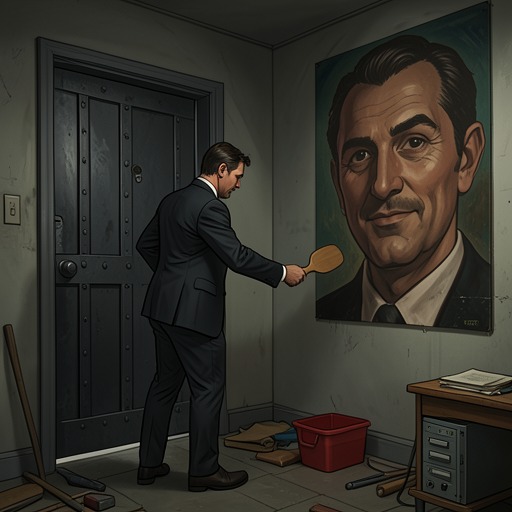
In early March, Count Alexander Ilyich Rostov descends to the hotel basement for the first time in years. He passes the furnace and electrical rooms to reach the corner where the hotel stores guests’ lost property, and searches a shelf of books, looking especially for small red volumes with gold lettering. Most of the Baedekers there concern Russia; among the foreign guides are volumes for Italy, Finland, and England, as well as two for Paris. The guide he later uses comes from this scattered collection of abandoned books.
The discovery follows a change in the Count’s preparation for Sofia’s concert trip. Beginning in February, he and Sofia set aside their customary game of Zut while they waited for appetizers and practiced practical French conversation. That earlier work gives the guide a place within a broader pattern of preparation, though the map’s function is more direct: it supplies a specific Paris neighborhood and a route that can be marked and carried.
The Map Made Portable
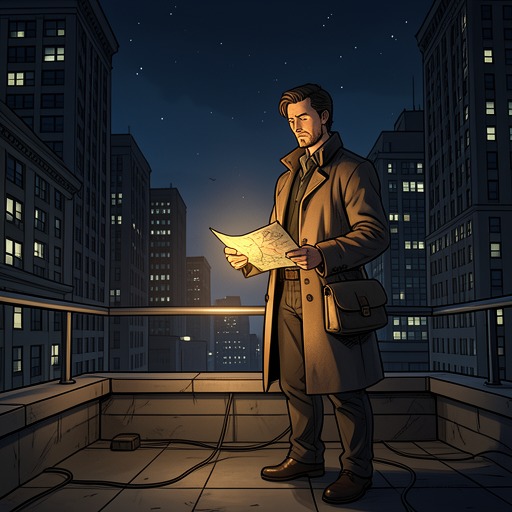
Upstairs, Count Alexander Ilyich Rostov consults the guide’s contents and turns to page fifty, where the section on the 8th arrondissement begins. Before the descriptions of the Arc de Triomphe, the Grand Palais, the Madeleine, and Maxim’s, he finds a thin foldout containing a detailed map of the neighborhood. Rather than leave his plan inside the guide, he takes Boris’s razor from his pocket and cuts the map cleanly from the book.
He then uses a red pen to draw a zigzagging line from Avenue George V to Rue Pierre Charron and down the Champs-Élysées. The route is precise enough to connect named streets and a major avenue, but the passage does not explain the individual turns or identify a destination beyond the marked course. The decisive action is the conversion of a reference into a separate, usable map: the guide provides the geography, while the Count’s line makes it his plan.
Role in the Count’s Preparations
The map-making takes place amid a sequence of deliberate preparations. On March 21, Count Alexander Ilyich Rostov writes a one-sentence insistence beneath the hotel’s moniker, leaves it on the bell captain’s desk, and waits for a note to arrive while making his weekly visit to the barber. Later, in his room, he works over the Paris Baedeker with a razor he has kept in his pocket. The narrative places these actions in the same unfolding effort without spelling out every connection between them.
The guide’s significance lies in this practical transformation. It begins as one of several foreign books left behind in the hotel, indistinguishable from the other abandoned volumes on the basement shelf. In the Count’s hands, its foldout becomes a marked route through the 8th arrondissement. The book’s printed descriptions remain behind when he removes the map; what travels forward is a compact plan shaped by his own line.