Paris Baedeker map marking the U.S. Embassy route
A Gentleman in MoscowThe Paris Baedeker map marking the U.S. Embassy route is a small, hand-altered map that Count Alexander Ilyich Rostov prepares to guide Sofia to safety in Paris. Its red line serves two opposed purposes: it gives Sofia a route away from the concert hall, but its earlier version also exposes the Count’s plan to Bishop Leplevsky. The map makes an escape legible as a sequence of streets—and makes that same sequence dangerous when discovered.
Two Maps and One Escape Plan
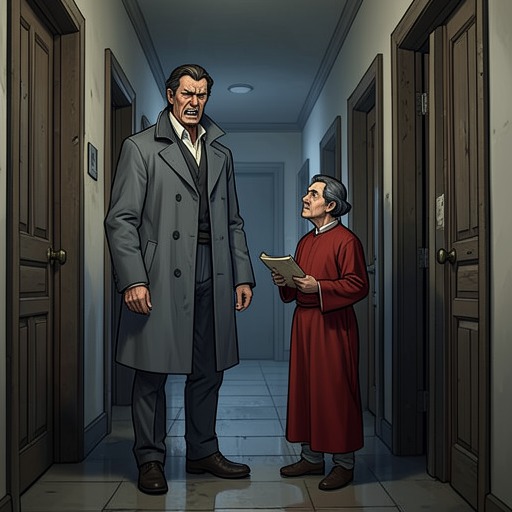
The Count’s plan is represented by more than one copy. An earlier Baedeker map bears a bright red line connecting the Palais Garnier to the American Embassy in Paris by way of Avenue George V. When the Bishop finds this map in the Count’s room, it identifies the route as evidence of the plan. The Count’s expression changes from indignation to horror before the Bishop has even accused him, making the map’s meaning plain through the Count’s reaction.
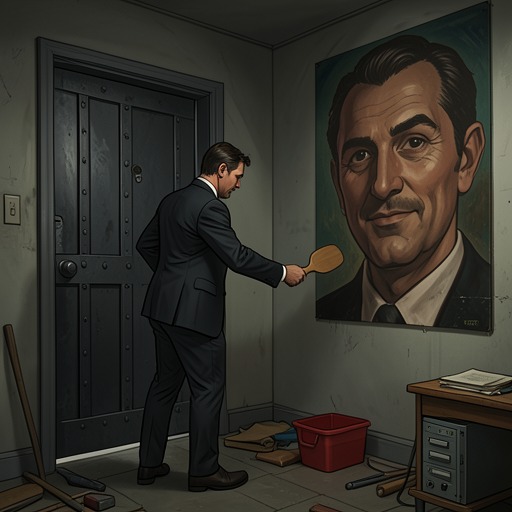
Preparing for Sofia’s departure, the Count goes to the basement for a second Paris Baedeker. He tears out its map, takes it to Grand Duke Demidov’s desk, and draws a new red line. The second copy is the one intended for Sofia: the first has exposed the plan, while the replacement is made to carry it forward. The repetition matters. The route is not an abstract intention but a plan the Count must reproduce after the first map becomes dangerous.
Route, Concealment, and Use
After Sofia leaves the Salle Pleyel, she circles the concert hall to its well-lit entrance on Rue du Faubourg Saint-Honoré, crosses the street, and steps into a doorway. There she removes the Italian’s cap and retrieves the little map her father has cut from the Baedeker and folded to the size of a matchbook. With it open, she orients herself and follows the red line: along Faubourg Saint-Honoré, down Avenue Hoche to the Arc de Triomphe, then left onto the Champs-Élysées toward the Place de la Concorde.
The route is deliberately not the shortest one. Ten blocks straight along Faubourg Saint-Honoré would have been more direct, but the Count wants Sofia away from the concert hall quickly and then lost among the anonymity of the Champs-Élysées. The detour adds only a few minutes, and his calculation is that she should still reach the embassy before her absence is discovered. The map therefore encodes not simply a destination but a strategy: speed at the start, concealment along the way, and a narrow margin of time.
Discovery and Consequence
The first map’s exposure gives the Bishop a concrete sign of what the Count is planning. He finds it among the Count’s letters and holds it up; the marked path from the Palais Garnier to the embassy makes the Count’s Paris interests look less like harmless curiosity about wine, cuisine, and streets. The map does not need to be interpreted aloud: the Count’s horrified expression confirms its significance before any charge is made.
The second map, by contrast, passes from the Count’s hands into Sofia’s and becomes useful through movement. Folded beneath the cap’s brim, it lets her navigate after she has changed her appearance and left the concert hall barefoot. Its smallness is practical, but also consequential: the route can travel with her in a form she can conceal and consult as she makes her way through the city.
A Line Against the City
The map’s red line imposes order on a journey whose outcome cannot be entirely controlled. The Count can choose a less direct course, calculate the minutes it will cost, and direct Sofia toward a place where she may disappear into the crowd; he cannot account for what the city will mean to her along the way. At the Place de la Concorde, she stops despite the time she has to spare, struck by the sight of Paris’s buildings at night. The route has brought her there, but the map’s practical instructions do not contain the experience of arriving. Its final significance lies in that difference: it can guide Sofia toward the embassy, while the city encountered en route begins to exceed the plan.