Rostov Returns to His Family Home
A Gentleman in MoscowCount Alexander Ilyich Rostov’s return to his family home is a quiet reckoning with time: the mansion he has been absent from for decades is gone, but the journey does not end in desolation. He meets the altered landscape with a wistful serenity, proceeds to a surviving village inn, and finds a woman waiting at a table for two.
The Journey Back
On one of the first afternoons of summer in 1954, Rostov appears in the high grass among ragged apple trees in Nizhny Novgorod Province. His beard is beginning to grow, his boots are dirty, and he carries a rucksack, giving the impression that he has been hiking for several days. He does not appear weary. In the trees, he makes out an old road, overgrown after years of disuse, and turns onto it with a smile that is both wistful and serene.
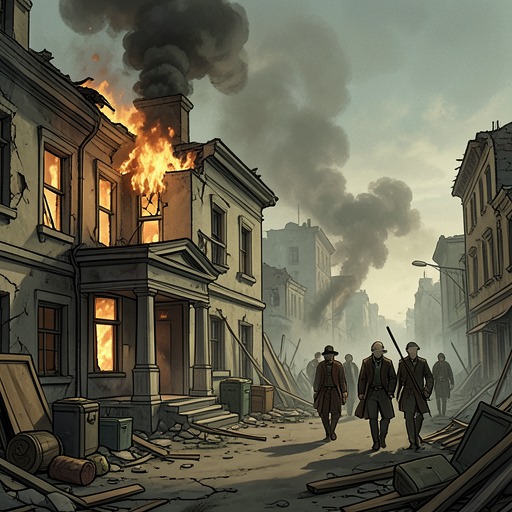
A boy and a girl lead him along the road, which bends in a long, lazy arc. After about ten minutes on foot, they reach the site of the mansion. Its disappearance is explained not by distance or concealment but by destruction: it burned to the ground decades earlier. The remains are two tilting chimneys at opposite ends of a clearing still dusted with ash.
The Ruins and the Past
The return places Rostov against a familiar warning: that people who have been away from a beloved home for decades should not go back. The narrative invokes Odysseus, who left Ithaca again after returning, and Robinson Crusoe, who set sail once more for the island from which he had longed to escape. In both examples, the passage of time and the force of remembered affection make homecoming vulnerable to disappointment. A landscape may lose its remembered beauty; old customs and buildings may disappear; the returning person may no longer be recognized.
Rostov’s response differs from that cautionary pattern. Before the burned mansion, he shows neither shock nor indignation nor despair. The serene smile he wore on finding the old road remains. His return is not made painless by the survival of the house—it has not survived—but by his readiness to encounter the place as it is rather than demand that it match memory. The event gives concrete form to a qualified possibility: the past can be revisited pleasantly when the visitor expects nearly everything to have changed.
The Village Inn
After wishing the children well, Rostov walks about five miles to a nearby village. Many old landmarks have disappeared, but the inn at the edge of town is still standing, a survival that brings him relief. He enters carrying his rucksack and asks the innkeeper for a room, though he wants something to eat first. She directs him toward the tavern.
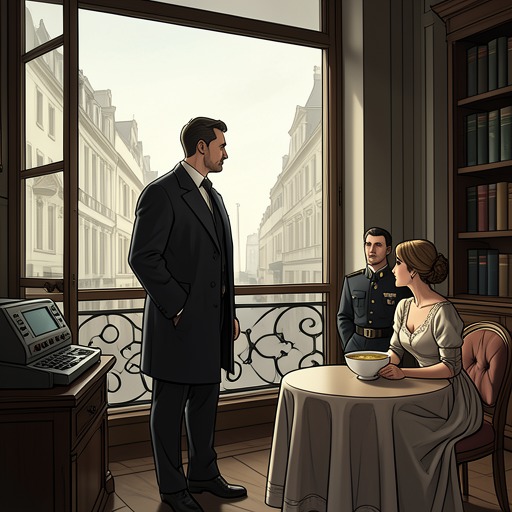
Inside, only a few people sit at the old wooden tables. Some eat cabbage-and-potato stew; others drink vodka. Rostov nods to those who look up and goes to a small room at the back, where an old Russian stove stands. In its corner, at a table for two, a willowy woman with gray in her hair is waiting. The homecoming thus closes not with the lost mansion restored, but with Rostov moving through the changed village toward a meeting whose quiet presence gives the return a human destination.