Rostov and Nina Have Lunch Together for the First Time
A Gentleman in MoscowRostov and Nina Have Lunch Together for the First Time brings Count Alexander Ilyich Rostov out of the isolation of his habitual routine and into an encounter shaped by a child’s questions. At the Piazza, Nina first watches him from behind a fountain, then approaches his table, joins his lunch, and pursues a line of inquiry that moves from his absent moustaches to princesses and duels. Their meeting is modest in scale, but its movement—from observation to conversation, and from formal courtesy to companionship—makes the restaurant table a place of genuine contact.
Restlessness and the Restaurant
The meeting occurs while the Count is feeling the confinement of his days more acutely. After another morning with Montaigne’s Essays, he buys a bottle of wine for a solitary lunch, hoping to lift his spirits. His habits have become measurable almost to the minute: he counts the steps on his way down to the lobby, enters the Piazza for lunch at 12:01, and climbs the 110 steps back to his room at 1:35. Even the interval before returning downstairs for a drink has become something to calculate. The narrator gives this routine a physical image: if it continues, the hotel will seem to contract until it is no larger than a biscuit tin. Nina’s arrival interrupts that inward narrowing with an attention the other diners do not offer.
The restaurant is populated but socially distant. Two remnants of the diplomatic corps pick at their meal while waiting for diplomacy to return; elsewhere, a bespectacled resident of the second floor compares four large documents word for word. No one pays the Count particular attention except the girl behind the fountain. He has seen her before: according to Vasily, she is nine years old, has straight blond hair, and is the daughter of a widowed Ukrainian bureaucrat. She usually sits with her governess. When she realizes the Count has noticed her watching him, she hides behind her menu, but the concealment does not last.
The meal itself is rendered with the Count’s practiced sensitivity to food. He assesses his okroshka as a competent bowl of soup, familiar enough to suggest what a Russian might have received from a grandmother. Its temperature is properly chilled; it has a little too much salt and too little kvass, but the dill is just right. The herb brings summer to mind and, in the narrator’s description, offers the kind of ease the Count’s recent routine has been missing. This attention to the meal establishes his measured, ceremonious way of inhabiting an ordinary lunch before Nina unsettles its solitude.
Nina Joins the Table
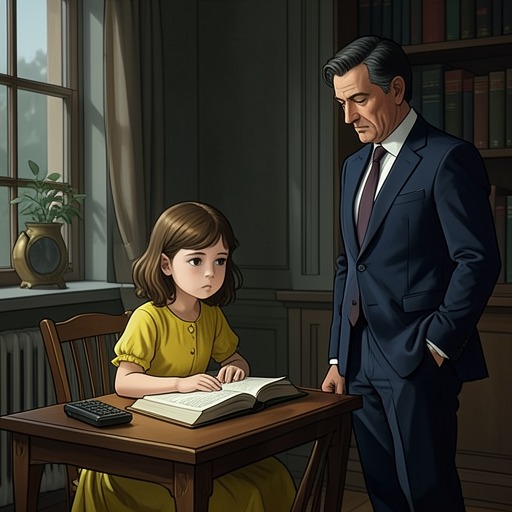
When the Count opens his eyes after tasting the soup, Nina is standing beside his table, studying him with an openness the narration associates with children and dogs. Her dress is lemon-colored, a bright continuation of her familiar preference for yellow. Without introducing herself, she asks where his moustaches have gone. The question breaches the Count’s expectations of a child’s manners: he believes a child should not approach a stranger without reason, interrupt a meal, or ask about a personal feature. Yet he answers her rather than dismissing her. He says the moustaches have travelled elsewhere for the summer, like swallows, and flutters his hand upward to suggest their flight.
Nina accepts the answer, adds that they have gone to the Black Sea, and pulls out the empty chair. The Count invites her to join him. She settles herself at the table, elbows resting on it, while a small pendant on a gold chain hangs at her neck. He looks toward her governess in the hope of catching her attention, but she remains absorbed in her book, apparently accustomed to leaving Nina to make her own approaches. Nina then asks whether he really is a count. When he confirms it, her eyes widen. The exchange turns his title from a formal social distinction into a source of direct, childlike interest.
Nina has brought her own lunch, but she tells him she does not like it. The Count responds by transferring some of his fish to a side plate and offering it to her. She eats the whole portion at once and calls it yummy, then looks wistfully at the remainder of his meal. He gives her half of his sole, along with an equal share of spinach and baby carrots. Nina settles in for a longer stay, pushes the vegetables to the edge of her plate, and cuts the fish into four equal pieces. Her appetite and careful division of the food make the encounter reciprocal: she questions the Count, but he also accommodates her presence through the meal itself.
Questions About Princesses and Duels
Once Nina has joined him, her curiosity ranges beyond his appearance and title. She asks how a princess would spend her day. The Count answers that she would spend it like any young lady. When Nina encourages him to continue, he explains that castles are less common in their country than in fairy tales, although he has dined in one. The available exchange shows the shape of his response—measured, courteous, and grounded in experience—without turning the conversation into a lesson or a display of rank.
Nina’s next question is whether he has ever been in a duel. The Count pauses over the idea of an affaire d’honneur and allows that he has been in a duel of sorts. Nina sharpens the question by specifying pistols at thirty-two paces. The conversation then moves to literary duels: Nina says that Lensky was killed by Onegin, speaking in a hushed voice as though reciting Pushkin’s poem required discretion. The Count answers in the same low register that Pushkin was killed as well. Nina identifies the place as Saint Petersburg, on the banks of the Black Rivulet, and the Count repeats the location. The child’s questions thus draw him from the particulars of lunch into a shared cultural reference, while her attention to the circumstances of the deaths gives the conversation a seriousness beneath its playful beginning.
Departure and Significance
By the time Nina’s fish is gone, she appears satisfied with the Count as a luncheon companion. She places her napkin on her plate and nods before rising. But she pauses to tell him that she prefers him without his moustaches, because their absence improves his countenance. The observation returns the conversation to the feature she noticed first, now transformed from a blunt opening question into a personal compliment. She makes an off-kilter curtsey and disappears behind the fountain.
The encounter’s significance lies in its small but clear change of circumstance. The Count begins the scene among diners who offer no relief from his restlessness, attending to the exact timing and familiar rituals of his day. Nina notices him, questions him, takes the empty chair, and eats from his plate; he answers, shares his food, and follows her questions into subjects of history and literature. The scene does not erase the constraints of his routine, but for the duration of lunch it replaces solitary observation with conversation. Its ending preserves the delicacy of the meeting: Nina leaves on her own terms, after pronouncing judgment on his appearance, and the Count is left with the memory of an unexpectedly engaged companion.