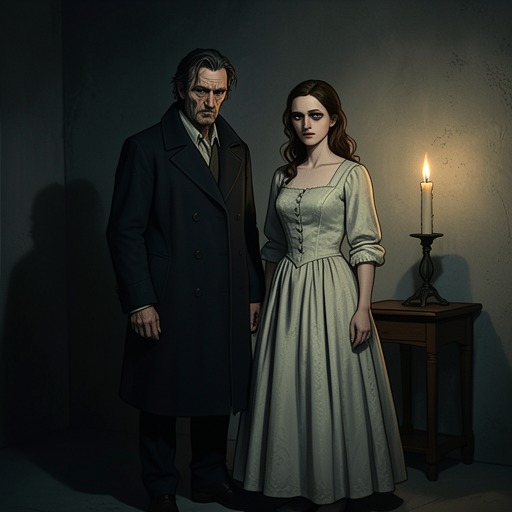
Rostov’s shooting of the Hussar
A Gentleman in MoscowRostov’s shooting of the Hussar is a remembered act of retaliation that begins with a calculated courtship and ends in an unresolved burden of guilt. In the story Rostov tells Charles, he shoots the officer after finding that he has sexually humiliated Helena Rostov’s handmaiden; the shot cripples the Hussar’s right arm but does not kill him. The officer later dies in battle, and the distance between Rostov’s intention, his action, and the eventual death becomes the episode’s central moral complication.
The courtship and its concealed purpose
Rostov places the beginning of the episode in the spring of 1914, when he returns to the family estate after seven months away. Having paid his respects to his grandmother in the library, he goes outside to find Helena Rostov reading beneath a great elm beside a bend in the river. From a distance, he sees that she is eager to tell him something. Before he reaches her, however, she notices a Hussar approaching on horseback and turns her attention to him.
Rostov understands the suitor’s arrival as the completion of a deliberate scheme. While Rostov had been carousing in Moscow, the officer had arranged to meet Helena Rostov and had patiently won her affection—not, as Rostov sees it, from admiration of her, but to settle an earlier score. The officer’s amusement makes the deception especially difficult for Rostov to bear: he can see the private satisfaction in the man’s expression, while Helena Rostov appears unaware of his purpose.
Rostov does not tell his sister what he believes. Instead, he waits for the Hussar’s nature to expose itself, expecting him to behave as he had at the Novobaczkys’. During the weeks of courtship, Rostov watches from its edges, enduring lunches and teas and seeing the pair stroll through gardens. The officer’s manners frustrate his expectation: he draws Helena Rostov’s chair, picks blossoms, reads verses, and writes them. Yet when he catches Rostov’s eye, his small, knowing smile preserves the sense that the apparent courtship and the private contest are not the same thing.
The birthday and the assault
The decisive reversal comes on Helena Rostov’s twentieth birthday. The Hussar is away on maneuvers when she and Rostov visit a neighbor. At dusk, they return to find his troika outside their house. Rostov reads Helena Rostov’s elation as the expectation that her suitor has hurried back from his battalion to celebrate her. She nearly jumps from her horse and runs toward the house; Rostov follows, imagining himself condemned to witness what comes next.
In the entry hall, Helena Rostov is not in the officer’s arms. She is trembling, while Nadezhda, her handmaiden, stands against the wall with her bodice torn open and her arms held across her chest. Her face is scarlet with humiliation. She looks briefly at Helena Rostov and runs upstairs. Helena Rostov stumbles across the hall, collapses into a chair, and covers her face. The Hussar, by contrast, grins at Rostov.
When Rostov protests, the officer dismisses the assault by presenting it as a birthday jest and a settlement between himself and Rostov. He then leaves laughing, without looking at Helena Rostov. The gesture makes the harm more than an attack on Nadezhda: it turns her humiliation into an instrument in the officer’s contest with Rostov and disregards both women’s presence and distress. The officer’s cultivated manners during the courtship now stand against his casual cruelty in the entry hall.
The shot on the drive
This time, Rostov does not wait for the officer’s conduct to speak for itself. He crosses the entryway to a pair of pistols hanging beneath the family crest. When Helena Rostov grabs his sleeve and asks where he is going, he walks out without looking at her. The action repeats the officer’s own departure from the house, but its purpose is different: Rostov is going after him, and he leaves his sister in distress to do so.
The family drive forms a grand circle, joining the house to the main road along two arcs lined with apple trees. Rostov’s horse is still tied at its post. As the Hussar rides away, Rostov mounts and takes the opposite direction at a gallop, reaching the point where the two arcs meet the road within minutes. He dismounts and waits. The setting is strikingly open and composed: Rostov stands alone beneath a blue sky, in a breeze, among apple trees in bloom.
The Hussar had initially been moving little faster than a trot. When he sees Rostov, he rises in his stirrups, raises his whip, and drives the horses at full speed. Rostov reads this as an attempt to run him down. He raises his arm, steadies his aim, and fires. The bullet knocks the officer from his feet; the reins fly free, the horses career off the drive, the troika rolls, and the Hussar is thrown into the dust, unmoving. In that instant the episode’s conflict changes from an offense Rostov has watched and endured to a violent confrontation he has chosen to enter.
Wound, death, and the limits of guilt
When Charles asks whether he killed the Hussar, Rostov first answers yes. Charles’s question about the interval of eight months leads Rostov to explain that he meant to shoot the officer in the heart but missed. He attributes the missed aim to the uneven road, the Hussar’s movement as he whipped the reins, and apple blossoms blowing in the wind. Rostov touches his own right shoulder to indicate where the bullet struck the officer: not the heart, but the shoulder.
The officer survives the gunshot. Rostov binds his wound, rights the troika, and drives him home. During the journey the Hussar curses him at every turn of the wheel; Rostov concedes that he deserved to be cursed. The wound leaves the officer’s right arm lame and forces him to surrender his commission in the Hussars. When his father files an official complaint, Rostov’s grandmother sends Rostov to Paris, which she treats as the customary response.
Later that summer, when war breaks out, the injured officer insists on returning to the head of his regiment. He is eventually knocked from his horse at the Second Battle of the Masurian Lakes and run through with a bayonet by an Austrian dragoon. Charles expresses sorrow at the officer’s death but tells Rostov that he has assumed more than his share of guilt. The distinction does not erase Rostov’s choice to fire, or the injury and consequences that followed; it does distinguish his failed attempt to kill the Hussar from the battlefield death that came later. In recalling the drive, Rostov preserves both his responsibility for the shot and the limits of what that shot caused.