Rostov's 1918 Return to Russia
A Gentleman in MoscowCount Alexander Ilyich Rostov’s 1918 return to Russia was less a restoration than a passage into upheaval. He came back from Paris after the Tsar’s execution, found his family estate and household under strain, and arranged for Countess Rostov to leave the country without him. He then shuttered Idlehour Estate and continued to Moscow, carrying only a wagon of selected furniture. The journey brought him home, but its decisive acts were separation, relinquishment, and the beginning of another uncertain life in Russia.
The Journey Back
Word of the Tsar’s execution reached Rostov in Paris, and he set out for Russia at once. The journey took more than twenty days: he crossed six nations and skirted eight battalions fighting under five different flags. He arrived at Idlehour Estate on August 7, 1918, with nothing but a rucksack on his back. The scale of the route and the spareness of his luggage make his return a striking reversal of the life he was leaving: a transnational journey through a continent at war ended not in comfort but at a family home already on the verge of upheaval.
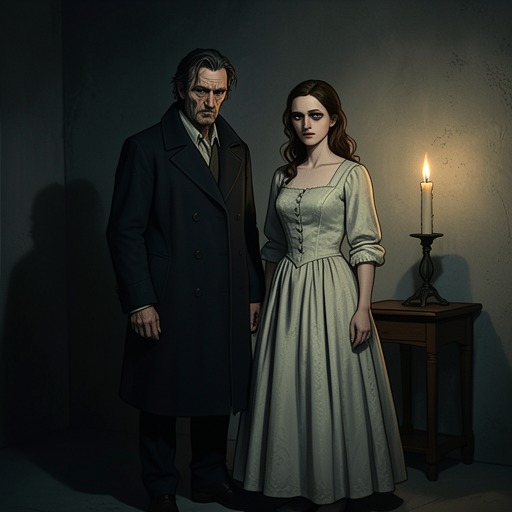
That arrival did not restore the household to its former order. The countryside was unsettled, and the estate was in distress. Countess Rostov, characteristically composed, received her grandson and only heir, whom she had raised from the age of ten. Her calm welcome stood against the circumstances awaiting them: the family would have to divide, and the estate could not simply continue as before.
Countess Rostov’s Departure
Rostov explained that Countess Rostov needed to leave the country and described the passage he had arranged for her. She understood that there was no alternative. Although every servant in her employ was prepared to accompany her, she would have to travel with only two. She also understood that Rostov, her grandson and only heir, would not be going with her. His return thus brought him directly to a separation he had chosen to make possible, even as he remained in the country himself.
Their parting was shaped by an earlier lesson. When Rostov was seven, a defeat at draughts had left him in tears and the game pieces scattered across the floor. Countess Rostov came to him not to deny the sting of losing, but to teach him not to give his opponent the satisfaction of seeing his distress. Years later, that remembered counsel informed the way they parted at the docks in Peterhof: without tears. The restraint did not make the separation slight; it gave them a way to endure it without turning the farewell into a display of grief.
Closing Idlehour Estate
After Countess Rostov’s departure, Rostov returned to the estate to administer its closing. The work proceeded in practical stages: chimneys were swept, pantries cleared, and furniture shrouded. The routine resembled preparation for the family’s seasonal return to St. Petersburg, but the resemblance broke at the details that could not be reversed. The dogs were released from their kennels, the horses from their stables, and the servants from their duties. The household was not being readied for another season; it was being dismantled.
Rostov selected some of the finest furniture belonging to the Rostov family and loaded it into a single wagon. Then he bolted the doors and set out for Moscow. That small inventory of what could be carried gives the return a material consequence: a home was reduced to what could be removed, while the locked estate and released household marked what had to be left behind. His arrival with a rucksack had become a departure with one wagon, not a recovery of the possessions and order he had lost.
Homecoming and Exile
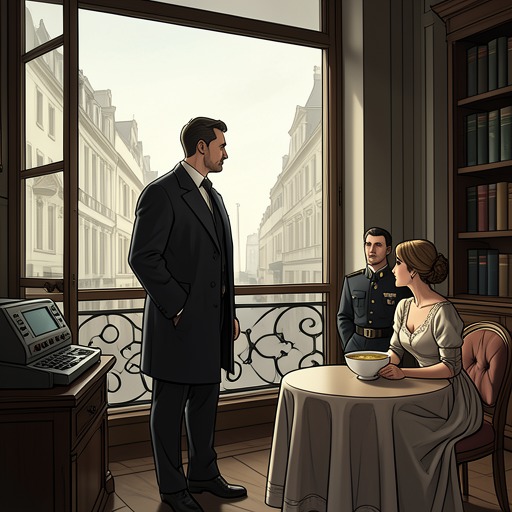
The novel later places Rostov’s return against his reflections on exile. Looking out over Moscow from the hotel roof, he considers the Russian practice of sending people into exile within their own country, rather than forcing them to begin again abroad. In his account, being confined at home can sharpen attachment to the place one cannot freely enjoy: Moscow remains visible, but not fully available. That later understanding gives the 1918 return an irony it could not yet resolve. Rostov had crossed borders to come back to Russia; in the years that followed, home would also become a place from which movement could be restricted.
The event’s force lies in the difference between geographical return and restoration. Rostov reaches Idlehour, but finds upheaval rather than continuity; he ensures Countess Rostov’s departure, then closes the estate and takes a reduced remnant of family property toward Moscow. The journey begins with the news of a political rupture and ends with a private one: the old household dispersed, and the returned heir left to make a life in the country whose changing order had called him back.