Sofia's Fall and Emergency Surgery
A Gentleman in MoscowSofia’s fall and emergency surgery turn a sudden accident at the Metropol Hotel into a test of Count Alexander Ilyich Rostov’s composure and a moment of acute uncertainty about her future. A fracture near the front of her skull makes immediate treatment necessary; after surgery, the surgeon identifies a concussion but expects her to recover. The episode moves from the Count’s precise account of the accident to the doctor’s clinical assessment, then narrows to the reassurance he gives a father who cannot yet bring himself to ask whether his daughter will be all right.
The Accident and Medical Emergency
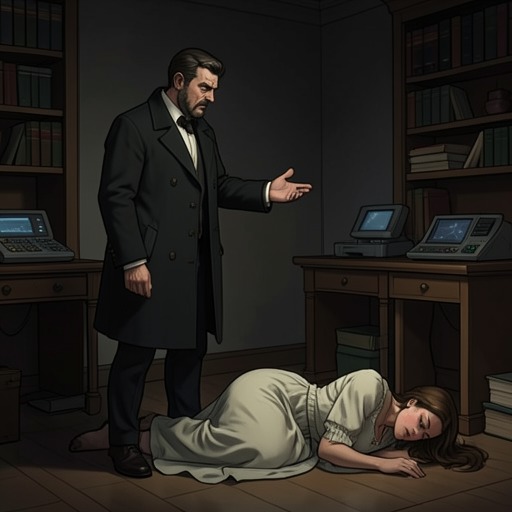
Sofia has fallen while running up a staircase at the Metropol Hotel. The Count tells the surgeon that she may have struck her head on the edge of the landing and estimates that the accident occurred no more than thirty minutes earlier. Asked whether she had been drinking, he rejects the suggestion with startled incredulity: she is a child. His account is brief and practical, but its precision establishes both the short interval available for treatment and the domestic setting from which the emergency has abruptly taken them.
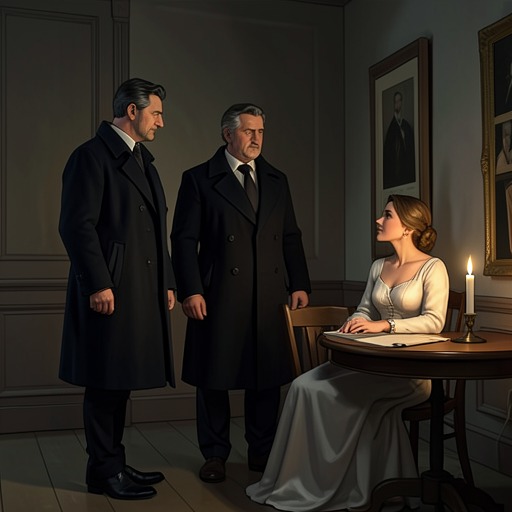
The crisis is already unfolding in a surgery when a tall man in his late forties arrives with a primly dressed associate and asks who is in charge. Kraznakov claims that authority and challenges the newcomer’s presence. The newcomer’s intervention soon makes clear that he is the surgeon whose judgment will determine what happens to Sofia. Rather than linger over the dispute about control, the scene shifts toward diagnosis and action.
Diagnosis and Immediate Treatment
The surgeon identifies a fracture at the front of the left parietal bone and a likely risk of subdural hematoma. He orders Antonovich to suit up and asks him to improve the lighting, converting the assessment into an immediate plan for treatment. The reference to the room’s lighting is a concrete reminder that urgent care depends not only on medical knowledge but also on the conditions in which a procedure must be performed. The surgeon then clears the room and tells the Count that Sofia will be attended to at once.
He explains that the danger is swelling rather than direct damage, and compares the skull’s capacity to withstand rough treatment with the possibility of a serious complication. The Count must wait outside while the doctors operate. The hallway is cleared, including the two gurneys and their sleeping patients; Antonovich returns in scrubs, whistling as he goes into Surgery Four, while a man in a black suit holds the door for him. Once the door closes, the Count is left alone in the empty corridor. The action’s focus shifts from the clinical team’s purposeful preparation to the helplessness of waiting beyond the operating room.
Prognosis and Reassurance
After the operation, the surgeon reports that the risk of swelling has been alleviated. Sofia has suffered a concussion, described as a bruising of the brain, and is expected to have headaches and need substantial rest. The prognosis is specific: in a week, she should be up and about. The account thus distinguishes the immediate danger from the recovery still ahead; the operation has addressed the most pressing risk, but Sofia’s return to ordinary activity will require time.
The Count extends a hand to Dr. Lazovsky and begins to speak, but cannot find the words to form his question. The surgeon understands the question without requiring him to say it and assures him that Sofia will be every bit herself. That assurance answers more than a request for a medical timetable: it speaks to the fear that the injury might have changed her in a lasting way. As the Count begins to offer thanks, Osip Glebnikov arrives, and the surgeon turns to him. The scene’s reassurance is therefore a decisive pause in the larger movement of events, not a claim that Sofia’s recovery is already complete.
Narrative Significance
The episode is organized around a sharp contrast between action and waiting. In the surgery, the diagnosis produces orders, preparation, and intervention; outside it, the Count has no task beyond remaining on the bench until someone returns. The empty hallway makes that division visible. His brief, exact account of the fall gives way to a period in which no further effort on his part can determine the outcome.
The surgeon’s final reassurance supplies the event’s emotional resolution without erasing its physical consequences. Sofia has sustained a skull fracture and concussion; she faces headaches and a period of rest, even as the immediate danger has been treated and the doctor expects her to recover. The episode’s movement is from an uncertain injury to a qualified but firm assurance about her future, with the Count’s unspoken question marking the personal stakes of the medical report.