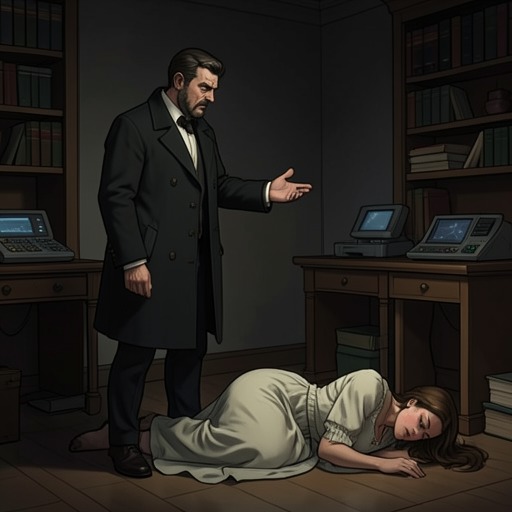
Sofia's fall in the service stair
A Gentleman in MoscowSofia's fall in the service stair is a sudden medical emergency that interrupts Count Alexander Ilyich Rostov's wait for her and brings him face to face with her vulnerability. The scene moves from expectation to alarm in a few beats: a chambermaid's urgent report sends him running, and he finds Sofia unconscious and bleeding on the stairs.
The Fall
Count Alexander Ilyich Rostov had been waiting for Sofia and, after five minutes without her arrival, was conceding that he might have been mistaken about her coming. The door then flew open—not to admit Sofia, but a distressed chambermaid named Ilana, who told him that Sofia had fallen. When he asked where, Ilana identified the service stair.
He rushed down the belfry, passing two flights of empty stairs before reaching the third-floor landing. There he found Sofia sprawled across the steps, her eyes closed and her hair matted with blood. He dropped to his knees and called to her, but she did not respond. Raising her head gently, he saw a gash above her brow. Her skull did not appear compromised, but she was bleeding and unconscious. Ilana, now behind him and in tears, said she would go for a doctor. The discovery changes the scene from a delayed meeting into an urgent crisis, with Sofia's condition unresolved at the moment the episode ends.
Service, Status, and the Hotel’s Codes
The emergency unfolds against a hotel culture governed by distinctions of rank and service. In an earlier exchange, the manager tells the Count that staff have continued to address him as Your Excellency and insists that they stop: the times have changed. The Count accepts the change without resentment, reassuring the manager that adapting to changing times is part of a gentleman’s business. The scene establishes that his former rank remains visible in the language people use, even as the institution tries to regulate how that rank is acknowledged.
The Count also observes the codes of service from the other side. When a stranger invites him to sit at a table, he hesitates chiefly because he is dressed to wait upon it; after accepting, he leaves the napkin off his lap. At a later formal dinner, he carries out the practical work of service while listening closely to the guests’ private exchanges. These episodes present attentiveness and decorum as practiced skills, not merely social ornaments. Set beside that pattern, the fall’s alarm marks a moment when the demands of care override the careful roles and manners that ordinarily structure life in the hotel.
Narrative Turn and Unresolved Stakes
The scene withholds both the cause of Sofia’s fall and any medical outcome. Its attention stays with what can be established in the moment, while the Count’s first response is to act rather than explain. That narrow, immediate perspective makes the fall a genuine interruption: the episode closes on an emergency in progress, not on reassurance or resolution.
What the Scene Can Establish
The episode carefully separates the fact of the fall from any explanation of it. Ilana’s alarm identifies what has happened and where, but offers no cause; the Count’s examination supplies only a limited medical impression, distinguishing a visible wound and unconsciousness from the apparent absence of a compromised skull. That qualification is not reassurance: it leaves the danger open while refusing to claim more than the moment allows. The narration’s restraint makes the emergency legible through successive acts of recognition—report, discovery, inspection—rather than through retrospective explanation.