The courage to venture forth despite the uncertainty of acclaim
A Gentleman in MoscowThe courage to venture forth despite the uncertainty of acclaim is a principle Count Alexander Ilyich Rostov gives Sofia as she prepares to leave the Metropol for Paris. It redirects pride away from applause and toward the risk of setting out: Sofia’s decisive achievement, in his account, was not winning a Conservatory competition but walking through the hotel doors before she knew how she would be received.
Memory and recognition
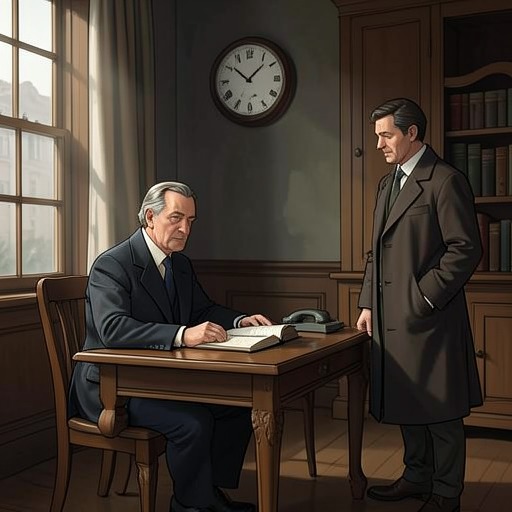
The principle emerges from a conversation about a Christmas Count Alexander Ilyich Rostov had spent with Sofia’s mother in Piazza in 1922. He recalls Nina Kulikova’s ice-cream hors d’oeuvre, her reluctance to sit in scholarly rows, and her argument that anyone seeking broader horizons would do better to venture beyond the horizon. The anecdote makes the coming departure more than a career step: Sofia is about to act on an idea her mother had expressed years earlier.
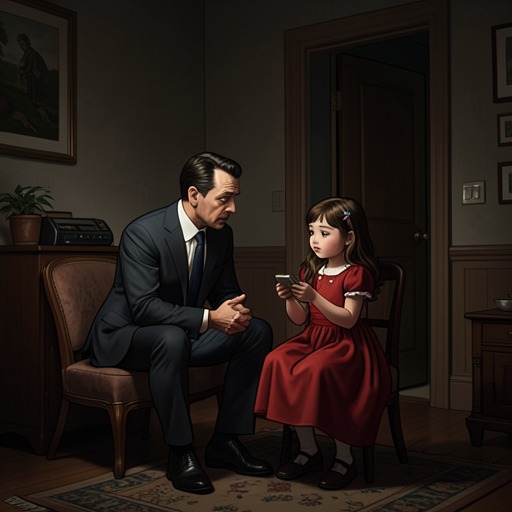
That recollection also prompts the Count to reconsider the life he and the hotel’s other adults have shaped for Sofia. He says he fears he has done her a disservice by drawing her, since childhood, into a life bounded by the building’s four walls. Marina, Andrey, Emile, and the Count had made the hotel seem as wide and wonderful as the world, hoping Sofia would choose to remain there with them. He recognizes the limit of that affection: a richly furnished, culturally attentive enclosure cannot stand in for encountering the world beyond it.
Pride measured by departure
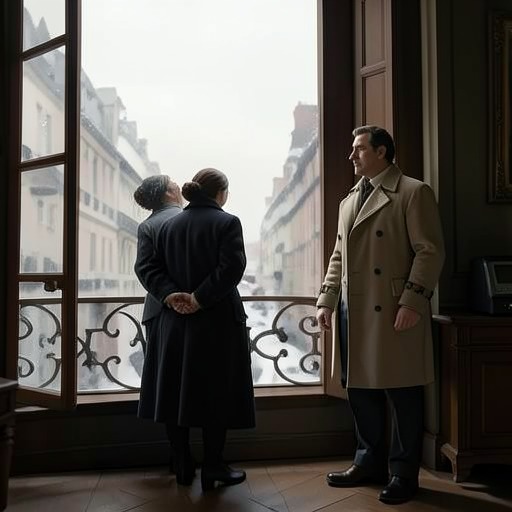
The Count distinguishes the result of Sofia’s Conservatory competition from the moment that mattered most to him. Although he was proud when Sofia and Anna brought home news of their victory, he says his greatest pride came earlier, when he watched Sofia leave the hotel for the hall. His formulation turns the image of a threshold into the expression’s central measure: courage is visible before acclaim, when the outcome is still uncertain.
He reinforces the point by contrasting genuine experience with its sheltered substitutes. Listening to Scheherazade in a gilded hall or reading the Odyssey in a den may offer knowledge and beauty, but, he tells Sofia, neither fulfills a person’s potential as fully as setting out into the unknown. His examples of Marco Polo’s journey to China and Columbus’s journey to America give that choice the scale of exploration, while the immediate hotel doorway keeps the idea grounded in Sofia’s own decision.
Paris and continued attachment
Sofia answers that, if she is to play piano in Paris, she wishes the Count could be in the audience. Her wish reveals that departure does not mean indifference to those she leaves behind: the freedom to venture outward remains bound to her affection for him. The Count responds by assuring her that he would hear every chord even if she played on the moon. His hyperbole turns the distance between them into no obstacle to his attention, while affirming that her journey can proceed without diminishing their bond.
The expression therefore holds two truths together. Sofia must move beyond the hotel in order to fulfill her potential, yet the relationships formed there remain part of what gives the journey meaning. The Count’s pride rests not on guaranteeing her welcome or success, but on recognizing her courage at the moment she steps into an uncertain world.