Theatre Square
A Gentleman in MoscowTheatre Square is the civic stage outside The Metropol, its public life repeatedly entering the story through the hotel’s doors and windows. Across decades, its approaches, façades, and crowds make political change visible at street level: a place where the Count arrives under guard, Nina chooses her direction, citizens queue to mourn Stalin, and Soviet leaders gather to announce a new power plant. The square’s significance lies not in a single event but in the way familiar views persist while the people and systems occupying them change.
Setting and approaches
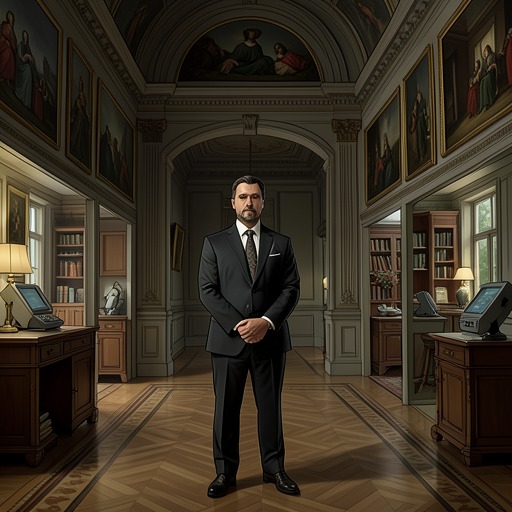
On June 21, 1922, at half past six in the evening, Count Alexander Ilyich Rostov was escorted through the gates of the Kremlin onto Red Square. The weather was glorious and cool. He crossed the square, passed through Resurrection Gate, turned away from the lilacs of the Alexander Gardens, and continued toward Theatre Square, where The Metropol stood. At the hotel entrance he thanked the two soldiers who had brought him there and told them their assistance was no longer needed. His arrival thus linked the square to the political authority behind his escort, while the hotel threshold marked the point at which he resumed control of his immediate movements.
The surrounding buildings make the square a space of both ordinary passage and public display. From the northwest windows of the hotel, the Count had long watched travelers arriving from St. Petersburg, snow falling beneath street lamps, and people hurrying toward the Bolshoi Theatre. He remembered his own younger habit of arriving late to performances after lingering over drinks at the English Club; from his seat in the twentieth row, he had enjoyed a privileged view of the ladies in the theater boxes. The square and theater therefore hold two versions of the same life: the old social world recalled through the Count’s habits, and the changing city visible beyond the glass.
The hotel windows as a viewpoint
The square repeatedly becomes legible from inside the hotel. During tea with Nina Kulikova, a samovar and tea cakes were brought in as thunderclouds gathered over Theatre Square. The conversation moved from the weather to more serious business, following the Count’s understanding of tea as a setting where formal pleasantries should quickly give way to the purpose of a meeting. The view outside is not merely scenic: it accompanies the shift from social convention to decision.
On another evening, Nina hurried to the northwest window. Across the square, the Bolshoi Theatre was illuminated from portico to pediment, while people mingled among its columns in the warm air. As the lobby lights flickered and the audience began to go inside, a taxi arrived; a woman in a red dress ran up the steps, gathering her hem in her hands. Nina watched through the glass and regretted the reversal between the woman’s place and her own. The distance across the square makes the theater a visible possibility, close enough to watch but not to enter from the hotel room.
The windows also give animals a view of the changing city. After greeting the two borzois that had arrived with their mistress, the Count watched them trot to the Theatre Square windows and rest their forepaws on the sills, following the movement of cars below. Their alert attention echoes the hotel’s wider habit of looking outward: arrivals, traffic, and the city’s daily movement become part of life indoors. In these scenes, the square is simultaneously a public space and a view framed by the hotel’s rooms.
Departures and historical change
The square serves as a threshold for departure as well as arrival. After Nina met with two young idealists, the Count watched them leave through the revolving doors. A young man spoke to the doorman, who signaled for a taxi, but Nina indicated that she was headed elsewhere. When the man offered, by gesture, to accompany her, she declined and walked across the square in the direction the narrative associates with historical necessity. The next morning she and her companions boarded a train east for Ivanovo, carrying a sense of purpose into the countryside.
That movement outward places the square beside a much larger transformation. The First Five-Year Plan called for rapid industrial expansion, while agricultural regions were expected to supply more grain. The campaign to exile kulaks, the shortage of tractors, resistant farming communities, poor weather, and rising requisitions helped turn that policy into catastrophe, including starvation in Ukraine. Theatre Square is not the site of those rural events; its narrative importance comes partly from the contrast between the metropolitan world visible from the hotel and the consequences unfolding far away. Nina’s departure connects those scales without making them identical.
The narrative also sets personal scenes against a longer political chronology. It reflects on how historians identify turning points only from a later vantage, naming the launch of the First Five-Year Plan, Bukharin’s removal from the Politburo, and the drafting of Article 58. The square’s recurring views give that historical sweep a local, concrete counterpoint: the same hotel windows remain, but the political meanings attached to the city around them continue to shift.
Public spectacle and official announcements
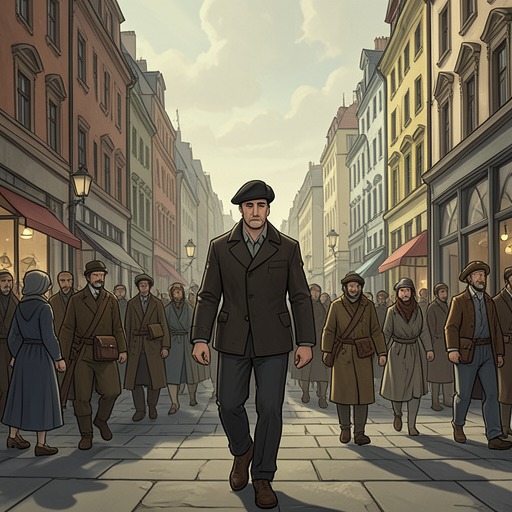
After Joseph Stalin died in his Kuntsevo residence in March 1953, the Palace of Unions on Theatre Square became a focal point of public mourning. Workmen and flower-laden trucks arrived the following day, and a portrait of Stalin three stories high covered the building’s façade. When the Palace of Unions opened to the public, the queue of citizens waiting to pay their respects stretched five miles across Moscow. The scale of the line made the square part of a citywide ritual: people mourned a leader associated with victory in the Great Patriotic War and the country’s rise to world-power status, while others confronted the uncertainty of a succession with no obvious heir.
The square later framed a different kind of official spectacle. At a dinner attended by Soviet leaders in The Metropol, Nikita Khrushchev invited the forty-four other guests to the great windows facing Theatre Square. Minister Malyshev announced that the Obninsk power plant had become fully operational, six months ahead of schedule, after three and a half years of construction. The announcement transformed the hotel windows into an audience space, turning an external view into the setting for a state ceremony. Against the earlier portrait and mourning crowds, the declaration presented technological achievement as another public claim on the square.
Continuity and narrative significance
Theatre Square gathers together experiences that the political narrative might otherwise keep apart: the Count’s remembered theatergoing, Nina’s choice to walk away, the public’s long wait at Stalin’s funeral, and the leaders’ staged announcement of industrial progress. Its most persistent feature is the hotel’s view across it. From that vantage, the city can appear as scenery, but each new crowd or ceremony also presses public history into the characters’ private routines.
The square’s role is therefore both geographic and structural. It connects the Kremlin’s authority to The Metropol’s interior, the hotel to the Bolshoi Theatre, and individual departures to national projects. Its changing crowds make history visible without making it simple: a queue can register mourning and uncertainty at once, while a technological announcement can turn an ordinary window into a platform for power. The square remains recognizable across these scenes, but its uses—and the stories told there—are never quite the same.