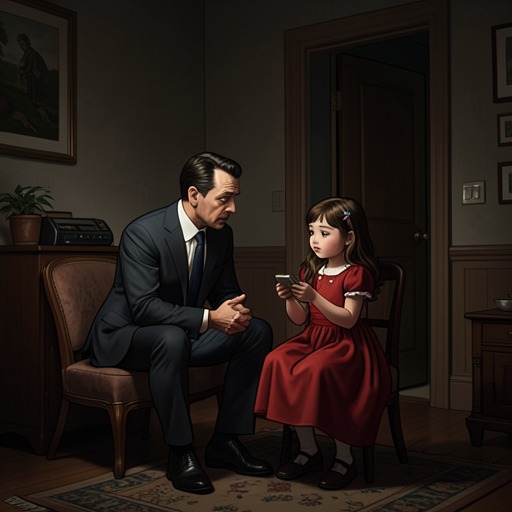
Those we have loved never slip away from us entirely
A Gentleman in Moscow“Those we have loved never slip away from us entirely” is Count Alexander Ilyich Rostov’s answer to Sofia’s fear that her memories of her mother are fading. The expression links the girl’s grief to the Count’s own earlier anxiety about forgetting his sister, presenting love as a bond that persists even when memory changes.
Meaning and Context
The remark follows Sofia’s explanation of how she finds the emotional character of a piece of music. Her teacher, Viktor Stepanovich Skadovsky, has taught her to locate the composition’s mood within her own heart before playing. For this piece, she thinks of her mother and of how her few memories of her seem to be fading; she then begins to play.
The Count has just suggested that Sofia must have drawn on a wellspring of sorrow to play the opening measures with such feeling. Her explanation shifts the exchange from his inference about her grief to the way she deliberately uses a personal memory to interpret music. The expression answers the vulnerability she has disclosed without denying that the memories are fading.
The Count’s Reassurance
Sofia asks whether her explanation makes sense. The Count says that it does, then recalls feeling similarly about his sister when he was younger: as each year passed, he feared that more of her had slipped away and that he might one day forget her altogether. His reply grows out of that remembered fear rather than from an abstract claim about memory.
He tells Sofia, “No matter how much time passes, those we have loved never slip away from us entirely.” The sentence does not promise that recollections remain complete or unchanged. Instead, it distinguishes the fading of particular memories from the persistence of the relationship they carry.
The Room and the Shared Memory
After the exchange, both fall quiet. The Count gestures around the room and says it was a favorite room of hers. Sofia assumes he means his sister, but he clarifies that he means her mother. The brief misunderstanding brings the two women’s memories into the same conversation: the sister behind the Count’s recollection and the mother at the heart of Sofia’s music.
The room makes the reassurance concrete without turning it into a claim that the past can be perfectly recovered. Sofia’s mother is present through Sofia’s fading memories and music, while the Count’s sister is present through his recollection and words. The expression’s significance lies in that distinction: remembrance may weaken, but the loved person is not thereby erased from the lives shaped by that love.