Triumvirate
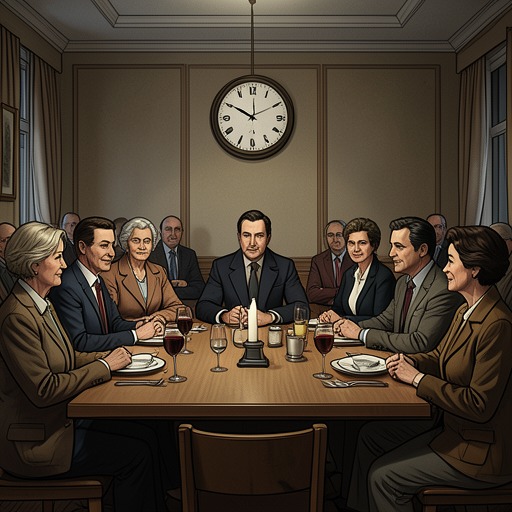
A Gentleman in MoscowThe Triumvirate is the name given to the close working and social alliance of Count Alexander Ilyich Rostov, Andrey, and Emile Zhukovsky at the Boyarsky restaurant. It is sustained less by formal authority than by shared meals, old memories, professional trust, and the quiet persistence of friendship. As titles and institutions change around them, the three continue to find one another in the restaurant and its offices; their solidarity is most visible in ordinary rituals rather than declarations of allegiance.
Members and Shared Work
The alliance brings together three different kinds of experience. Andrey is a trusted friend of the Count, while Emile is the Boyarsky’s chef, whose cooking makes the restaurant’s daily work a test of skill as well as a source of fellowship. Emile had arrived at the Metropol in 1912 with a seasoned staff, a large kitchen, and an exceptionally well-stocked larder. After the Revolution, economic decline, failed crops, and interrupted trade stripped that abundance away. He continued to cook with what was available, including cornmeal, cauliflower, and cabbage.
His resourcefulness is captured in the saltimbocca the Count eats: chicken replaces veal, Ukrainian ham stands in for prosciutto, and a bitter aromatic herb takes the place of sage. The dish shows why Emile’s place in the group is not merely convivial. His craft transforms scarcity into something worthy of the restaurant’s standards, and the Count recognizes the difference between abundance and genuine culinary ingenuity.
Meals and Rituals
The Triumvirate’s fellowship takes shape around food. At one in the morning, the three conspirators sit down together with a single candle, a loaf of bread, a bottle of rosé, and three bowls of bouillabaisse. They raise their spoons in unison, but Emile pauses before tasting, watching the Count and Andrey for their first reactions. The moment is both a meal and a small performance of trust: Emile has made the dish, and his friends’ responses matter to him.
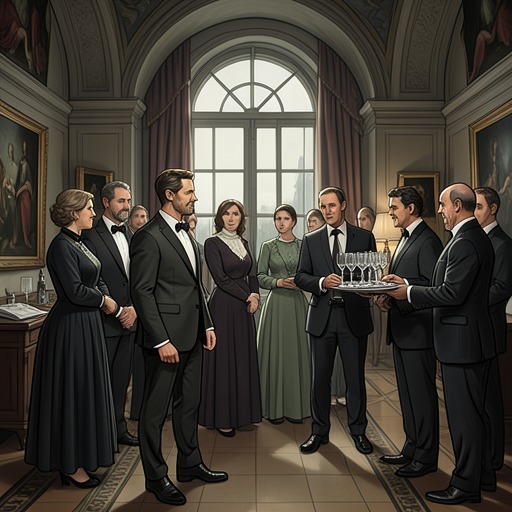
The group’s rituals also reach back to the Count’s arrival on the sixth floor. Years later, while celebrating Sofia’s victory, the Count and Andrey recall that earlier gathering, when Andrey had poured the brandy and Marina and Vasily were present. The recollection joins present celebration to a shared past without making the past seem untouched by time. Even the concierge’s sudden entrance through a closet door, just after the Count names Vasily, gives the gathering the quality of an old hotel world briefly reassembling itself.
Friendship Amid Changing Forms of Address
The Triumvirate’s personal ties persist in a society where the language of status is being remade. The hotel manager tells the Count that staff must stop addressing him as Your Excellency, because the times have changed. The Count accepts the change in principle, answering that it is the business of the times to change and the business of gentlemen to change with them. The exchange shows his willingness to adapt, but also marks the social distance the new rules seek to erase.
The rise of comrade as an all-purpose form of address sharpens that contrast. Once rare in the Count’s childhood, the word is now heard throughout the Russian language, serving as greeting, farewell, warning, congratulations, or a way to attract attention in the lobby. Its versatility displaces titles and even names. Yet when the Count receives a letter from Mikhail Fyodorovich Mindich, he recognizes the handwriting and finds his full name on the envelope. The movement from anonymous political address to the exact name written by an old friend suggests what personal bonds preserve when public forms of address flatten difference.
Pressure, Loss, and Continuity
The Triumvirate remains recognizable even as the Boyarsky’s routines acquire new pressures. The Bishop becomes the newest member of the restaurant’s daily meeting and announces that the others should not gather before his arrival. Emile answers with a grunt. The scene distinguishes the trio’s established intimacy from the more official meeting now being placed under another man’s direction; the Bishop’s presence does not make him a member of the Triumvirate.
The group’s closeness also exists alongside the loss of older friendships. Reading Mikhail Fyodorovich Mindich’s project, the Count encounters a collection of literary quotations in which the word bread has been capitalized and emphasized. A passage from The Brothers Karamazov about a dying child’s request for bread on his grave brings him to tears. He grieves for his friend, and for the fact that Mikhail Fyodorovich Mindich was the last person who had known him as a younger man. The Count’s enduring friendships with Andrey and Emile do not cancel that loss; they form part of the life that remains after it.
As the Triumvirate leaves the principal’s office after a meeting, the three walk silently toward the stairwell. At the landing, when Emile climbs toward the second floor, the Count takes Andrey by the sleeve and asks whether he can spare a moment. The episode ends not with a public statement but with a private appeal between friends. Soon afterward, the Count prepares the Boyarsky for the dinner of the Presidium and Council of Ministers, placing the trio’s accustomed companionship beside the demands of a major official occasion.