
The Serbian Panic
A History of the Vampire in Popular CultureThis thread follows the transition from local deaths to official vampire investigation and ritual dismemberment in eighteenth-century Serbia.
increasing Bearing strength in each event
 decreasing
Bearing strength in each eventdecreasingPaole’s Accident
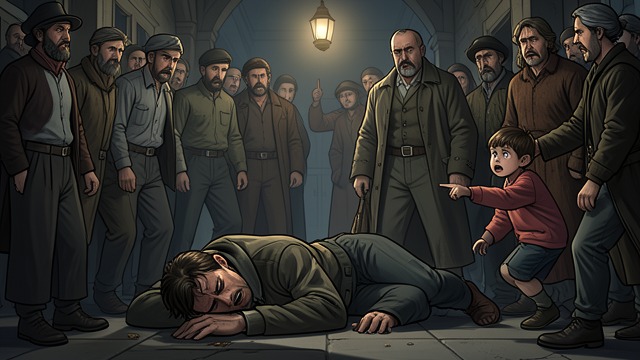
Paole’s Accident
Sudden Death
Arnold Paole dies after breaking his neck in Trstenik. His earlier claim of surviving a vampire attack gives the death an ominous interpretive frame.
Contagious Suspicion
When villagers later become sick, Paole’s personal story supplies an explanation. The dead man is recast as the source of further deaths.
Corpse Exhumation
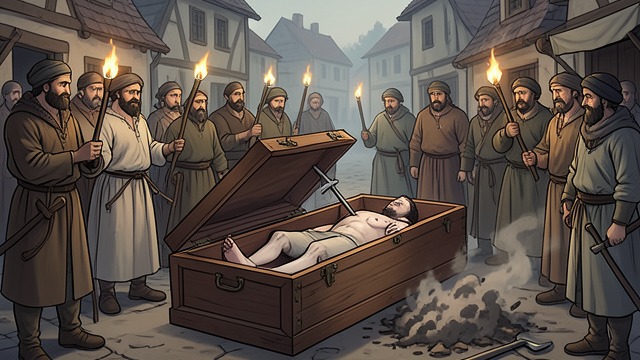
Corpse Exhumation
Signs of Vampirism
Villagers report that Paole’s body has not decomposed and that new nails have appeared. Natural postmortem changes are interpreted as evidence of renewal.
Ritual Violence
The corpse is staked and cremated. Fear converts burial into a public trial in which the body must be destroyed to restore communal safety.
The 1731 Outbreak
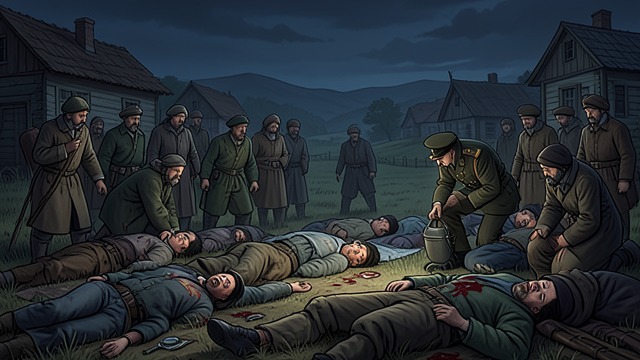
The 1731 Outbreak
Clustered Deaths
A series of deaths in a Serbian village produces renewed suspicion. Malnutrition and illness are proposed, but residents insist that vampires are responsible.
Official Attention
The dispute becomes serious enough to attract medical and military officials. Local fear is elevated into a documented public event.
Flückinger’s Report
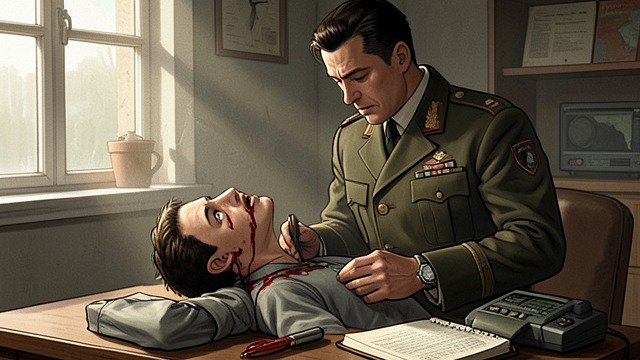
Flückinger’s Report
Bureaucratic Confirmation
Johann Flückinger records corpses with open eyes, apparent blood, and unusual fullness. His report treats vampirism as the most logical conclusion despite the evidentiary weakness.
Authority Amplified
Official documentation gives local superstition international reach. Once printed and circulated, the investigation becomes part of vampire history itself.
Public Legend
Public Legend
Press Transmission
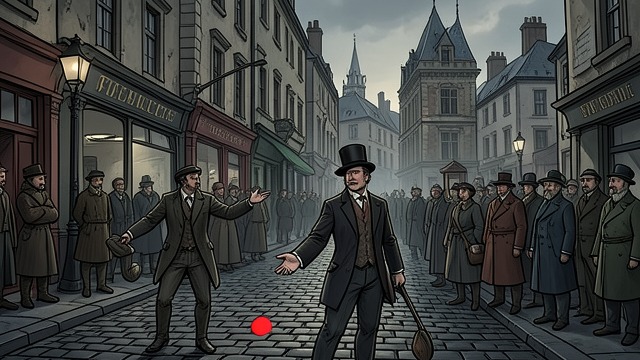
Reports travel into London newspapers and become evidence that distant European villages are inhabited by the undead. Geographic distance increases rather than reduces the story’s glamour.
Mythic Consolidation
The Serbian cases help define the vampire as a contagious, returning corpse. Local panic becomes a foundation for later Gothic literature.
1726
after Paole’s death
1731
1732
the eighteenth century
