19th-century New England vampire panic
A History of the Vampire in Popular CultureThe 19th-century New England vampire panic was not a single outbreak of supernatural violence but a recurring social response to household deaths attributed to tuberculosis. In an era when the disease was poorly understood, families and neighbours could interpret successive illnesses as the work of a dead relative returning to consume the life force of survivors. The panic converted medical uncertainty into a visible target: the grave, the corpse, and the suspected vampire within it.
Causes and Historical Setting
The panic took hold across New England during the nineteenth century, while tuberculosis was running through the region. Known as “consumption” because it seemed to consume a victim’s health, tuberculosis was highly contagious and could spread rapidly through households with lower hygiene standards than those expected today. When one family member died and others became ill, there was no reliable way to know who would be next or why one person survived while another did not. The supernatural explanation supplied a frightening but intelligible chain of causation: the first victim had returned from the grave and was draining the vitality of relatives who remained alive.
This interpretation belonged to a broader nineteenth-century climate of credulity and instability. The second Industrial Revolution was transforming technology and social life at a speed that could seem magical, while spiritualism and seances attracted people who hoped to approach God or find stability amid upheaval. Victorian culture combined industrial discovery with a pronounced appetite for the macabre; newspapers could still report witchcraft as fact. In that setting, older beliefs in revenants and vampires did not simply survive as isolated folklore. They offered a ready language for experiences that medicine and public institutions could not yet explain.
The panic also depended on the authority of communal suspicion. Fear of the undead had previously produced mass accusations in eastern Europe, where whole villages dug up corpses and staked them. Reports of such cases, including the documented Serbian vampire epidemic of 1731 and Antoine Augustin Calmet’s discussion of revenants and vampires in The Phantom World, helped preserve a cultural model in which unusual corpses and clustered deaths were treated as connected evidence. Calmet remained sceptical about the supernatural interpretation and suggested that older burial customs, including leaving food and wine on graves, might have encouraged the belief that the dead returned to consume offerings. Yet the persistence of these stories demonstrated how religious practice, medical observation, and popular narrative could reinforce one another even when their conclusions conflicted.
The Mercy Brown Exhumation
The most fully developed New England episode centred on Lena “Mercy” Brown, a nineteen-year-old daughter of George and Mary Brown in Exeter, Rhode Island. Tuberculosis had already killed Mercy’s mother, Mary, in 1883 and her eldest daughter, Mary Olive, in 1886. In 1891, Mercy and her brother Edwin also contracted the disease. Mercy died in January 1892, but Edwin remained ill, and friends and neighbours began to suspect that the family’s deaths had a supernatural cause.
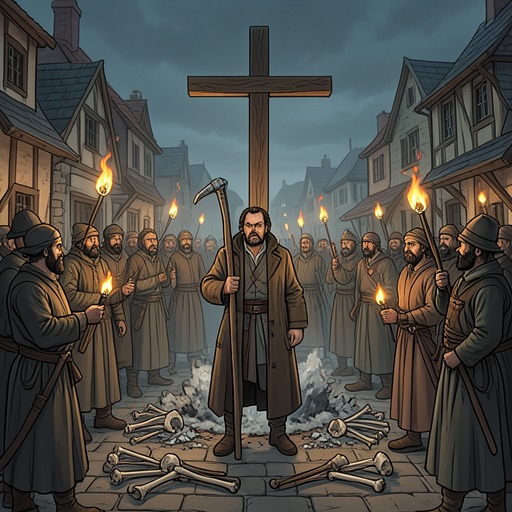
They persuaded the reluctant George Brown to disinter the bodies of his dead relatives. The purpose was not merely to satisfy curiosity: the exhumation was undertaken in the hope of saving Edwin’s life. The family’s grief was therefore redirected into a diagnostic and protective ritual. By opening the graves, the community sought to identify the alleged source of the disease and interrupt its movement through the household.
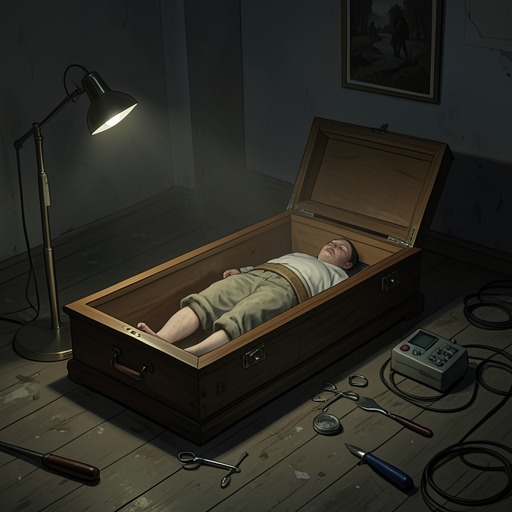
The exhumed bodies appeared to offer different kinds of evidence. Mary and Mary Olive had decomposed in ways consistent with the length of time they had been buried. Mercy’s corpse, by contrast, appeared “fresh,” showing little decomposition. That appearance was later explainable: she had been dead for less than two months during the coldest part of the year, and her coffin had been kept in a crypt because the frozen ground was too hard to dig. At the time, however, the lack of decay was treated as a sign that Mercy remained active after death.
A local doctor objected to the supernatural conclusion. He removed Mercy’s lungs and insisted that they showed signs of tuberculosis, a disease already known for centuries and formally recognised by the medical profession since the early 1800s. His medical objections failed to overcome the force of communal superstition. Mercy’s heart and lungs were cut out and burned on a pyre built on nearby rocks, turning the corpse into the focus of a public attempt at treatment.
Ritual Treatment and Its Failure
The panic’s logic required more than identifying a vampire; it required a remedy. In the hope of saving Edwin, Mercy’s burned heart and lungs were reduced to ashes, mixed with water, and given to him as a medicinal concoction. The act combined exhumation, destruction of the suspected infectious agent, and ingestion of its remains as a cure. It was a material response to an invisible threat, but it could not alter the course of tuberculosis.
The remedy failed, and Edwin died on 2 May 1892. His death exposed the terrible cost of the vampire explanation. The ritual had offered the family a sense of agency in circumstances dominated by contagious disease and uncertainty, but it did not stop the illness. Instead, the effort added another layer of violence to the family’s bereavement: Mercy’s body was opened, her vital organs were burned, and her remains were administered to a surviving relative without preventing the death the ritual was meant to avert.
Bodies, Evidence, and Medical Reinterpretation
The central evidence in such cases was often the corpse itself. Stories of disinterred bodies with blood around the mouth, or even blood in the stomach, predated modern knowledge of decomposition. What appeared to be proof of feeding could result from purge fluid, produced as body tissues break down. As pressure builds inside a corpse, the dark red-black fluid can be forced through the mouth and nose and collect in the main body cavities. If a body is staked, the pressure may release the fluid in a way that resembles bleeding.
This physical explanation also offers a possible account of reports that a staked corpse shrieked. Gases produced inside a decomposing body can build up and be released under pressure, creating a noise that frightened witnesses could interpret as a final supernatural response. Such explanations do not erase the historical reality of the panic. They clarify instead how ordinary postmortem processes became persuasive signs within a cultural system already prepared to read the dead as agents.
The same interpretive problem appears in other accounts of revenants. Taphophobia, the fear of being buried alive, was once a reasonable fear because medicine had not established reliable definitions of death. A report from Naples described a woman buried while apparently in a trance; when the grave was later opened, her clothing had been torn apart and her limbs broken as she tried to escape. The doctor who certified her illness and the mayor who authorised the burial were each sentenced to three months’ imprisonment for involuntary manslaughter. Although verifiable premature burials were uncommon, the possibility made stories of the dead returning especially powerful. The boundary between clinical death, burial, and animation remained frighteningly uncertain.
Fear, Control, and Historical Significance
The New England panic shows how a community can transform diffuse disaster into a persecuted cause. A series of apparently arbitrary deaths produces helplessness: no one knows who will die next, why the disease has entered one house, or why medical advice cannot protect the living. Folk narrative gives that fear a direction. By naming a dead person as the source of danger, it creates a target for anger and a ritual through which survivors can imagine that control has been recovered.
The Mercy Brown episode makes this process unusually visible because the medical explanation was present but powerless in the face of social conviction. The doctor identified tuberculosis in the lungs, while neighbours treated the apparently preserved corpse as evidence of vampirism. Competing authorities therefore confronted the same body: medicine read disease, whereas the community read agency and attack. The exhumation did not represent a simple absence of knowledge; it was an alternative explanatory system that organised family responsibility, communal action, and the hope of cure.
Its historical importance lies in the way it joins the intimate and the collective. Tuberculosis moved through households biologically, but the vampire panic moved through communities culturally, linking graves, newspapers, older European precedents, religious assumptions, and local ritual. The event also reveals why vampire stories remain durable: they convert invisible processes of infection and decay into figures that can be named, confronted, burned, or blamed. In New England, the vampire was less a monster discovered in the grave than a narrative produced at the point where grief, contagion, and uncertainty became unbearable.