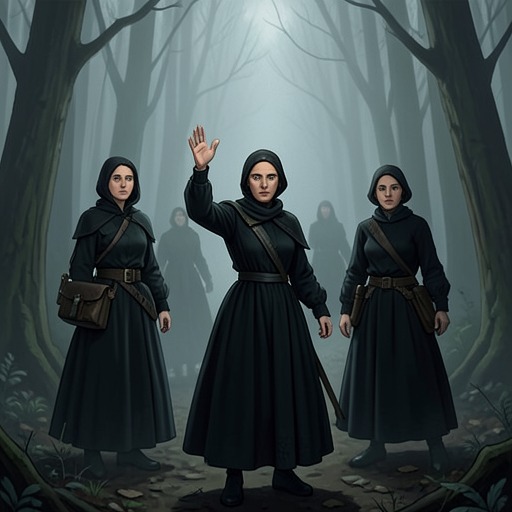
Abraham Van Helsing
A History of the Vampire in Popular CultureAbraham Van Helsing is the principal human opponent of Count Dracula in Bram Stoker’s Dracula and one of the most influential figures in the development of vampire fiction. He is not merely a monster hunter: he represents the authority to interpret strange bodies, identify hidden contagion, organize collective action, and decide which beliefs deserve to survive. Later adaptations repeatedly alter his age, gender, profession, and temperament, but retain the central function of a determined investigator who turns vampiric terror into a problem that can be studied, named, and attacked.
Identity and Historical Function
In the original Dracula tradition, Van Helsing belongs to a nineteenth-century world in which scientific progress and older religious explanations coexist uneasily. The second Industrial Revolution had transformed technology so rapidly that new inventions could seem magical, while spiritualism and séances attracted people who otherwise regarded themselves as practical and educated. At the same time, the nineteenth-century vampire panic in New England and the eighteenth-century vampire craze in eastern Europe showed how unexplained deaths could be converted into supernatural accusations. Tuberculosis, especially, was interpreted in some communities as the dead returning to drain the life force of surviving relatives. Van Helsing’s importance arises within this conflict between diagnosis and superstition: he is the figure who must confront the corpse without surrendering either to credulity or to complacent disbelief.
That historical tension also explains why vampire hunters acquire institutional authority. In the Mercy Brown vampire incident, a doctor identified tuberculosis in the exhumed body and explained the apparent freshness of the corpse through its short burial, winter cold, and storage in a crypt, yet his objections were ignored. In the Serbian vampire panic of 1731, a physician’s explanation of thirteen deaths as malnutrition likewise failed to satisfy villagers, and Johann Flückinger was sent to inspect corpses that appeared unusually plump and seemed to contain fresh blood. Van Helsing belongs to the literary tradition that gives such unsettling evidence a disciplined interpreter, although Dracula also keeps the boundary between medical knowledge and supernatural conviction deliberately unstable.
Role in the Dracula Narrative
Van Helsing’s practical role is to assemble the scattered signs of Dracula’s activity into a coherent threat. The novel’s epistolary structure distributes knowledge among diaries, letters, and reports, so no single observer initially possesses the whole pattern. Van Helsing’s intervention helps transform isolated injuries, altered behavior, mysterious deaths, and the movements of the Count into an organized campaign. He joins Jonathan Harker, Mina Murray, Quincey Morris, and Arthur Holmwood in pursuing Dracula back to his lair, using Mina’s psychic connection with the vampire as a means of locating and understanding him.
His authority is therefore both intellectual and tactical. He does not defeat Dracula through strength comparable to the vampire’s. Instead, he interprets signs, coordinates witnesses, and combines modern investigation with inherited protective rituals. The crucifix, communion wafers, religious quotations, and the use of daylight all belong to a symbolic system in which Christianity functions as the force opposed to vampiric darkness. Yet the book’s larger history complicates this apparent certainty. The rule that vampires fear the cross was not a timeless supernatural fact; later film and television versions helped standardize and intensify it, with daylight killing vampires beginning notably with F. W. Murnau’s Nosferatu rather than with Stoker’s novel.
Van Helsing’s most memorable struggle is consequently a struggle over interpretation. He must persuade others that Dracula is not simply a criminal, a diseased man, or an eccentric foreign aristocrat. The Count’s vampirism is portrayed almost as a communicable disease, particularly after his arrival in Victorian Britain, and Van Helsing’s task resembles an investigation into an epidemic whose symptoms are moral, sexual, bodily, and supernatural at once. The vampire hunter becomes a diagnostic authority: he names the condition, identifies its transmission, and prescribes the methods by which it can be contained.
Mina Murray and the Ethics of Protection
Van Helsing’s relationship with Mina Murray reveals the gender politics embedded in his heroic role. In Francis Ford Coppola’s Bram Stoker’s Dracula, Mina’s blood connection with Dracula is used by Van Helsing and the other hunters to track the Count. Her ingestion of Dracula’s blood creates a psychic and almost spiritual bond, making her both a source of knowledge and a person placed under protection. The hunters therefore depend upon Mina’s connection while also treating it as a danger that must be controlled.
That contradiction becomes explicit when the hunters wait outside Dracula’s castle in the snow. Dracula’s Brides encourage Mina to seduce Van Helsing’s guardian figure, and Mina moves toward violence with fangs ready. Van Helsing resists through religious quotations and communion wafers, temporarily warding off the threat. The scene presents him as the man of God who saves a woman from the consequences of her own desire, a formulation that exposes the adaptation’s moralizing structure as clearly as it affirms his protective function.
His treatment of Dracula’s Brides intensifies the same pattern. Waiting for daylight, Van Helsing calls them “Whores of Satan!” and beheads them while they sleep, then throws their heads from the cliff. The action is framed as practical vampire hunting, but its imagery also turns female sexuality into something to be purged and discarded. Van Helsing’s power is thus double-edged: he protects Mina from becoming a vampire, yet he does so within a patriarchal moral order that repeatedly casts women’s erotic agency as contamination, temptation, or punishment.
Agatha Van Helsing and the Reversal of the Hunter
The 2020s BBC adaptation of Dracula radically revises Van Helsing by introducing Sister Agatha Van Helsing, a cynical nun played by Dolly Wells. Agatha describes vampirism matter-of-factly as “a contagion” that removes “the holy ability to die.” Her formulation preserves the original hunter’s concern with diagnosis while stripping it of easy religious certainty. She is associated with the convent, the crucifix, and Christian language, but she is disillusioned with God and nearly atheistic in outlook. When Dracula questions her presence in a convent, she explains it as the consequence of a loveless marriage and the need to maintain appearances for shelter.
Agatha’s self-description, “I’m all your nightmares at once – an intelligent woman with a crucifix,” condenses the adaptation’s reversal of the traditional Van Helsing role. She is not a passive victim waiting to be rescued by male expertise. She hunts Dracula not only as a physical enemy but as a problem of truth and logic. She develops theories about his supposed rules and tests them even when she is unsure of the results. Her curiosity, rather than unquestioning faith, drives the investigation, and her fascination with Dracula makes her a predator of explanations as much as he is a predator of bodies.
The adaptation also makes Agatha and Dracula’s relationship a contest of mutual fascination. Dracula drinks her blood and takes her inside himself physically and mentally, while she deliberately goads him to bite her. The blood exchange creates a bond that is neither simple romance nor simple combat. It places the hunter within the vampire’s interior world and makes the vampire carry his opponent within him. In this version, the opposition between Van Helsing and Dracula becomes more intimate and psychologically complex than the straightforward alliance of hunter and hunted.
Science, Patriarchy, and the Meaning of the Monster
Van Helsing’s broader narrative significance lies in his embodiment of competing systems of authority. In both the original story and the BBC adaptation, he represents science, patriarchy, a mixture of modern thought and the Old Ways, and the fear that these systems may lose their authority. He clings to inherited beliefs while recognizing that modern unbelief may sweep them away. The crucifix is therefore not only a weapon; it is a symbol of a threatened worldview attempting to remain indispensable.
The later Dracula also makes Van Helsing’s authority look less secure by revealing that many of the vampire’s supposed limitations exist only in his mind. The Count believes he must be invited across a threshold, cowers from the cross, and treats sunlight as a fetishized object of desire, asking Jonathan Harker to describe the sunrise to him. In the final scenes, the adaptation reveals that these barriers are products of centuries of belief. Dracula has internalized the myths created and reinforced by vampire fiction, while Van Helsing’s role is reimagined as the person who investigates the structure of those myths rather than simply obeying them.
This development reflects the wider history of vampire representation. Varney becomes a sympathetic figure who fights his instincts and eventually kills himself to escape eternal existence. Carmilla makes the vampire an elegant, openly predatory woman whose same-sex desire carries the charge of Victorian taboo. Nosferatu turns Dracula into the repulsive Count Orlok, while later adaptations make the vampire beautiful, erotic, comic, sympathetic, or politically assimilated. In True Blood, vampires emerge “out of the coffin” and seek equality through the use of Tru Blood, a synthetic substitute that theoretically permits peaceful coexistence with humans. Against such changes, Van Helsing remains the recurring figure who asks what the vampire is, what rules govern it, and who has the power to define those rules.
His final significance is therefore less that of an unchanging hero than of a cultural function. He is the investigator who stands where evidence meets fear, where medicine meets religion, and where private desire becomes public danger. The vampire may change from revenant to aristocrat, from monster to antihero, or from hidden predator to visible minority, but Van Helsing’s presence marks the moment when society tries to impose a method upon the darkness. He gives the vampire story an argument about knowledge: every generation claims to have discovered what the creature really means, and every new adaptation proves that the meaning remains unsettled.