Adam–Eve relationship
A History of the Vampire in Popular CultureThe Adam–Eve relationship is the emotional center of Jim Jarmusch’s Only Lovers Left Alive, presenting immortal love not as youthful permanence but as a centuries-old practice of recognition, patience, and mutual rescue. Adam and Eve live thousands of miles apart, Adam in Detroit and Eve in Tangier, yet their connection remains active across the distance. They are lovers whose intimacy has survived so long that boredom, danger, art, and appetite have become shared conditions rather than temporary crises.
Identity and Separation
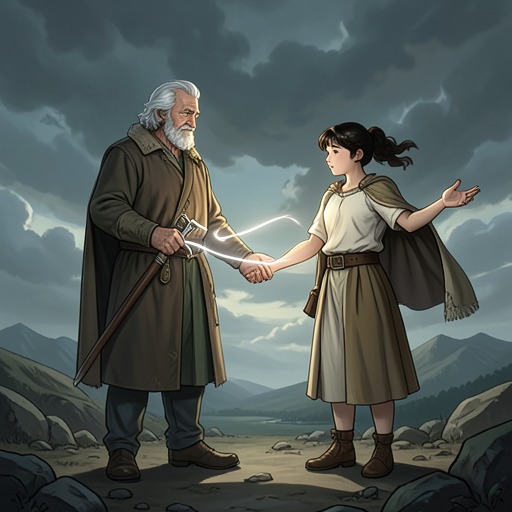
Adam and Eve are ancient vampires and lovers who have spent centuries together while maintaining separate lives on different continents. Adam lives in Detroit, where he has withdrawn from the world into a hermit-like existence. He is a famous musician whose work has influenced major names across the centuries, but his fear of being discovered has suppressed his desire to create and pushed him toward dramatic isolation. Eve, by contrast, lives in Tangier. Their physical separation does not indicate emotional estrangement: she can sense Adam’s distress even across great distances and travels, reluctantly but decisively, to Detroit to help him.
Their relationship therefore begins from a paradox. They are profoundly connected, but they do not need constant proximity to prove that connection. Immortality has made ordinary romantic urgency unnecessary. Adam can languish in Detroit while Eve carries on in Tangier, secure in the knowledge that the other remains reachable when the situation becomes serious. Their bond is less a sequence of declarations than a durable form of mutual awareness.
Shared Survival and Ethical Limits
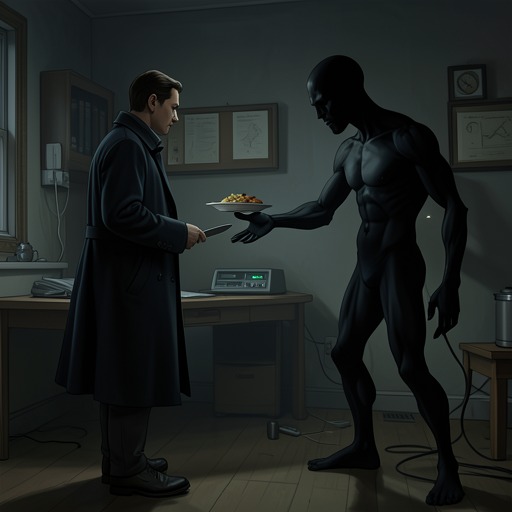
Adam and Eve have stopped feeding indiscriminately because they fear contamination from the blood supply of modern humans. Their survival depends on carefully obtained “special supplies” rather than casual killing. Adam visits a hospital contact in the middle of the night to obtain the blood he needs, while Eve receives her supplies from their old friend Christopher Marlowe in Tangier. The arrangement allows them to live a minimally murderous lifestyle, but it does not make them harmless or conventionally moral.
The death of Christopher Marlowe exposes the fragility of that compromise. When Marlowe dies, Adam and Eve lose both a beloved friend and the source that has sustained their restricted diet. His death transforms their polished, insulated existence into an immediate survival problem. Without the supplies that enabled them to avoid indiscriminate predation, their way of life is no longer viable.
The couple’s response is stark. On the brink of their final true death, they encounter two young lovers enjoying a romantic evening. Adam and Eve approach them in a friendly manner, but as they bare their fangs, the last words of the encounter are, “Well, what choice do we have?” The line turns their relationship’s apparent refinement into an admission of necessity. They still kill the two young people because they are hungry, not because the victims have committed any offense or because the couple has discovered a moral justification. Their affection for one another and their cultivated superiority do not cancel the predatory condition of their existence.
Family Disruption and Crisis
Eve’s arrival in Detroit is followed by the arrival of her younger sister Ava from Los Angeles. Ava finds Adam and Eve’s carefully controlled life boring and attempts to disturb it with the casual force of someone shaking a snow globe. Her presence introduces an energy that the older couple have excluded from their safe isolation. Even while they try to restrain her appetites, the disruption begins to break through the shell of their carefully managed ennui.
Ava drinks all the good blood in the house and persuades the unwilling couple to go to a nightclub. There Adam becomes disconcerted when the live band plays his own music, an encounter that exposes how closely his desire for artistic recognition is tied to his fear of discovery. The night’s excitement has consequences when Eve later discovers that Ava has killed Adam’s acolyte, Ian. Ava explains that Ian was attractive and that she did not mean to kill him, but the result is still fatal and irreversible.
Adam and Eve respond as a unit to the crisis. They expel Ava from the house and dispose of Ian’s body in an acid bath. Their action is practical rather than sentimental: affection for Ava does not permit them to ignore the danger she has created. The arrival of Adam’s fans outside the house compounds the threat, forcing the couple to abandon Detroit and return to Tangier with only the belongings they can carry. Their relationship is thus tested not by a romantic betrayal but by the pressure of an immortal family whose appetites conflict with the couple’s fragile survival system.
Time, Ennui, and Mutual Care
The relationship’s distinctive atmosphere comes from its “glacier-slow, dreamlike” existence. Adam and Eve are not propelled by the schedules that govern mortal life. In their universe, everything can wait because they have all the time in the world. That abundance of time produces beauty and knowledge, but it also produces ennui. Adam has existed for so long that he struggles to find anything interesting in the world, while Eve’s connection to him remains sufficiently strong for her to recognize that his withdrawal has become dangerous.
Eve’s journey to Detroit is therefore an act of care, even though it is undertaken reluctantly. She does not cure Adam’s despair through a grand romantic gesture, nor does the relationship eliminate the conditions that cause it. Instead, her presence interrupts his isolation. Their reunion creates a temporary shelter in which Adam’s distress can be acknowledged without being explained away. Their intimacy is built on familiarity with one another’s exhaustion, not on the assumption that love must make immortality easy.
Their bond also allows the film to hold two apparently opposed ideas together. Adam and Eve possess an “otherworldly air,” yet their domestic problems resemble those of any long-established couple: an intrusive younger relative, depleted supplies, a dangerous houseguest, and the consequences of a companion’s reckless behavior. The difference is that their family arguments occur across centuries and involve acid baths, contaminated blood, and the concealment of supernatural identities.
Ending and Significance
The couple’s return to Tangier does not restore their former security. Marlowe has unknowingly drunk contaminated blood while Adam and Eve were away and is dying, removing the last reliable source of their special supplies. His death leaves Adam and Eve facing the consequences of their chosen restraint. They have rejected indiscriminate feeding, but the modern world offers no dependable alternative once their contact is gone.
The relationship consequently ends not in moral purification but in renewed predation. Adam and Eve still recognize themselves as superior to ordinary mortals, and they do not linger over the moral implications of killing the young lovers who become their emergency meal. Unlike the Cullens, who struggle to preserve a humane identity through an animal-based diet, Adam and Eve do not waste time pretending that survival has made them innocent. They remain animals at heart and survive as such.
This refusal gives the relationship its particular force. Adam and Eve are affectionate, cultivated, empathic, and capable of a minimally murderous lifestyle, but they are not transformed into human beings by love. Their centuries together create loyalty without redemption and intimacy without innocence. The relationship makes immortality appear both enviable and unbearable: the lovers have unlimited time to preserve their bond, yet that same time has drained the world of novelty and left them dependent on increasingly precarious forms of nourishment. Their final choice shows that even a beautiful, enduring partnership cannot escape the material demands of the undead body.