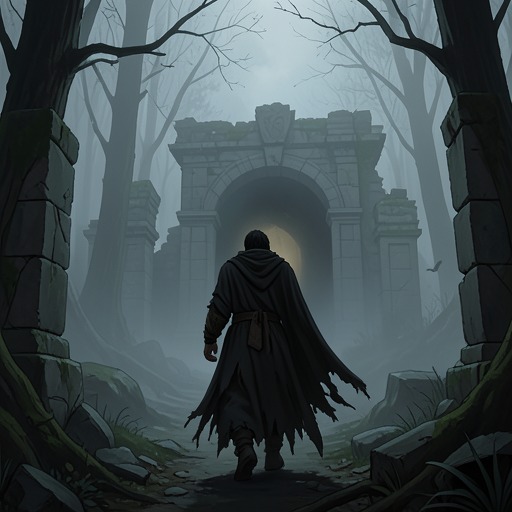
Astryiah
A History of the Vampire in Popular CultureAstryiah is an elderly female vampire described in Sefer Hasidim, the Book of the Pious, written around the turn of the thirteenth century. She is significant not because the surviving account gives her a developed biography, but because its few details preserve a striking early model of the blood-drinking creature: an apparently human older woman whose body provides the means of attack, whose victims are endangered through an intimate and unexplained form of feeding, and whose defeat depends on a peculiar food-based remedy. Her fragmentary appearance also illuminates the unstable boundary between vampire, witch, and estrie in older supernatural traditions.
Identity and Source
Astryiah appears in a Jewish story from Sefer Hasidim, a collection associated with the early thirteenth century. The text calls her an elderly female vampire and says that she sucks the blood of her victims through her hair. No further explanation survives concerning the mechanics of this act, leaving the hair simultaneously as an ordinary bodily feature and as an uncanny instrument of predation. That unexplained detail is central to her identity: Astryiah is not presented through a fully standardized set of powers, but through one memorable violation of the expected relationship between body and appetite.
The account is part of a much older and geographically varied history of life-sucking beings. Before Gothic literature established the familiar modern image of the vampire, such creatures were generally feared and loathed and were often imagined as physically ugly. Older stories were especially associated with Eastern Europe, while different cultures assigned blood-drinking, child-killing, seducing, or corpse-returning functions to different beings. Astryiah belongs to this pre-nineteenth-century landscape rather than to the later aristocratic and romantically alluring vampire tradition.
Powers and Method of Feeding
Astryiah’s defining action is the extraction of blood through her hair. The source gives no additional description of whether she flies, changes shape, approaches sleeping victims, or uses any other supernatural ability. The absence of explanation preserves the strangeness of the image rather than resolving it into a familiar anatomical or folkloric system. Her hair becomes a boundary-crossing medium: something associated with appearance and identity is transformed into a channel through which life is taken from another body.
The narrative associates Astryiah with the estrie, a creature assumed to be capable of flying and taking different forms in order to catch and suck the blood of victims. This identification is presented as an interpretation rather than as a fully elaborated statement within the surviving account. It places Astryiah within a wider class of female supernatural predators whose danger could involve both physical consumption and unstable bodily form. In that respect, her story stands near other traditions in which a female blood-drinker could also resemble a seductress, witch, or demon, without those categories being cleanly separated.
Remedy and Ritual Boundaries
The account gives Astryiah an unusually specific weakness or antidote: anyone bitten by an estrie is said to be cured by eating the creature’s bread and salt. The remedy turns nourishment into a counterforce against blood loss. Bread and salt are ordinary domestic foods, yet their connection with the vampire’s household or provision makes them part of a supernatural economy in which contamination and protection are negotiated through ingestion.
This detail also complicates the usual logic of vampire stories. The threat is not answered only by weapons, staking, fire, or religious objects. Instead, survival depends on consuming food associated with the attacker. The remedy suggests a reversal of predation: the victim answers the drinking of blood by taking in something belonging to the creature. Because the source supplies no procedure beyond eating the bread and salt, Astryiah’s story remains a compact folkloric prescription rather than a complete exorcistic ritual.
Relation to Witch and Estrie Traditions
The same collection includes a method for killing a witch identified as an estrie, and that method sounds similar to practices later associated with vampires. The juxtaposition is important because it shows that the categories of witch and vampire could overlap in premodern narrative. Astryiah is called a vampire, yet her presumed identity as an estrie and the adjacent account of an estrie-witch place her within a shared field of female supernatural harm, bodily transformation, and postmortem or nocturnal danger.
The overlap does not establish that Astryiah herself was killed by the procedure described for the witch. Rather, it demonstrates how the text organizes related threats: a woman capable of causing numerous deaths can be seized, questioned, and subjected to measures intended to prevent further consumption. The story’s concern is therefore not only what the creature is, but how a community classifies and neutralizes a dangerous figure whose identity crosses religious, social, and bodily boundaries.
Historical and Cultural Significance
Astryiah’s brief appearance matters because it predates the modern literary vampire while already containing several elements that later narratives would repeatedly reshape: a female predator, the taking of blood, an uncanny relation to the body, and a remedy governed by symbolic or ritual logic. Unlike later vampires who may be elegant, romantic, or socially integrated, she is presented as an elderly and threatening figure within a moral world that treats supernatural predation as a practical danger.
Her story also belongs to a broader pattern in which unexplained illness and death were translated into supernatural causation. In later historical episodes, including the eighteenth-century vampire craze and the nineteenth-century New England vampire panic, communities interpreted clusters of deaths through the figure of the undead, exhumed bodies, and sought ritual interventions when medical explanations seemed inadequate. Astryiah is not part of those later incidents, but her account helps show the persistence of a cultural vocabulary in which blood, illness, death, and social fear could be made intelligible through the vampire.
At the same time, Astryiah’s gender connects her indirectly with the long history of female supernatural otherness. Later figures such as Lamia and Carmilla would develop different combinations of seduction, sexuality, violence, and cultural transgression. Carmilla, in particular, would be presented as an openly gay woman in nineteenth-century fiction, when same-sex relationships were far from socially acceptable. Astryiah has none of Carmilla’s developed romantic plot or psychological interiority, but the early account similarly locates extraordinary danger in an older female figure whose body and appetite resist ordinary social classification.