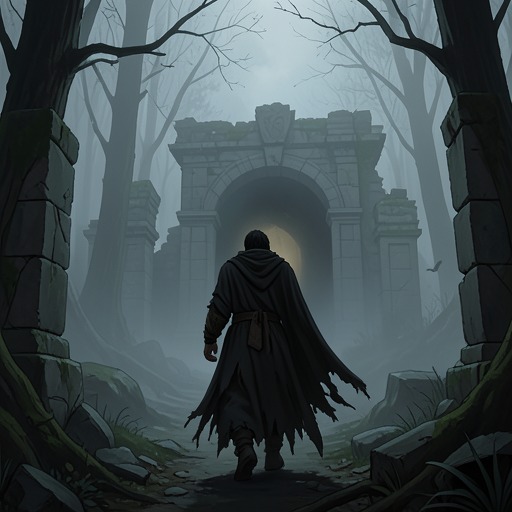
Aubrey
A History of the Vampire in Popular CultureAubrey is the young man whom Lord Ruthven befriends in John William Polidori’s The Vampyre, and his importance lies in the way the story makes vampiric violence personal. Ruthven does not merely prey upon anonymous strangers: he moves through Aubrey’s intimate circle, consuming his nearest and dearest and transforming friendship into a channel for destruction. Although Aubrey is only briefly identified in the historical account of the tale, his position as witness, companion, and victim gives The Vampyre its crucial human perspective.
Identity and Introduction
Aubrey appears in a story published in the April 1819 edition of New Monthly Magazine. The tale was written by John William Polidori, though it was published without his permission or name and falsely attributed to Lord Byron. At its center is Lord Ruthven, a vampire who befriends Aubrey before proceeding to attack the young man’s closest relations. Aubrey therefore enters the narrative not as an already defined monster hunter or scholar of vampirism, but as the human figure through whom Ruthven’s menace becomes socially and emotionally legible.
The account gives no detailed biography of Aubrey, yet his narrative function is precise. Ruthven’s access to him creates proximity to the people Aubrey values, and the vampire’s predation acquires its force from that movement through a network of personal trust. The relationship is consequently more dangerous than a simple encounter between predator and prey: Aubrey’s friendship helps bring the threat near, while the destruction of his nearest and dearest makes the consequences of that trust intimate and cumulative.
Creation of The Vampyre
The story grew from the 1816 ghost-story competition at Villa Diodati. Five friends, forced indoors for three days by exceptionally bad weather, read aloud from Fantasmagoriana, a collection of dark German fairy tales, and decided that each would write an original ghost story. The most famous result was Frankenstein; or, The Modern Prometheus, but Polidori’s contribution became an important rival because it redirected the supernatural tale toward the aristocratic, socially mobile vampire embodied by Lord Ruthven.
At the core of Polidori’s tale was an unfinished fragment begun by Lord Byron for the competition. The fragment, originally titled A Fragment…, supplied material, but the completed story was Polidori’s. Aubrey’s role belongs to that completed design: he is the young companion placed in Ruthven’s path, the character whose personal attachments allow the vampire’s appetite to unfold as a chain of intimate losses rather than as a detached catalogue of horrors.
The publication history complicates Aubrey’s place in literary history. Henry Colburn reinforced the false attribution to Byron partly through Polidori’s use of the name Ruthven, which recalled Lady Caroline Lamb’s Clarence de Ruthven, her disguised portrayal of Byron in Glenarvon. Polidori initially tried, unsuccessfully, to establish his authorship, while Byron was also angered by the association. Whatever the authorial dispute, Aubrey remained attached to the work that helped make the modern literary vampire a recognizable figure.
Relationship with Lord Ruthven
Aubrey’s defining relationship is his friendship with Lord Ruthven. The evidence presents Ruthven as someone who gains access through companionship and then turns that access into an instrument of predation. Aubrey’s vulnerability is thus relational: the danger does not arrive only from a visibly inhuman creature but from a person who can occupy the social position of a friend.
This structure distinguishes The Vampyre from later stories in which the vampire’s identity is surrounded by elaborate mythology or cinematic spectacle. Aubrey is placed beside an apparently social and cultivated predator whose plans and moral character are part of his appeal. The vampire’s violence becomes more disturbing because it operates through ordinary human expectations of loyalty and association. Ruthven’s attacks on Aubrey’s nearest and dearest make the young man’s social world the true terrain of the horror.
The name Ruthven also binds Aubrey’s story to the cultural afterlife of Byron. Byron had already supplied one of the earliest English literary descriptions of the vampire in The Giaour, printed in 1813, while Polidori’s story appeared six years later. In The Vampyre, Byron’s aura is converted into a fictional aristocratic predator, and Aubrey becomes the human counterpart required to expose what that glamorous figure does to those drawn into his orbit.
Place in Vampire History
Aubrey’s story belongs to a transitional moment in the formation of modern vampire mythology. The Vampyre predates Varney the Vampire, whose 1845 publication introduced sharpened, fang-like teeth and other features that became familiar in later representations. Varney was issued as Penny Dreadful pamphlets and eventually expanded to more than 650,000 words, whereas Aubrey’s tale helped establish the vampire through concentrated social menace rather than sheer narrative scale.
The later development of Carmilla in 1872 made vampirism increasingly nocturnal, selective, elegant, emotionally predatory, and physically intimate. Dracula, published in 1897, then presented a fully rounded vampire personality with plans and morals of his own. Aubrey’s predicament anticipates this movement toward the vampire as a calculating individual rather than a merely restless corpse. Ruthven’s conduct toward him shows an early version of the vampire who chooses victims through human contact and turns attraction, status, and trust into weapons.
Later media repeatedly transformed the human position that Aubrey occupies. Count Orlok in Nosferatu was threatening and non-erotic, while the film’s simplified Dracula narrative used Expressionist settings and technical devices such as stop-motion animation to make supernatural movement visible. Tod Browning’s 1931 Dracula, with Bela Lugosi as the Count, established a public image that shaped subsequent vampire portrayals. In later fiction and television, vampires could become sympathetic, openly integrated, romantic, comic, or even ethically self-regulating. Aubrey’s original function remains the baseline against which these variations can be measured: he stands where the human subject confronts a vampire whose intimacy is inseparable from danger.
Narrative and Thematic Significance
Aubrey is significant less because the surviving account gives him an elaborate independent personality than because of the narrative pressure placed upon him. His character marks the cost of allowing the vampire into the sphere of friendship. The story’s central horror is not only blood drinking; it is the discovery that a trusted companion can carry destruction toward the people who make a life meaningful.
That pattern anticipates the broader use of the vampire as a figure for otherness and social suspicion. Vampires have often represented outsiders and intruders: fascinating figures who are nevertheless treated as threats. Later discussions connect vampire stories with suspicion toward immigrants in port cities such as Liverpool, with the stigmatization of unconventional sexuality, and with the policing of cultural identities. Aubrey’s position reverses the emphasis. He is the socially vulnerable insider whose world is penetrated by an outsider possessing greater mobility, charm, and power.
The character also helps explain why vampire fiction has remained adaptable. Modern portrayals may make vampires heroes, romantic partners, public minorities, comic figures, or members of an alternative subculture. Real vampire communities, as described in the broader discussion, distinguish careful feeding from predation and emphasize willing donors, blood testing, and social responsibility. Such later ethical frameworks are distant from Ruthven’s conduct. Aubrey’s experience preserves the older model in which the vampire’s defining act is not self-expression or community membership but the violation of human bonds.
Aubrey therefore occupies a foundational place in the history of the genre. He is the young companion whose trust gives Lord Ruthven access to a human community, the emotional center through which the vampire’s violence becomes consequential, and an early template for the endangered human caught inside a predator’s cultivated intimacy. His relative thinness as a documented character is part of the point: The Vampyre’s lasting innovation lies in the social mechanism of the threat, and Aubrey is the figure that makes that mechanism visible.