Bauhaus
A History of the Vampire in Popular CultureBauhaus is an English post-punk band whose music helped give gothic rock its defining atmosphere and vocabulary. Its importance rests above all on "Bela Lugosi’s Dead," a 1979 single widely credited as the first gothic-rock release. Through its stark sound, vampire imagery, and later appearance in The Hunger, the song connected post-punk performance to the wider cultural mythology of the undead, making Bauhaus central to the musical history of the Goth subculture.
Formation and Gothic Context
Bauhaus emerged from the post-punk milieu that fed the Goth subculture in early-1980s Britain. Goth began in northern English post-punk clubs during a period of political unrest and economic depression, first as a musical tendency and then as a broader culture encompassing fashion, literature, aesthetics, and communal identity. The label "gothic rock" itself was not entirely new: John Stickney had used it in 1967 in a college newspaper discussion of Jim Morrison and The Doors. Bauhaus nevertheless helped make the term culturally legible as a distinct post-punk sound and sensibility.
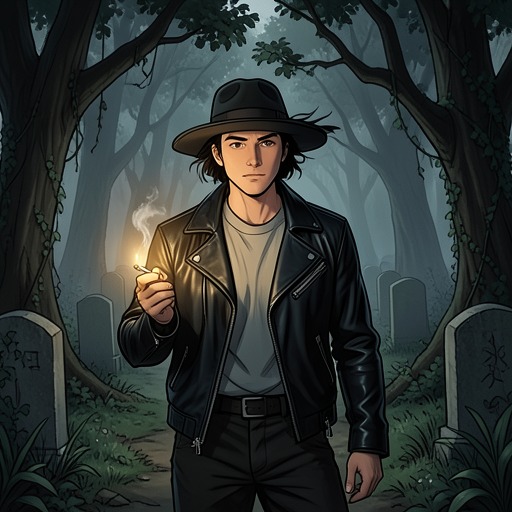
The band's significance cannot be separated from the vampire's appeal within Gothic culture. Vampire fiction combines fear with beauty, bodily threat with erotic fascination, and the promise of escape from ordinary social limitations with the danger of becoming an outsider. The broader culture that followed treated Victorian mourning-wear, artificial fangs, skull ornaments, and spiderweb jewelry as visible signs of an identity that could be worn, performed, and shared. Bauhaus supplied that culture with one of its most recognizable musical rites of entry.
"Bela Lugosi’s Dead"
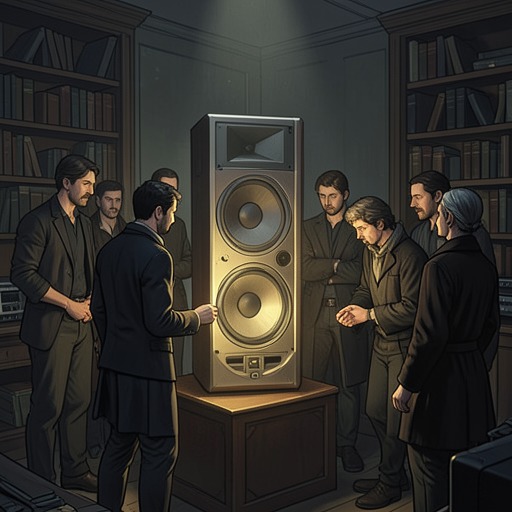
"Bela Lugosi’s Dead" was released in 1979 and is widely credited with being the first gothic-rock single. Its lyrics were inspired by old horror films that David J had watched on television in the late 1970s, while its unusual musical construction began with a bossa nova beat and a riff that Daniel Ash later recognized as having been influenced by an old Gary Glitter song. The recording therefore turned familiar popular materials toward a colder, more ominous purpose rather than treating horror as a solemn or purely orchestral effect.
The song was engineered by Derek Tompkins at Beck Studios in Wellingborough, Northamptonshire. Bauhaus recorded it in a single take, and it was the band's first visit to a professional studio. Peter Murphy's vocal enters more than two and a half minutes into the track, making the delayed arrival of the voice part of its dramatic design. It was also the first time Murphy had recorded his singing through a studio microphone; he had a cold during the session, a circumstance that intensified the harsh, atmospheric quality of the vocal performance.
The recording's afterlife became larger than its original release. Peter Murphy later described it as "the Stairway To Heaven of the 1980s," a comparison that indicates how completely the song came to function as a canonical emblem rather than merely another band single. Although Bauhaus sometimes attempted to distance themselves from the Goth label, "Bela Lugosi’s Dead" continued to define public perceptions of the band. Their wider body of work contains music that does not invoke vampires at all, yet this one song remains the track most readily associated with the undead.
Film, Performance, and Vampire Mythology
The song became even more deeply embedded in Gothic mythology through The Hunger. The film opens with Catherine Deneuve and David Bowie stalking a nightclub as glamorous predators while Bauhaus perform "Bela Lugosi’s Dead" on a huge screen, with singer Peter Murphy looming ominously over the crowd. The sequence makes the band part of the film's atmosphere before the narrative explains its supernatural figures, allowing sound, image, celebrity, and predation to arrive as a single cultural package.
The connection was especially powerful because The Hunger never once uses the word "vampire." Viewers understand what is happening through the visual language of elegant predators, the nightclub setting, the song's threatening monotone, and the presence of Bowie and Deneuve. Bauhaus's recording thus performs a kind of indirect genre declaration: it identifies the film's world without requiring an explicit label. Music supplies the knowledge that the characters and the audience share before the story names nothing.
This association also helped define the vampire as a figure of style as much as a figure of horror. The Hunger presents the undead through glamour, sexual danger, and performance, while the song provides an auditory equivalent to its sleek surfaces and menace. Bauhaus did not simply accompany a vampire film; the film helped stabilize the song as a ritual sound for a whole subculture, turning a recording made in one take at a Northamptonshire studio into a recurring cultural shorthand for nocturnal elegance and death.
Relation to Goth Identity
Bauhaus's influence operates within a Goth culture that many participants understand as more than fashion or musical taste. Dr Nadia van der Westhuizen describes the scene as a safe space in which a person can be entirely themselves, and as a culture connecting people through music, literature, aesthetics, and shared identity. In that context, Bauhaus's music is not merely decorative background. It provides a communal archive through which outsiders can recognize one another and transform difference into belonging.
That identity is also visibly constructed. Goth participants may use elaborate makeup and clothing to project an internal self onto the exterior, treating the "true" face as something achieved through appearance rather than revealed by stripping appearance away. The vampire imagery associated with Bauhaus works in the same manner. It turns mortality, otherness, darkness, and forbidden desire into signs that can be heard, displayed, and collectively interpreted. The song's enduring power comes from this double movement: it makes the listener feel surrounded by supernatural danger while also offering a social language for those who identify with the margins.
The band's place in this culture is therefore both foundational and unstable. Bauhaus helped establish a sound that became inseparable from Goth, yet the band itself has sometimes resisted being reduced to that category. The tension is revealing. A subculture requires recognizable symbols, while artists may resist the narrowing effect of a single style or public image. "Bela Lugosi’s Dead" became a kind of cultural millstone precisely because it was so successful at embodying the vampire spirit, even though Bauhaus's artistic identity exceeded the song that made them emblematic.
Legacy and Cultural Significance
Bauhaus's 1979 release occupies a decisive position in the chronology of Gothic rock. It predates The Hunger's 1983 cinematic adaptation and became one of the key sounds through which later audiences encountered vampire aesthetics. The song's continued prominence reflects the durability of the vampire as a metaphor for forbidden desire, social exclusion, bodily transformation, and the fantasy of escaping ordinary life. In a culture that repeatedly reworks the undead into tragic lovers, elegant predators, comic figures, or sympathetic outsiders, Bauhaus supplied a musical form capable of holding menace and attraction together.
The song's history also illustrates how Gothic culture circulates between media. Horror films inspired its lyrics; post-punk musicians translated those images into rhythm and sound; cinema then placed the recording inside a scene of glamorous predation; and the Goth subculture adopted the combined image as part of its collective heritage. The result is not a simple adaptation from film to music or music to film, but a feedback loop in which each medium strengthens the others.
Bauhaus remains significant because "Bela Lugosi’s Dead" does not merely describe the vampire. Its delayed vocal entrance, sparse and unsettling musical structure, and horror-film inheritance make the listener experience a controlled approach toward revelation. The recording's cultural life follows the same pattern: first an experimental post-punk single, then a landmark of gothic rock, then the sound of a cinematic vampire encounter, and finally one of the most immediately recognizable anthems of the Goth subculture.