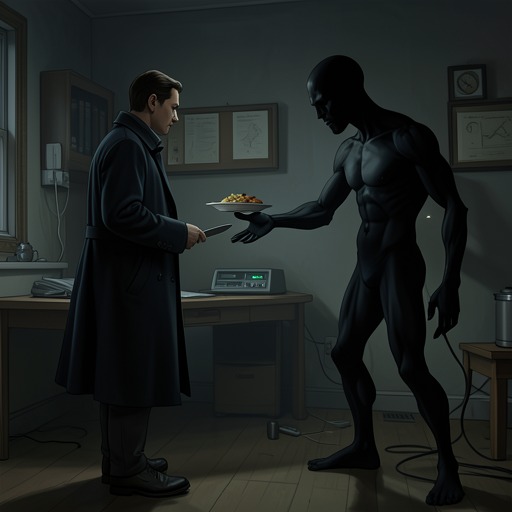
Capital is dead labour, that, vampire-like, only lives by sucking living labour
A History of the Vampire in Popular Culture“Capital is dead labour, that, vampire-like, only lives by sucking living labour” is Karl Marx’s defining vampire metaphor for capital: a dead accumulation that remains active only by extracting value from living workers. Its force lies in the reversal it performs. The vampire is no longer merely a corpse that feeds on the living; capital itself becomes the animated dead, dependent on the labour it consumes and growing more powerful in proportion to the amount extracted.
Origin and Formulation
The expression appeared in 1867, when Marx echoed an earlier political use of vampiric imagery associated with Voltaire. In his Dictionnaire philosophique of 1764, Voltaire had called exploitative monks the “true vampires,” accusing them of living at the expense of kings and people. He extended the comparison to stock-jobbers, brokers, and business men who, in his account, sucked the blood of the people in broad daylight while inhabiting agreeable palaces rather than cemeteries. Marx’s formulation preserves this daylight inversion but relocates it from clerical and financial social types to the structure of capital itself.
The sentence is therefore more than a decorative comparison. It gives economic accumulation a bodily and temporal logic. “Dead labour” refers to value already embodied in accumulated goods, money, and productive organization; yet this dead store does not remain inert once it becomes capital. Like a revenant, it returns to activity by attaching itself to living labour. The metaphor makes exploitation legible as a relation in which the apparently lifeless depends upon, and progressively enlarges itself through, the vitality of others.
The Vampire as Economic Metaphor
The expression’s central image is extraction. A conventional vampire drinks blood, while capital appropriates living labour; the substitution of labour for blood preserves the idea of life being transferred upward into a parasitic form. Marx intensifies the metaphor by insisting that capital “lives the more, the more labour it sucks.” The appetite is not satisfied by one act of feeding. It is structurally expansive: increased extraction produces increased capital, which in turn requires further access to living work.
This imagery also clarifies why the vampire is a particularly apt figure for political economy. A vampire belongs to the category of the undead, neither simply alive nor simply dead. Capital has the same contradictory status in the passage: it is accumulated past labour, but it behaves as an active power in the present. Its apparent independence is therefore deceptive. What looks like an autonomous force is sustained by continuing contact with workers whose present activity gives motion and value to what has already been produced.
The expression belongs to a broader history in which vampirism has never possessed a single stable definition. Earlier revenant stories associated the undead with bodies rising from graves, while nineteenth-century fiction gradually established the more familiar image of the nocturnal, selective, and elegant blood-feeder. Marx’s metaphor draws on the older figure of parasitic return while redirecting it toward a modern social system. The supernatural creature becomes a way to describe an institution that is not literally alive but nevertheless acts upon living bodies.
Relation to Life, Death, and Extraction
The metaphor gains further force from the uncertainty surrounding death itself. Clinical death is generally defined through the cessation of breathing and blood circulation, but both signs can cease temporarily or become too faint to measure. Modern life-support technology complicates the boundary still further: a brain-dead person may retain circulation and physical responses, while legal and religious definitions of death may diverge. In this context, “dead labour” is not a simple synonym for inert matter. It belongs to a wider conceptual problem in which something may be officially dead yet remain physically active, socially consequential, or ethically disputed.
The same ambiguity appears in the distinction between the undead and the living. Vampire narratives repeatedly ask whether a body presumed dead can still act, desire, or harm. Marx converts that question into an account of capital’s social operation. Capital is dead in origin, because it consists of accumulated labour from the past; it is undead in effect, because it returns as a power that commands present labour. The metaphor thus links economic exploitation to the book’s recurring concern with bodies that occupy an unstable border between life and death.
The expression also exposes the ethical stakes of deciding who or what counts as alive. In the discussion of vampiric transformation, Carlisle Cullen is praised for creating a family by turning dying people, yet his actions are also criticized as the killing of four people who might have preferred death and as the permanent removal of their choice. In the world of True Blood, vampire blood becomes a prized commodity because it can heighten human senses and strength, while vampires themselves become targets for hunters seeking to sell their vital essence. Across these examples, bodily vitality is treated as something that can be transferred, controlled, consumed, or monetized. Marx’s phrase gives that recurrent logic its most direct economic form.
Later Cultural Echoes
The vampire metaphor continues to resonate because later representations keep modifying the relationship between predation and responsibility. Varney becomes sympathetic despite his murderous tendencies, struggles against his instincts, and eventually kills himself to escape an eternal fate. Carmilla develops the vampire into an emotionally and physically predatory night creature whose feeding is increasingly selective and stylized. Count Orlok in Nosferatu returns the figure to a stark, threatening body without the erotic polish of later vampires, while Dracula becomes a fully rounded personality whose plans and moral character help establish the modern vampire’s public image.
Contemporary portrayals make the metaphor more flexible rather than obsolete. Modern vampires may be heroes or villains, hidden neighbours or openly political minorities. True Blood places vampires in small-town Louisiana and gives them synthetic Tru Blood as a substitute for human blood, allowing them to seek equality while raising the question of whether a pseudo-vegetarian diet can undo habits formed over eternal lifetimes. Its vampire blood, or “V,” also becomes an aphrodisiac and a valuable commodity, reversing the usual direction of predation when human hunters attack vampires to sell their blood. The economic vocabulary of extraction remains visible even when the narrative changes who feeds on whom.
The expression therefore survives not because every vampire story reproduces Marx’s argument literally, but because the vampire remains a durable figure for systems that depend on living energy while presenting themselves as independent, natural, or permanent. Its later appearances range from the portable vampire essence weapon in Lies Sleeping to the gothic subculture that emerged from post-punk clubs in northern England during the early 1980s. In each case, the old image is adapted to a new medium or social anxiety. Marx’s sentence remains the clearest formulation of the underlying structure: the dead acquire power only by consuming the living, and their apparent vitality is evidence of that consumption rather than an escape from it.