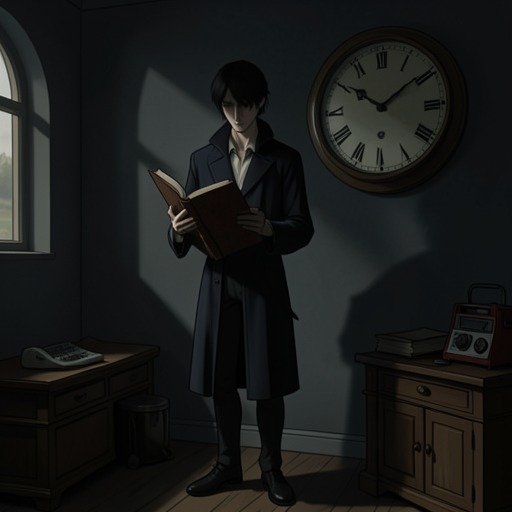
Clara Radley
A History of the Vampire in Popular CultureClara Radley is the teenage daughter in Matt Haig’s The Radleys, a vampire family hiding in plain sight beneath the appearance of middle-class normality. Her decisive importance lies in the event that breaks this disguise: after a classmate sexually assaults her, Clara accidentally murders him and is forced to confront the possibility that she is not, after all, an ordinary human girl. Through her, the novel turns the vampire myth into a story about violence, addiction, secrecy, and the painful discovery of an identity that a family has spent years denying.
Identity and Background
Clara lives with Peter and Helen Radley and her brother in a quiet Yorkshire village. The family’s public identities are deliberately unremarkable: Peter works as a family doctor, Helen is an artist, and their household is presented as the epitome of respectable middle-class life. Their apparent banality is not incidental but protective. The Radleys are vampires attempting to remain undiscovered among humans, and Clara has grown up inside the rules and anxieties created by that concealment.
Unlike the traditional vampire who must kill in order to survive, the Radleys can live without drinking blood if necessary. Their condition is therefore described less as animal savagery than as addiction. Abstinence is physically possible, but the psychological strain resembles that experienced by a heroin addict without drugs or an alcoholic resisting another bottle. Clara’s inherited nature is consequently both biological and compulsive: it is a suppressed appetite, a family secret, and a source of shame that has been built into her understanding of normal life.
The Incident That Reveals Her Nature
Clara’s life changes when she accidentally murders a classmate who sexually assaults her. The act is both a violent crime and an eruption of the identity her family has tried to suppress. What appears from outside to be an inexplicable killing becomes, within the novel’s vampire framework, the moment at which Clara discovers that the human self her parents have cultivated cannot contain everything she is.
The murder places the entire family at risk of discovery. Clara must be protected from the repercussions of the assault and the killing, while Peter and Helen must preserve the secret on which their carefully constructed human stability depends. The immediate danger is therefore double: Clara faces the consequences of her action, and the family faces exposure as vampires. Her accidental violence converts private repression into a collective emergency.
Family Conflict and the Burden of Secrecy
Clara’s crisis forces Peter and Helen to confront truths they have tried to avoid. Their goal is not simply to conceal a supernatural fact; they are attempting to maintain safety, social respectability, and a recognizable family life in a human world that neither fully wants them nor understands why it might reject them. Clara’s actions make that strategy impossible to sustain without revision.
The Radleys’ fear of losing their human stability is as powerful as their desire for blood. Their determination to deny what they are becomes their eventual downfall, leaving them with no choice but to assemble a patchwork existence as a human-vampire hybrid. Clara’s experience is central to that collapse because she is the family member whose encounter with sexual violence exposes the inadequacy of abstinence and concealment. The family’s devotion remains real even when its members betray one another emotionally and struggle to live together; Clara’s danger makes that devotion concrete rather than sentimental.
Change and Thematic Significance
Clara belongs to a modern tradition in which vampires may be good or bad, familiar or monstrous, and may exist unnoticed in ordinary communities. Her story therefore departs from the older image of the vampire as an openly supernatural night creature. Earlier literary figures established recognizable conventions such as sharpened fang-like teeth, nocturnal predation, and increasingly selective or elegant methods of feeding. Clara inherits those conventions only to have them relocated into a suburban and adolescent crisis.
Her characterization also belongs to a later movement toward the ethical vampire, in which bloodsucking is treated as a problem of compulsion and responsibility rather than proof of innate evil. The Radleys can abstain, but abstinence does not erase desire; Clara’s violence demonstrates the danger of confusing suppression with resolution. The novel’s horror and pathos arise from the fact that the family wants the ordinary life it has built, yet cannot achieve lasting happiness while denying its nature.
Clara’s predicament also resonates with the broader cultural history of the vampire as a figure of otherness. Stories have repeatedly used vampirism to represent outsiders and intruders who fascinate people while provoking suspicion. In port-city legends, that suspicion can attach itself to immigrants and unfamiliar social groups; in stories of Carmilla, it can be bound to same-sex desire that nineteenth-century society refused to acknowledge publicly. Clara’s difference is framed through a more intimate modern setting: the supposedly safe school and family environment cannot protect her, and the identity that marks her as abnormal also supplies the force with which she resists an attacker.
The result is not a simple transformation from innocence to evil. Clara’s accidental killing makes her morally compromised, but the circumstances prevent her from being reduced to a conventional monster. Her family’s eventual movement toward a hybrid existence offers an alternative to both total assimilation and total separation. Clara’s narrative significance lies in that unresolved middle ground: she is a vampire living next door, a daughter caught between secrecy and disclosure, and a figure through whom the older bloodsucking myth becomes a contemporary story about survival, stigma, and the limits of pretending to be someone else.