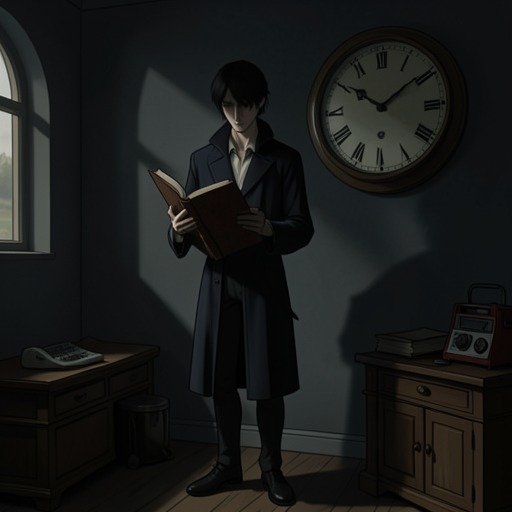
Clara Radley kills her attacker
A History of the Vampire in Popular CultureClara Radley kills her classmate after he sexually assaults her, and the act becomes the crisis that makes her family’s hidden identity impossible to ignore. In The Radleys, the killing is not presented simply as a conventional monster attack. It is simultaneously an act of resistance against immediate violence, an eruption of a nature that Clara has been taught to deny, and the event that places an apparently respectable Yorkshire household at risk of discovery.
Identity and Circumstances
Clara is the teenage daughter of Peter and Helen Radley, a middle-class couple living with their children in a quiet Yorkshire village. Peter works as a family doctor and Helen as an artist, and the family’s public appearance is defined by domestic normality rather than Gothic spectacle. Their concealment depends on routine, restraint, and what the narrative describes as a heavy layer of beige banality. They are vampires living in a recognisably human world, but unlike many traditional bloodsuckers, they can survive without drinking blood if necessary.
That capacity does not make abstinence easy. The Radleys’ condition is compared to addiction: blood may be physically dispensable, yet the mental strain of refusing it remains severe. Clara has therefore grown up inside a family structure organised around suppression. The household’s effort to remain human is not merely a disguise adopted for convenience; it is a sustained discipline that converts vampirism into a private burden and makes any uncontrolled act especially dangerous.
The Killing and Its Immediate Meaning
The decisive incident occurs when Clara accidentally murders a classmate who sexually assaults her. The sequence joins two forms of violence that the surrounding human world would tend to separate: the sexual violence inflicted on Clara and the fatal violence through which she responds. Her attacker’s assault is the immediate cause of the confrontation, while Clara’s vampiric strength and blood-driven nature transform an act of self-defence or retaliation into a death with supernatural consequences.
The word accidentally is important to the account. Clara does not appear as a calculating predator who selects a victim according to the familiar conventions of the elegant nineteenth-century vampire. Her violence breaks out under pressure, revealing how unstable the family’s rejection of its own nature has become. The killing therefore changes the meaning of Clara’s apparent abnormality. Before the event, not being normal is an unease that might remain hidden; afterward, it is a physical and legal danger attached to a dead classmate and to the possibility that witnesses or authorities may investigate.
The event also reverses the usual moral arrangement of vampire fiction. Clara is both a victim and a killer, but the narrative does not allow her victimhood to disappear merely because she has caused a death. The classmate’s assault establishes the ethical fact that she has been attacked, while the killing reveals the terrible cost of a response shaped by a body and appetite her family has tried to suppress. Her action thus resists a simple division between innocent human and monstrous vampire.
Consequences for the Radley Family
Clara’s killing places the entire family at risk of discovery. Peter and Helen must act to protect her from the repercussions while preserving the secret that has allowed them to live among humans. The crisis forces them to confront truths that their domestic stability had kept out of sight: Clara is not entirely normal, the family’s abstinence has not abolished its nature, and concealment cannot guarantee safety indefinitely.
The family’s response exposes the contradiction at the centre of their lives. They want the security of human respectability while remaining subject to the demands of vampirism. Their fear of losing stability becomes as powerful as their desire for blood, but the attempt to deny what they are eventually becomes their downfall. Clara’s killing is the practical proof that denial has failed: the family’s rules have not prevented violence, and their beige disguise can no longer contain the consequences.
The aftermath does not resolve the problem by restoring the old household. Instead, the Radleys are driven toward a patchwork existence as a human-vampire hybrid. Their forced adjustment is a consequence of Clara’s act, but it also reflects the family’s longer inability to live happily while denying its true self. Emotional betrayals, the threat of death, and the danger of exposure converge around the killing, making it the event through which private repression becomes collective transformation.
Narrative and Thematic Significance
Clara’s action belongs to a later phase of vampire fiction in which vampires are not restricted to traditional roles as villains or nocturnal predators. The broader tradition moves from the fang-bearing Varney, through the predatory and night-bound Carmilla, to Count Orlok’s threatening Expressionist form and then to modern vampires who may be sympathetic, ordinary, comic, or morally conflicted. The Radleys extend that movement by treating vampirism less as a fixed animal nature than as an addictive condition negotiated within family and society.
The killing also contrasts with representations that make vampires the objects of uncomplicated fear. Earlier vampire panics transformed unexplained deaths into supernatural accusations: nineteenth-century New England communities attributed tuberculosis deaths to the dead draining surviving relatives, while the eighteenth-century vampire craze led villages to exhume suspected corpses. In The Radleys, by contrast, the supernatural explanation is attached to a concrete social crisis involving sexual assault, family secrecy, and the pressure to appear normal. The monstrous explanation does not erase the human circumstances; it makes their contradictions harder to evade.
Finally, Clara’s killing is the point at which the novel’s metaphor of addiction becomes action. The Radleys can abstain from blood, but they cannot simply will away the conditions of their bodies, their vulnerabilities, or the pressures imposed by a human world that neither accepts them nor understands why. Clara’s attacker is killed in a moment when suppression collapses, and the family’s subsequent reorganisation suggests that survival may require acknowledgment rather than continued denial. The incident is therefore both a violent tragedy and a recognition scene: Clara, and eventually the family around her, must confront what their carefully constructed normality has concealed.