Count Dracula
A History of the Vampire in Popular CultureCount Dracula is the central architect of modern vampire mythology, even though the vampire existed long before Bram Stoker gave the Count his definitive literary form. He gathers older revenant beliefs, Eastern European panic, Gothic atmosphere and nineteenth-century anxieties about desire and social order into one exceptionally durable figure. Later versions repeatedly alter his body, manners, weaknesses and moral character, but his bloodline remains visible in almost every major vampire tradition.
Literary Identity and Cultural Origin
In 1897, Bram Stoker was working as business manager to Henry Irving while also writing fiction. He had already published several books, but Dracula became by far his most successful work, although it did not generate substantial financial returns until after Stoker’s death. The novel made its Count a fully rounded personality rather than a merely functional monster: Dracula has plans, a history, a social identity and morals of his own, however repellent those morals may be. At the level of its basic plot, the book places a human love story against the predatory attention of another man, turning an apparently simple romantic conflict into a supernatural struggle over possession, loyalty and survival.
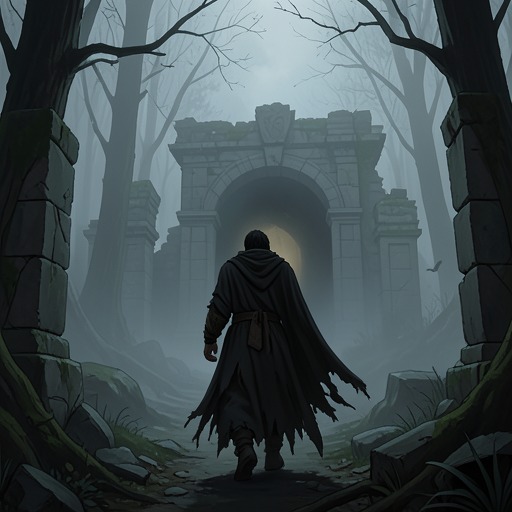
The Count’s name also links fiction to history. Dracula is generally understood as drawing on Vlad Dracula III, while Stoker used parts of Transylvania, geographically adjacent to Wallachia, the region in which the historical ruler reigned for seven and a half years. For Stoker’s 1897 readers, this was a distant and little-known world, already associated with early-eighteenth-century vampire fears. The combination of a real historical name, plausible geography and older reports of vampirism gave the fictional Count an unusually convincing foundation and helped raise his profile far beyond that of an invented monster.
Stoker’s vampire entered a culture both fascinated and unsettled by rapid change. The nineteenth century combined industrial development and scientific discovery with spiritualism, séances, witchcraft reports and renewed attachment to older forms of belief. Tuberculosis was often interpreted as a supernatural draining of life, while eastern European communities sometimes exhumed corpses suspected of vampirism. Antoine Augustin Calmet’s learned treatment of apparitions, revenants and vampires, first published in 1746 and expanded in 1751, shows how supernatural claims could circulate through scholarly and religious culture as well as popular rumor. Dracula therefore did not invent the fear of the undead; he gave that fear its most portable and influential personality.
Character and Plot Trajectory
In Stoker’s novel, Dracula is a noble undead predator who has spent centuries in near isolation in the Carpathian region, refining his hatred of humanity. He is psychopathic in his lack of empathy for human life, yet the length of his existence and the isolation surrounding it give him a tragic dimension. He is not simply a creature that attacks at random. He acts with calculation, pursues expansion and seeks a new life for himself, particularly in England, rather than any improvement for the people he endangers.
His physical presentation carries a crucial reversal. When Jonathan Harker first encounters him, Dracula appears withered and ancient, hiding in dark corners so that the decaying horror of his body will not be fully exposed. The Count’s condition is connected to his restricted diet, not to poverty. He has had centuries in which to accumulate wealth, knowledge and vocabulary, and he uses those resources to maneuver his way toward England. By the time he reaches London, he has become an urbane Renaissance man: an ancient corpse concealed beneath education, money and cultivated behavior.
This combination of predation and refinement became one of the Count’s defining innovations. Dracula is not merely a corpse that rises, nor an animal that feeds. He is a strategist who understands society well enough to enter it, exploit its systems and disguise his hunger beneath manners. The novel’s vampirism also resembles a communicable disease, particularly after Dracula reaches Victorian Britain. Blood becomes both the medium of infection and the instrument of intimacy, making the Count a figure through whom fears of contagion, sexual contact and social contamination converge.
The novel’s significance does not depend on every part of its execution being equally successful. Its epistolary form can feel clunky and overwrought, and parts of the narrative are undeniably dull. Yet Dracula distills a wide range of earlier myths into a single essence: the elegant or monstrous undead being, the nocturnal predator, the immortal outsider, the sexually charged invader and the enemy who can move between human and animal forms. Whether later vampires are beautiful or repulsive, female or male, medieval or modern, heroic or villainous, the Count’s influence remains present.
Manners, Wealth and Assimilation
Dracula’s wealth is not decorative background but a practical condition of immortality. An immortal who cannot accumulate resources would be condemned to remain permanently hidden, whereas centuries allow the Count to build financial reserves, study the world and prepare elaborate plans. His movement toward England is therefore an act of self-directed modernization. He is seeking a better existence for himself, and his victims are treated as the expendable material of that project.
Later portrayals make his assimilating intelligence even more explicit. In the BBC’s 2020s adaptation written by Mark Gatiss and Steven Moffat, Dracula is placed at the center of the narrative rather than being seen mainly through the filtered perspectives of other characters. He first appears as a stalking predator who knows that he cannot blend into society, but adapts with startling speed. After being dropped into the modern world, he masters the internet and contemporary social etiquette within days, quietly re-establishes his fortune and does so legally and politely.
This adaptation turns social assimilation into a performance that Dracula constantly stages for himself. He enters different levels of society without drawing unnecessary attention, even when his entrances are dramatic. His manners are impeccable enough that he could be taken to tea with a maiden aunt or to a royal garden party without causing embarrassment. The contrast is deliberately grotesque: the person capable of perfect public civility is also a psychopath who treats victims as toys, discussing demonic plans with casual humor and killing when the game ceases to entertain him.
The screen tradition repeatedly reshapes this aristocratic surface. Bela Lugosi’s 1931 performance established Dracula’s public image more powerfully than almost any earlier interpretation. The adaptation changes details of the novel, including Mina’s position as Dr Seward’s daughter and Renfield’s journey to Castle Dracula in place of Jonathan Harker’s, but retains the broad structure. Lugosi’s stage experience, Hungarian accent and determination to secure the film role helped make him an enduring image of the classic vampire.
Christopher Lee’s performance in Hammer Film Productions’ 1958 Dracula, retitled Horror of Dracula in the United States, created another benchmark. Lee played the Count without Lugosi’s theatrical hamming or Max Schreck’s expressionist monstrosity. His Dracula takes his evil seriously: socially superior, sexually threatening and terrifyingly controlled, he regards ordinary people as beneath him. The use of Technicolour intensified the film’s bloody effects, including a scene in which Dracula tears away his own skin. That sequence was cut from domestic release and restored in 2012 from a surviving Japanese reel, extending the afterlife of Lee’s version through both censorship and recovery.
Religion, Weakness and Shame
The BBC adaptation radically revises the traditional logic of Dracula’s weaknesses. The Count cowers from the cross, requires an invitation before crossing a threshold and treats other familiar barriers as real limitations. Only in the final scenes does the story reveal that most of these obstacles exist because Dracula himself has believed the myths for centuries. His fear of the cross is different: it is genuine, immutable and tied to a precise personal history.
While still living in his homeland, Dracula had been forced to feed mainly on uneducated peasants who were deeply committed to religion. They accepted the power of the cross absolutely, and the Count absorbed their fears and convictions over the course of his long predation. The result is a striking reversal in which the vampire is shaped by the beliefs of the people he consumes. Religion does not merely provide humans with a weapon against him; it becomes part of his internal structure, a weakness he recognizes, hates and cannot escape.
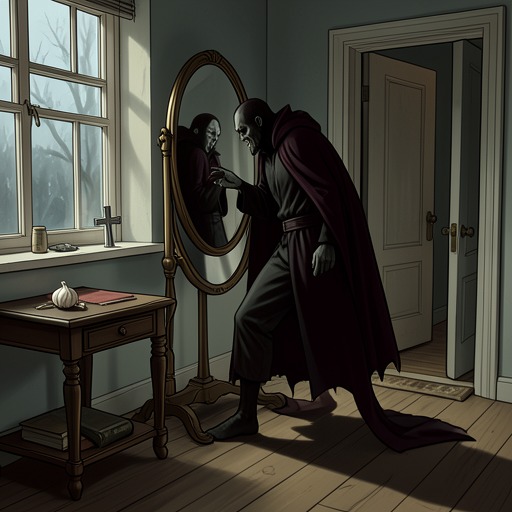
Zoe Van Helsing offers another interpretation: Dracula may not have been infected by the beliefs of his victims so much as driven by shame. He is ashamed that he cannot face mortality, ashamed that he cannot die a true death and ashamed that immortality has forced him to watch everyone around him perish, including his mortal family. His hatred of mirrors follows the same logic. Mirrors do not primarily expose him to other people; they expose him to himself as an ancient, crumbling, walking corpse. Immortality has preserved his existence without preserving his self-respect.
This shame gives the adaptation’s Count a psychological depth that complicates his conventional role as the embodiment of evil. He remains cruel, predatory and self-serving, but his supernatural power does not free him from social judgment or self-condemnation. The stories he has inherited become a prison built from belief, and the Count is both its inhabitant and its keeper.
Final Death and Continuing Legacy
Dracula’s most decisive vulnerability in the BBC adaptation is diseased blood. When he drinks from Zoe Van Helsing, who has cancer, he is reduced to a retching, animalistic heap, with bloody-black vomit spilling from his mouth. Zoe later uses this knowledge as a weapon, warning the newly undead Lucy Westenra that biting her would cause a final and horrible death. Blood, traditionally the source of vampiric strength and transmission, becomes instead a means of destruction.
The device echoes the earlier episode on the Demeter in which a young girl drinks poison rather than risk being turned by a predatory passenger. Dracula’s own final act, however, is not an attempt to avoid a fate worse than death. It is the completion of a desire for oblivion that has been hidden beneath centuries of survival. When he drinks Zoe’s blood, he takes her with him into a dream state in which she can escape the pain and loneliness of dying. Their intimacy exists simultaneously as bodily death and imagined release: in reality Zoe lies fully clothed on a table, while in the death dream she is entwined with her oldest adversary.
The final death is therefore presented as a blessed escape rather than a defeat. Dracula and Agatha Van Helsing, whose memory and identity are carried into Zoe, need each other until the end. The Count uses the moment to secure his own advantage, but his last words are also an act of kindness: “After all this time, did you think I would let it hurt?” His ending transforms the old monster’s destruction into a shared passage, preserving the antagonism between them while allowing it to become the closest form of equality either has known.
Count Dracula’s afterlife extends far beyond any single novel or film. Modern vampire stories may make their creatures benevolent, comic, erotic, urban, openly political or radically nontraditional, but the Count remains the foundation stone against which those variations are measured. Even later experiments that depart from him depend on the audience recognizing the conventions he helped consolidate. The vampire’s continuing popularity draws on power, sexuality and the fantasy of immortality, while the Count’s particular endurance comes from his ability to hold opposites together: aristocrat and corpse, gentleman and predator, conqueror and prisoner, immortal and man desperate for death.