Daily Alta California
A History of the Vampire in Popular CultureDaily Alta California was a San Francisco newspaper whose surviving relevance in the vampire record rests on a single, vividly titled report published on 24 July 1870. By reproducing an account of nocturnal assault, village deaths, and supposed vampirism from Europe, it shows how the vampire moved from local fear and disputed testimony into an international media narrative.
The 1870 Vampire Report
On 24 July 1870, Daily Alta California placed the story on page four under the alarmist headline “VAMPIRES: Gibbering Ghosts in Germany––A Flesh-Creeping Narrative of Vampirism––Truth Stranger Than Fiction.” The headline did more than identify a subject: it framed the material as sensational horror while claiming the authority of truth, a characteristic tension in nineteenth-century reporting on supernatural events.
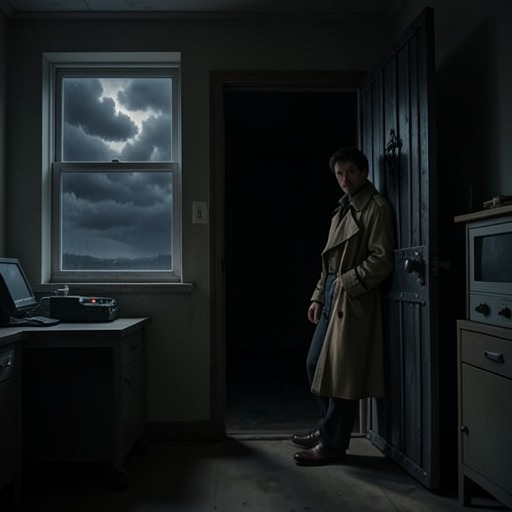
The article was almost a direct reprinting of a report from The New York World. Its immediate setting was a traveller’s frightening experience in Hungary. The reporter claimed to have awakened in a cold sweat while pinned to a bed by a corpse-cold creature that restrained his arms and tried to fasten its mouth upon his throat. After the attacker escaped through a window, the landlord inspected the reporter for evidence of a vampire attack and found no puncture marks.
From Local Claim to Newspaper Knowledge
The report did not end with the traveller’s personal account. The World’s reporter investigated the landlord’s claim that similar attacks had already occurred and recorded that three villagers had died on the preceding night after their blood had allegedly been sucked out by the Devil. Through this structure, an unverified nocturnal encounter was connected to a wider community narrative, giving individual terror the appearance of an epidemic.
Daily Alta California therefore functioned as a relay in the circulation of vampire belief. The underlying material belonged to a wider European landscape in which deaths, unexplained bodily changes, and fears of the undead were repeatedly interpreted through supernatural causation. In the eighteenth century, eastern European communities had dug up corpses believed to be vampires, while Johann Flückinger’s investigation in Serbia recorded bodies that witnesses considered insufficiently decomposed and unusually plump. Antoine Augustin Calmet later gathered such reports into The Phantom World, preserving the contested testimony within an academic and religious discussion of spirits, revenants, and vampires.
The Newspaper and the Vampire Panic
The newspaper’s report appeared within the broader nineteenth-century vampire panic, when tuberculosis and other poorly understood causes of death could be transformed into stories of the dead stealing life from the living. In New England, tuberculosis was popularly associated with the return of deceased relatives who supposedly drained the vitality of surviving family members. In eastern Europe, a succession of deaths in 1731 had likewise produced accusations of vampirism, despite a doctor’s explanation that malnutrition was the more likely cause.
Such reports reveal the social mechanics of supernatural explanation. Where medical knowledge could not establish why one person died and another survived, vampirism supplied an identifiable agent and a target for fear. Print did not necessarily create the belief, but it made local testimony portable, repeatable, and available to readers far from the original village. Daily Alta California’s dramatic presentation helped preserve the report as a cultural artifact in which the authority of journalism and the vocabulary of folklore reinforced one another.
Media, Sensation, and Later Vampire Culture
The 1870 article belongs to the same expanding media environment that made vampire stories increasingly familiar to mass audiences. Earlier reports had already appeared in London newspapers, while Varney the Vampire, first issued in pamphlets in 1845, developed recognizable features such as sharpened, fang-like teeth. Carmilla then helped establish the elegant nocturnal predator of nineteenth-century literature, and Dracula gave the vampire a fully developed personality, deliberate plans, and an enduring public identity.
The pattern continued across later media. Nosferatu translated the Dracula story into Expressionist film, despite the court order requiring Prana-Film to destroy its copies, and Bela Lugosi’s 1931 performance fixed a lasting screen image of the vampire. In modern culture, vampires can be sympathetic, comic, openly assimilated, or radically unlike traditional revenants. True Blood, for example, imagines vampires living openly in Louisiana and using synthetic Tru Blood as a substitute for human blood, while later popular culture even turned vampire mythology into music, fashion, and goth subculture.
Daily Alta California’s importance lies not in a sustained institutional campaign or a large body of vampire journalism documented here, but in the clarity of the transmission it represents. A frightening story attributed to a traveller, repeated by The New York World, and printed in San Francisco demonstrates how newspapers helped transform uncertain local testimony into a transatlantic supernatural archive. The report’s lasting subject is consequently not only the alleged vampire, but also the power of print to make fear travel, acquire authority, and survive as cultural memory.