David Farrant
A History of the Vampire in Popular CultureDavid Farrant became a central figure in the Highgate Vampire affair, not because the existence of a vampire was established, but because his limited claim about a strange apparition helped provide the first public shape for a legend that newspapers, rival investigators, and crowds would enlarge. His story shows how a cemetery sighting can move from private impression to public panic, and how disagreement over whether an apparition is a ghost or a vampire can itself become part of the spectacle.
Identity and First Claims
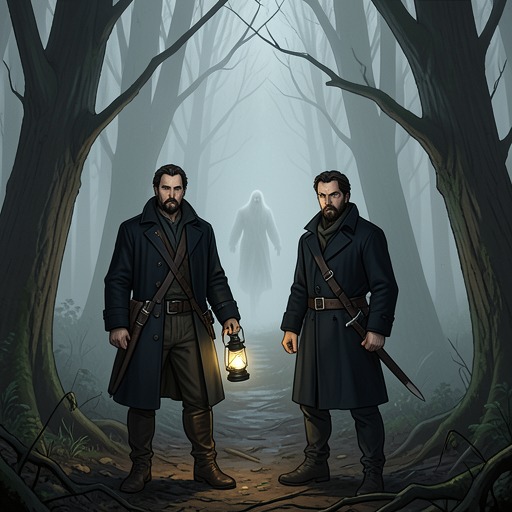
David Farrant was from Muswell Hill. In February 1970, he wrote to the Hampstead and Highgate Express about a supernatural presence that he said had appeared in Highgate Cemetery at night. He reported seeing a grey, ghost-like figure through the gates on Swains Lane on three separate occasions, apparently moving among the graves. Other readers then contacted the newspaper with their own accounts, including claims that the being floated and possessed glowing red eyes. Farrant’s initial description therefore belonged to the language of haunting rather than to a fully developed vampire narrative.
The setting made such reports especially effective. Highgate Cemetery, divided into East and West sections by Swains Lane, was a beautiful and peaceful place containing tens of thousands of bodies. Its older West Cemetery had entered a state of gothic decline during the 1970s, despite the care of staff and volunteers, and its atmosphere had already made it suitable for horror films such as Taste The Blood of Dracula, starring Christopher Lee. The cemetery supplied the architectural and historical backdrop through which an indistinct figure could be read as an intrusion from the dead.
From Apparition to Vampire
Sean Manchester, who described himself as a vampire hunter and as the president of the British Occult Society, gave the apparition a more sensational identity. He told the press that it was an Eastern European vampire and declared his intention to exorcise it publicly. Newspapers seized on the claim, publishing headlines such as “Does a wampyr walk in Highgate?” The change from ghost to vampire gave the story a recognizable monster, a named threat, and a dramatic promise of confrontation.
Farrant did not prevent this transformation. The public attention produced by the competing claims made the Highgate Vampire into an urban myth, while the media converted uncertain testimony into a continuing narrative. On Friday 13 March 1970, Manchester appeared on ITV’s nationally broadcast Today programme and claimed that he would exorcise the vampire that night. Hundreds of would-be vampire hunters climbed the walls and entered the dilapidated cemetery, forcing police to intervene and attempt to restore order. Farrant’s original reports were thus absorbed into a much larger event whose scale depended on publicity, expectation, and collective participation.
Rivalry with Sean Manchester
The conflict between Farrant and Manchester lasted until Farrant’s death in 2019. Their disagreement concerned the basic identity of the supposed entity. Farrant generally continued to describe it as a ghost or spirit, preserving the uncertainty of the original reports. Manchester insisted that it was unquestionably a vampire, a position that sustained the story’s most dramatic and marketable version.
The rivalry became part of the legend rather than a route toward resolving it. In retrospect, much of the mythology appears to have been created or amplified by Manchester, who expanded a very thin story into an elaborate supernatural narrative. Yet Farrant also participated in the public life of the dispute. His opposition to Manchester was not merely private: it became a counter-performance within the same media ecosystem that had elevated the cemetery’s apparition.
Farrant expressed that hostility through satire. He wrote a comic strip, The Adventures of Bishop Bonkers, portraying Manchester as a paranoid maniac whose evil plans were defeated by Farrant himself. In 2011, he filmed himself raising a toast to an effigy of Manchester’s head, ceremonially displayed on a silver platter. The gesture turned their antagonism into grotesque theatre, matching the gothic subject with a deliberately comic act of mock ritual.
Myth, Media, and Cultural Context
Farrant’s story belongs to a wider history in which fear of the undead becomes persuasive when medical, social, or institutional explanations feel inadequate. During the eighteenth-century vampire craze, entire villages in eastern Europe dug up corpses they suspected of being vampires. In nineteenth-century New England, tuberculosis was interpreted by some communities as the dead draining the life force of surviving relatives; the exhumation and mutilation of Mercy Brown’s body showed how grief and disease could be redirected into supernatural accusation. These earlier episodes establish a recurring pattern: uncertainty creates fear, fear seeks a target, and public narratives give that target a form.
The Highgate episode was shaped less by epidemic disease than by the modern circulation of rumor. Newspapers supplied competing descriptions, television broadcast Manchester’s promised exorcism nationally, and crowds converted the cemetery into a stage. Later government and media responses to the Gorbals Vampire incident likewise demonstrated how frightening stories could be connected to popular publications and used to justify demands for censorship. The Daily Mirror called for horror comics to be banned, while officials argued that such material was harmful to children even when it did not meet the legal definition of obscenity. Against this background, the Highgate Vampire affair illustrates how media institutions do not merely report supernatural belief; they can organize, intensify, and distribute it.
Narrative Role and Legacy
David Farrant remains important as a generator of ambiguity. Had he begun with an unequivocal vampire claim, the later dispute might have lacked its central contrast. His insistence on a ghost or spirit preserved a gap between observation and interpretation, while Manchester’s certainty filled that gap with a vampire. The resulting conflict allowed the public to choose between competing versions of the same invisible evidence, even though neither interpretation was confirmed.
His legacy is therefore inseparable from the endurance of the myth. The Highgate Vampire survived as an urban legend because it combined a decaying cemetery, alleged nocturnal sightings, sensational journalism, television exposure, mass trespass, and a rivalry that continued for decades. Farrant’s later satire did not dissolve the story; it added another layer to it, showing that the legend could accommodate belief, skepticism, hostility, and theatrical self-mythologizing at once. The affair’s lasting significance lies in that instability: the supposed monster was never securely identified, but the social machinery that created it was plainly visible.