Dracula–Agatha·Zoe relationship
A History of the Vampire in Popular CultureThe Dracula–Agatha/Zoe relationship is the central blood-bound conflict of the 2020 BBC adaptation of Dracula. It begins as a contest between Dracula and Sister Agatha Van Helsing, a skeptical and scientifically curious nun who treats blood as both evidence and weapon. When Agatha’s connection survives through her descendant Zoe Van Helsing, the relationship becomes more than a confrontation between hunter and vampire: it becomes a transmission of memory, sensation, and emotional knowledge across centuries. Its final movement joins Agatha, Zoe, and Dracula in a death that is at once defeat, intimacy, and release.
Agatha and Dracula: Adversaries Bound by Blood
Sister Agatha and Dracula are fascinated by one another before either can fully dominate the other. Their opposition is not simply physical. Agatha’s cynicism and scientific curiosity challenge Dracula’s self-mythologizing confidence, while Dracula recognizes in her an unusually formidable opponent. During the fated voyage of the Demeter, he uses Agatha as a scapegoat after she is discovered hidden in a cabin, attempting to conceal his own identity. Rather than submit to the role imposed on her, she turns the encounter back against him by biting her lip and spitting her blood at him. The gesture makes blood a deliberate act of defiance: Dracula’s preferred medium of possession becomes Agatha’s chosen weapon.
The relationship changes decisively when Dracula drinks Agatha’s blood. He takes her inside himself both physically and mentally, carrying her not as a living companion but through the power of what her blood transmits. Before drinking, he speaks of taking her with him wherever he travels; the promise is therefore fulfilled through incorporation rather than companionship. The act gives their antagonism an intimate and almost spiritual dimension. Dracula can consume Agatha, but he cannot reduce her to a victim, because her presence continues within the very body and consciousness through which he exercises power.
Zoe as the Descendant and Continuation of Agatha
Agatha’s connection with Dracula is carried into the modern period by Zoe Van Helsing, her terminally ill great-great-niece. Zoe encounters the relationship through scientific investigation as much as through inherited memory. In her gothic laboratory, she takes samples of Dracula’s blood and then drinks it, completing the circle begun with Agatha. The act does not merely expose Zoe to vampiric danger. It opens a route through which memories, sensations, and emotions can move across the centuries and through Zoe’s mind.
Zoe consequently becomes both herself and the continuation of Agatha. As her illness advances, Agatha’s presence helps prop her up from within, while Zoe’s fascination with Dracula keeps the dying woman engaged with the struggle. The boundaries between the modern scientist and the centuries-dead nun grow unstable. Zoe remains the person in the contemporary scene, yet she can snap back and forth between her own identity and Agatha’s as her life ebbs away. The relationship therefore treats blood as a hereditary archive: it carries not only physical substance but also unresolved conflict, knowledge, and feeling.
Recognition, Weakness, and Mutual Dependence
The blood connection gives Agatha and Zoe the means to discover what Dracula himself would prefer to hide. Agatha identifies Dracula’s true weakness, but the discovery depends on Zoe’s participation in the modern world. Their knowledge is cumulative rather than individual: Agatha supplies the long historical confrontation, while Zoe supplies the body, laboratory, and contemporary opportunity through which that knowledge can become decisive. Dracula is physically and mentally tied to both women even though he would resist acknowledging such dependence.
Zoe’s cancer reveals the weakness within Dracula’s apparent invulnerability. When he attempts to drink from her, he is unexpectedly reduced to a retching, animalistic heap, with bloody-black vomit coming from his mouth. The encounter establishes that Zoe’s illness is not merely a condition that threatens her; her blood can also become a weapon against the oldest and most powerful vampire. Later, Zoe warns the newly undead Lucy Westenra that biting her would bring a final and horrible death. In this adaptation, blood can sustain vampiric existence, expose its limits, or become a route to self-destruction.
The Penthouse and the Final Blood Tie
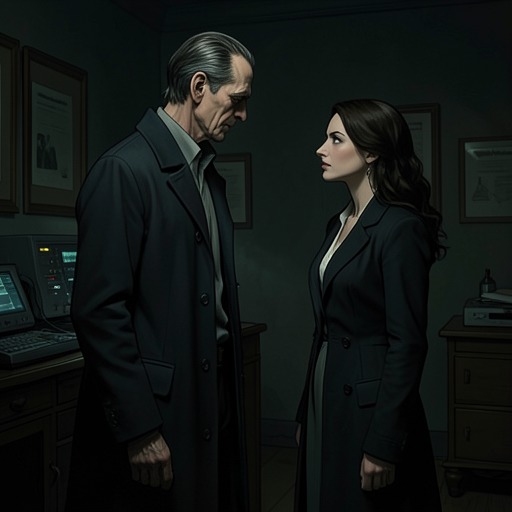
The relationship reaches its climax in a modern penthouse where Zoe and Dracula are left alone with centuries of accumulated antagonism between them. The setting strips away the elaborate historical machinery of the earlier encounters. There is only a table, the dying woman, and the vampire who has survived far beyond the span he wanted. Yet the scene is crowded by the past, because Zoe’s failing consciousness repeatedly allows Agatha to appear within her. The contemporary descendant and the dead nun become almost the same person without becoming entirely interchangeable.
Dracula’s decision to drink Zoe’s blood is not wholly altruistic. He uses the act to transport her spiritual form into a kinder, less painful end, but he also takes himself there with her. His act is therefore both care and self-interest, a final instance of the relationship’s inseparability from power. Zoe gains escape from the pain of terminal illness, while Dracula gains the death he has been unable to reach alone. Their bond ends not when one simply destroys the other, but when Dracula accepts that his own existence can end only through the person who has remained his equal across the relationship’s different generations.
Shame, Intimacy, and Release
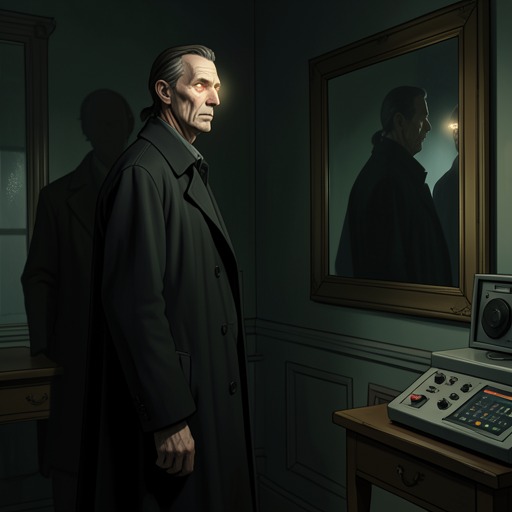
Zoe’s last understanding of Dracula is that he is ashamed. He is ashamed that he cannot die, that he has been forced to watch everyone around him—including his mortal family—disappear, and that he has been afraid to confront death itself. Immortality has not freed him from judgment. His hatred of mirrors comes from the image they return: not an invincible ruler, but an ancient, crumbling walking corpse. The revelation recasts his cruelty as part of a broader condition in which supernatural power cannot protect him from social expectations or from his own contempt for what he has become.
The final death is consequently a blessed escape for Dracula, and he enters it in the arms of the one person who has always matched him. Agatha and Zoe have not defeated him by standing outside his world; they have penetrated it through blood, memory, and shared knowledge. Dracula’s last words to Zoe, “After all this time, did you think I would let it hurt?”, make the ending tender without making it innocent. The sentence offers kindness, but it also confirms the relationship’s enduring ambiguity: he still controls the final act, yet the act becomes possible only because Agatha and Zoe have forced him to recognize dependence, shame, and the desire for oblivion.