Herman Munster
A History of the Vampire in Popular CultureHerman Munster is the affectionate, bumbling husband of Lily Munster and one of the central figures in The Munsters. His instantly recognizable appearance draws on Universal’s Frankenstein monster design, but his domestic role reverses the expected meaning of that image: beneath the threatening exterior is a working-class family man whose loyalty, bewilderment, and love make the supposedly monstrous household feel ordinary from within.
Identity and Appearance
Herman’s visual identity is inseparable from the history of Universal’s monster films. The Munsters’ writers were able to use the established designs and styles from Universal’s back catalogue because Universal originally owned the franchise, allowing Herman to resemble the familiar version of Frankenstein’s monster. That resemblance gives him an immediately legible supernatural identity without requiring the series to invent an elaborate explanation for his appearance.
Yet Herman is not presented primarily as a horror figure. His physical design functions as a comic contrast with his behavior. The body that conventionally signifies violence and unnatural creation belongs here to a husband who adores Lily, inhabits a family home, and participates in the frustrations and routines of suburban life. The joke depends on the gap between what viewers recognize at a glance and what Herman actually does within the family.
Family Life and Relationship with Lily
Herman’s most important relationship is with Lily Munster, who is both a vampire and a devoted working-class wife and mother. Lily adores her bumbling husband even when he drives her mad, making their marriage a recognizable domestic partnership rather than a gothic alliance between remote supernatural beings. Herman’s clumsiness is therefore not merely a source of slapstick; it is part of the affectionate pattern through which the household defines itself.
The family’s unusual background intensifies the comedy of Herman’s marriage. Lily is the daughter of Grandpa Munster, whose full name is Count Vladimir Dracula, or Sam to his friends, and whose gravestone-bearing car is called Drag-U-La. Grandpa has been married 167 times to mortal women and remains friends with all of them, while Lily recalls having a whole mausoleum full of brothers and sisters to play with as a child. Herman’s marriage thus places him inside an immense, eccentric supernatural genealogy, but the series treats that genealogy as family history rather than as an immediate threat.
The Munsters’ Idea of Normality
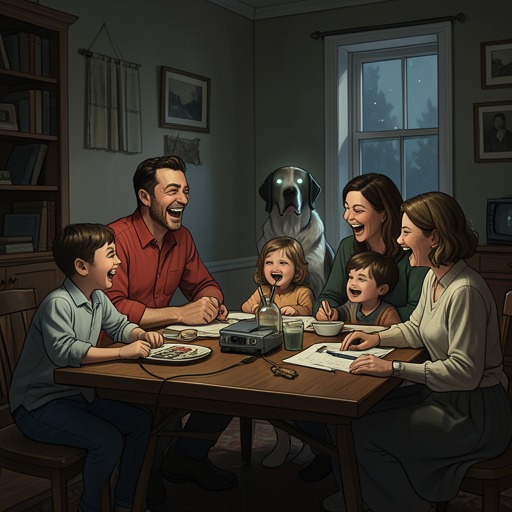
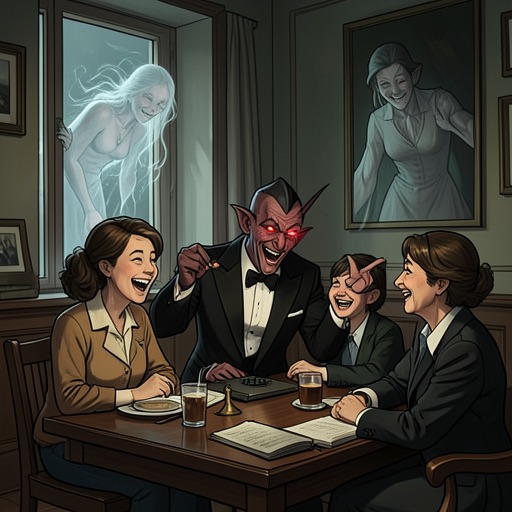
Herman belongs to a household convinced that it is simply another average family trying to get by. The Munsters do not understand themselves as fundamentally different from their neighbors; at most, they are slightly confused by the startled reactions their appearance and habits provoke. Herman’s ordinary self-understanding is crucial to the character. He is not a supernatural outsider pretending to be human. Within the family’s own frame of reference, he is a normal husband and father whose neighbors are the strange ones for reacting so strongly.
This reversal makes Herman a vehicle for the series’ critique of social judgment. The Munsters’ difference is visible, but their emotional life is familiar: they love one another, quarrel, cope with domestic irritation, and remain loyal to relatives. Even Grandpa’s discrimination is generally connected to his immigrant background rather than to fear of the occult. Herman’s monstrous appearance consequently exposes how quickly social worlds classify bodies as abnormal, while his conduct repeatedly demonstrates that visible otherness does not determine moral character.
Contrast with Marilyn and the Outside World
Herman’s household also complicates the idea that supernatural identity is the family’s true measure of belonging. Marilyn Munster, Lily’s niece, has no paranormal qualities and believes that she is the freak of the family. The apparently human member is treated as the odd one out, while Herman, Lily, and Grandpa experience themselves as the normal center. This inversion turns Herman’s appearance into part of a wider comic system rather than an isolated character trait.
The contrast between Herman and Marilyn shows that normality in The Munsters is relational. Herman looks like the obvious monster when judged from outside, but inside the family he is an accepted and loving husband. Marilyn looks human, yet her difference becomes conspicuous within the household’s own standards. Herman therefore helps the series detach appearance from identity: the family’s real cohesion comes from affection and tolerance, not from sharing a human body or a conventional history.
Narrative and Thematic Role
The Munsters first appeared in 1964, shortly after The Addams Family reached television, and ran for two series until 1966, with a one-off special in 1965. In that television context, Herman helped convert vampire and Frankenstein imagery into light entertainment without erasing the characters’ supernatural identities. Unlike portrayals in which vampires become increasingly elegant, predatory, or morally ambiguous, Herman is anchored in domestic comedy and family attachment.
That transformation belongs to a broader history in which vampires can become almost whatever modern audiences want them to be, including good characters rather than villains. Earlier literary milestones established recognizable forms: Varney the Vampire introduced sharpened, fang-like teeth into a major nineteenth-century vampire narrative; Carmilla developed the elegant nocturnal predator; and Count Orlok in Nosferatu returned to a threatening, non-erotic image. Herman does not simply repeat any of these models. He places the visual language of the monster inside a sitcom family and makes familiarity, not fear, the source of the character’s significance.
Herman’s comedy finally rests on a durable contradiction. He looks like an emblem of the undead and behaves like a loving suburban husband; his family is visibly extraordinary and insists on its ordinariness; the supposedly normal neighbors are the ones who cannot see past the surface. Through that contradiction, Herman Munster turns the vampire household into a portrait of tolerance: the family next door may look impossible, but its kindness and loyalty are recognizably human.