Highgate Cemetery
A History of the Vampire in Popular CultureHighgate Cemetery is a north London burial ground where death, architecture, folklore, journalism, and theatrical self-invention converge. Its peaceful setting and extensive collection of graves give it the dignity of a public memorial, while its Gothic decline and association with supernatural claims have made it one of the most potent modern locations for vampire mythology. The cemetery’s decisive cultural significance lies not in proof of an undead inhabitant, but in the way a place of mourning became a stage on which witnesses, occultists, newspapers, police, and would-be hunters collectively produced a legend.
Setting and Physical Character
Highgate Cemetery occupies a beautiful, quiet position on Highgate Hill in north London. Its cloisters and paths can resemble a country park, a quality sharply at odds with the tens of thousands of bodies buried within its boundaries. The cemetery is divided into East and West sections by Swains Lane. This division gives the site a practical geography, but it also reinforces the sense of a contained Gothic world: a place cut through by a road yet enclosed by graves, vegetation, monuments, and the accumulated presence of the dead.
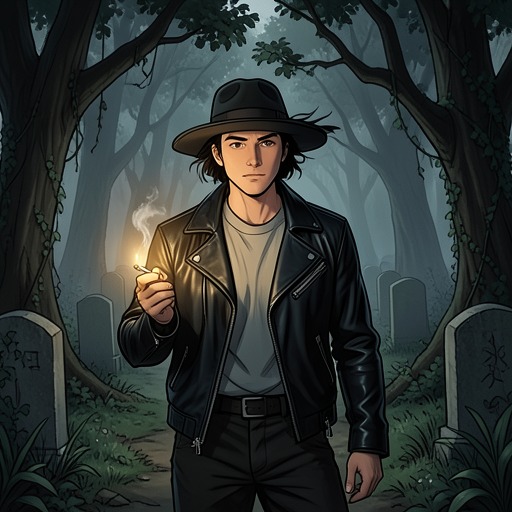
The West Cemetery is the older section. Many of its tombs show conspicuous signs of age despite the continuing work of staff and volunteers, whose care treats Highgate as something closer to a beloved companion than an inert historical site. Its atmosphere of Gothic decline helped make it an appropriate film location, including for Taste The Blood of Dracula, starring Christopher Lee. The cemetery therefore entered popular culture before the later vampire controversy reached its height; its architecture already supplied the visual language of ruined grandeur, concealment, and haunted history.
The Growth of the Highgate Vampire Legend
In February 1970, David Farrant of Muswell Hill wrote to the Hampstead and Highgate Express claiming that he had seen a supernatural being in or around the cemetery at night. On three separate occasions, he said, a grey, ghost-like figure had appeared through the gates on Swains Lane and seemed to wander among the graves. Other readers contacted the newspaper with accounts of their own sightings. Some described the entity as floating and gave it glowing red eyes, adding increasingly vivid details to an already uncertain report.
The decisive shift came when Sean Manchester, a self-proclaimed vampire hunter and the person described by the press as the president of the British Occult Society, announced that the apparition was an Eastern European vampire. Manchester stated that he intended to exorcise it publicly. His interpretation converted a ghost story into a vampire story, and the press seized on the transformation. A front-page headline in the Hampstead and Highgate Express asked, “Does a wampyr walk in Highgate?” The spelling itself made the claim feel sensational and archaic, while the headline helped give a local rumour a memorable public identity.
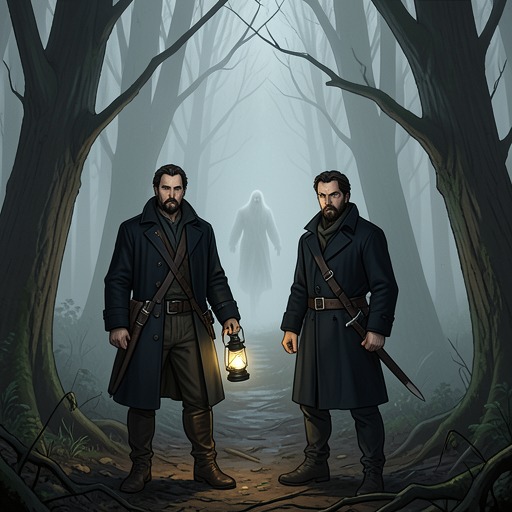
Manchester then appeared on ITV’s nationally broadcast Today programme on Friday 13 March 1970, claiming that he planned to exorcise the Highgate vampire later that night. Public interest became large enough for hundreds of would-be vampire hunters to climb the walls of the dilapidated cemetery and swarm through its grounds. Police attempted to restore order, turning the cemetery from a setting for private sightings into the scene of a public disturbance. The physical barriers meant to protect graves and control access became obstacles for trespassers eager to enter the legend bodily.
Rival Interpretations and Occult Publicity
The Highgate Vampire affair was never governed by a single stable account. Farrant generally described the supposed entity as a ghost or spirit, while Manchester insisted that it was unquestionably a vampire. Their disagreement was not a minor difference in vocabulary. It determined whether the cemetery was understood through the language of haunting and apparitions or through the more aggressive mythology of vampiric invasion, exorcism, and hunting.
With hindsight, much of the legend appears to have been enlarged by Manchester, who expanded a thin collection of claims into a far broader mythology. Media attention gave those claims circulation and durability, creating an urban legend that outlasted the original sightings. The cemetery’s cultural role thus depended on a chain of reinterpretations: an indistinct figure became a ghost, the ghost became an Eastern European vampire, and the vampire became the object of a public campaign that drew crowds and police intervention.
The rivalry between Farrant and Manchester continued for decades. In 1973, the two men announced that they would participate in a magician’s duel on Parliament Hill on Friday 13 April, although the event never took place. Farrant, usually the more reticent of the pair, expressed his hostility through satire, creating the comic strip The Adventures of Bishop Bonkers. In it, Manchester appeared as a paranoid maniac whose plans were defeated by Farrant. In 2011, Farrant performed an even more elaborate gesture of mockery by filming himself raising a toast to an effigy of Manchester’s head, ceremonially presented on a silver platter. Their conflict lasted until Farrant’s death in 2019, keeping the cemetery attached not only to a vampire myth but also to a long-running dispute over who had the authority to define it.
Graves, Bodies, and the Gothic Imagination
Highgate’s association with vampirism is intensified by its connection with actual stories of disinterment and apparently undisturbed corpses. Elizabeth “Lizzie” Siddal, the model, muse, and neglected wife of Dante Gabriel Rossetti, was buried in the Rossetti family vault after her death in 1862. Her death was officially recorded as accidental, although it was almost certainly caused by an intentional overdose of laudanum. Seven years later, Rossetti’s literary agent Charles Augustus Howell persuaded him to have her disinterred so that the poems placed in her coffin could be recovered. Rossetti had tucked the manuscript under her long red hair, combining mourning with a gesture of romantic self-dramatization.
Howell later told Rossetti that Lizzie had not decomposed and that her hair had grown so long and lustrous that it filled the coffin. The story encouraged Rossetti to believe that she might be waiting for him in the afterlife. He subsequently gave firm instructions that he was to be buried eighty miles from Highgate, at Birchington-on-Sea in Kent, apparently to place himself at a safe distance from possible unearthly revenge. The family vault therefore became part of a distinctly Victorian mixture of grief, guilt, artistic romanticism, and fear of the dead.
The apparent growth of hair and fingernails in such stories has a biological explanation. Hair and nails are dead tissue and cannot grow without a living host. As a corpse dehydrates, skin and soft tissue shrink, making nails or hair seem to have lengthened. Decomposition can also be slowed when a coffin is airtight or when heavy clay soil reduces bacterial activity and limits access by insects and animals. Adipocere, or corpse wax, formed through the anaerobic hydrolysis of body fats, can preserve facial features and give a body a roughly cast-wax appearance. These processes help explain why burial sites such as Highgate can generate convincing tales of undead preservation without requiring an actual return from death.
Cultural and Narrative Significance
Highgate Cemetery embodies the Gothic tension between beauty and dread. Its quiet cloisters invite contemplation, while its aged tombs and enclosed paths suggest histories that cannot be fully recovered. The setting offers the pleasure of the Gothic sublime: fear is joined to aesthetic fascination, and the dead become both a source of horror and an object of visual and historical desire. The cemetery’s beauty does not cancel its menace; it gives menace a form that can be revisited, photographed, filmed, reported, and performed.
Its legend also demonstrates how vampire folklore is made in modern conditions. Earlier vampire panics had often grown from disease, unexplained deaths, religious belief, and uncertain bodies. By 1970, however, newspapers and television could rapidly enlarge a local claim into national spectacle. The Highgate story shows a later stage in that process, in which the vampire is not simply inherited from old folklore but assembled through competing testimonies, publicity, rivalry, and audience participation. The hundreds who entered the cemetery after Manchester’s television announcement were not merely hearing a story; they were helping to materialize its social reality.
For that reason, Highgate Cemetery remains significant even without a verified vampire. It preserves the graves and vaults that supplied the material foundation of the myth, the Gothic landscape that made supernatural interpretation plausible, and the media history that carried the claim beyond the cemetery walls. The site stands as a vivid example of how a location can become an active participant in cultural memory: the stones remain, the bodies remain beneath them, but the meaning of the place continues to be contested, revised, and theatrically brought back to life.